

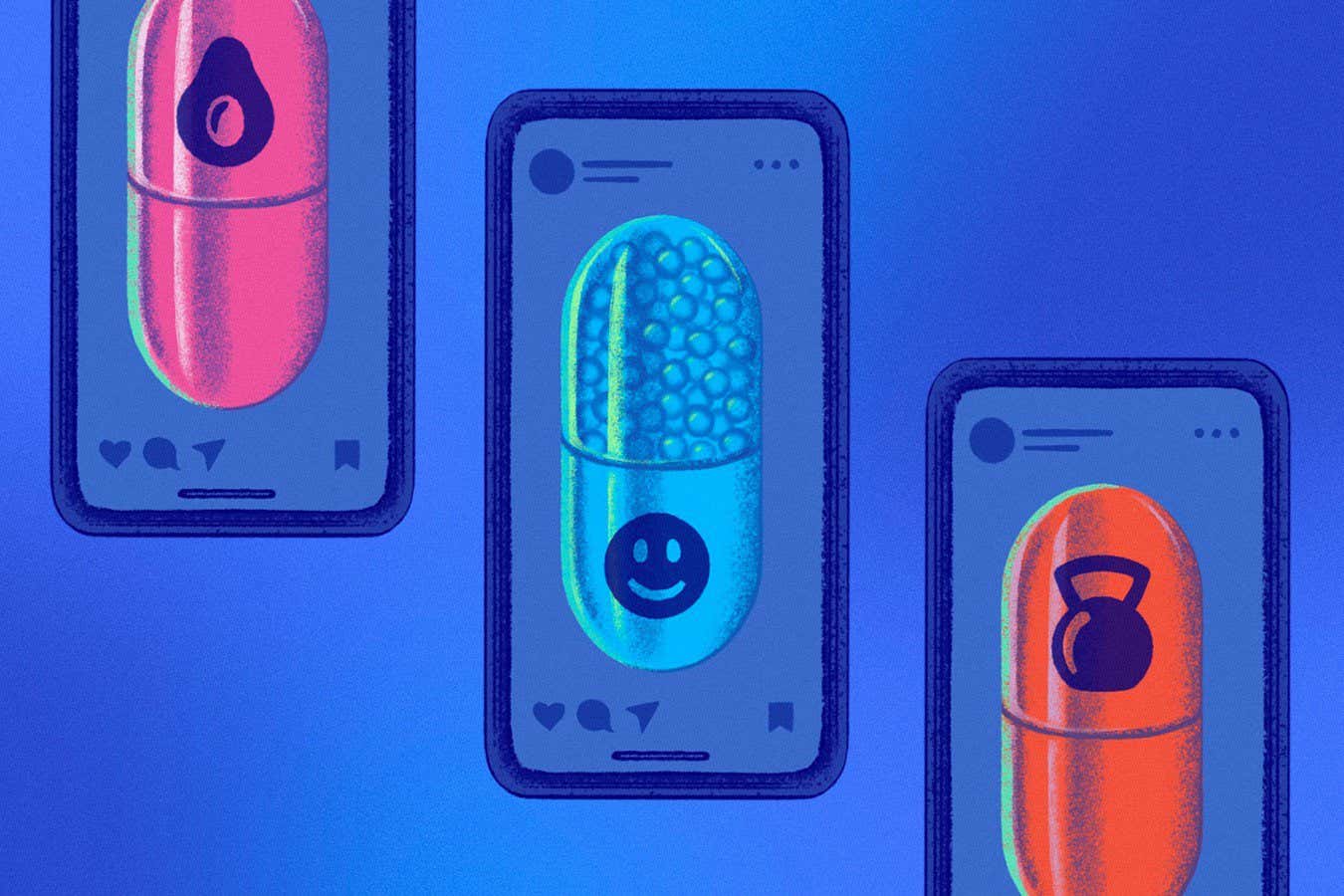
It is no secret that money shapes our health. From pharmaceutical ads to research agendas, money has always been part of medicine. What’s new is the scale, speed and intimacy of it all. A wave of new players is nudging our everyday health choices, often stepping into the cracks left by overstretched healthcare systems. And as this is happening, our health is being commodified.
For much of the past century, doctors had a near-monopoly on medical knowledge. That is changing fast. There is a whole parallel system rising up, powered by consumer health. Anywhere there is a gap – in getting care, answers or reassurance – commercial players are jumping in. Health tech start-ups, apps, diagnostics, online clinics, influencers – they are all competing for authority, and figuring out how to monetise it.
There now seems to be a solution for every discomfort and a product for every aspiration. Fitness trackers tally our steps and sleep. Meditation apps package calm for a monthly fee. More and more, our biology is turned into metrics – highly marketable ones not always tied to better health. We track biomarkers whether or not changing them helps. Genetic tests and personalised nutrition plans promise a “new, better you”, while evidence often trails hype.
Along the way, our symptoms, traumas and treatments – and even the fuzzy line between being unwell and regular discomfort – are being commodified. You see it all over: podcast hosts pitching treatments while glossing over conflicts of interest; influencers monetising their diagnoses; conditions turned into memes and merch; clinicians casting themselves as rebels taking on a broken system while selling treatments or tests.
Much of this shift is happening online where claims and ads are challenging to regulate. Health advice now lives on platforms built for entertainment, steered by opaque algorithms. Increasingly, people are turning to TikTok, YouTube, Instagram and Facebook in search of guidance and support.
This mash-up of pharma, tech, diagnostics and supplement brands has a name: the wellness-industrial complex. It is powering the rise of what I have dubbed the commodified self.
And it isn’t just about personal choices. As social platforms shape how we talk about illness, they may be nudging clinical expectations, research agendas and what people think healthcare should deliver. We are essentially living through a global public-health experiment.
Yet this phenomenon is also a reaction to real shortcomings. Alternative players are succeeding because people want time, recognition, agency and connection. They seek voices that validate their experiences and give them certainty – especially when the help offered by the official system feels rushed or out of reach. Simply calling out online misinformation won’t stop it from spreading, and may be alienating.
When people struggle to obtain timely testing or clear explanations, private diagnostics and continuous tracking offer a sense of visibility and control. When conventional medicine appears conservative or reactive, optimisation cultures step in.
So the question for health systems isn’t whether to adapt, but how. They need to stay evidence-based, safe and equitable – while perhaps getting more responsive and grounded in lived experience. Otherwise, they risk losing not just market share, but moral authority: the right to define what care should be.
To understand health now, we need to understand the commercial engines and platform designs shaping it. What hits our screens isn’t neutral – it is content curated by industries with unprecedented access to our bodies, data and wallets, and a growing hand in whether we see ourselves as well or unwell.
Deborah Cohen is the author of Bad Influence: How the internet hijacked our health
Topics: