
Close Menu
    Trending
    • Beijing’s new supply chain rules deepen concerns for US firms in China
    • India denounces ‘hellhole’ remark shared by Trump | Donald Trump News
    • New photos of Mike Vrabel and Dianna Russini emerge
    • AI search demands a new audience playbook
    • How do earthquakes end? A seismic ‘stop sign’ could help predict earthquake risk
    • Trump Announces Cease-Fire Between Israel and Lebanon
    • Google Is Tracking Your Life – Photo Cloud Feeding AI System
    • Rachel Zoe Confronts Amanda Frances In ‘RHOBH’ Reunion Clip
    Benjamin Franklin Institute
    Friday, April 24
    • Home
    • Politics
    • Business
    • Science
    • Technology
    • Arts & Entertainment
    • International
    Benjamin Franklin Institute
    Home»Science»Ancient bacterium discovery rewrites the origins of syphilis
    Science

    Ancient bacterium discovery rewrites the origins of syphilis

    Team_Benjamin Franklin InstituteBy Team_Benjamin Franklin InstituteJanuary 22, 2026No Comments3 Mins Read
    Share Facebook Twitter Pinterest Copy Link LinkedIn Tumblr Email VKontakte Telegram
    Share
    Facebook Twitter Pinterest Email Copy Link


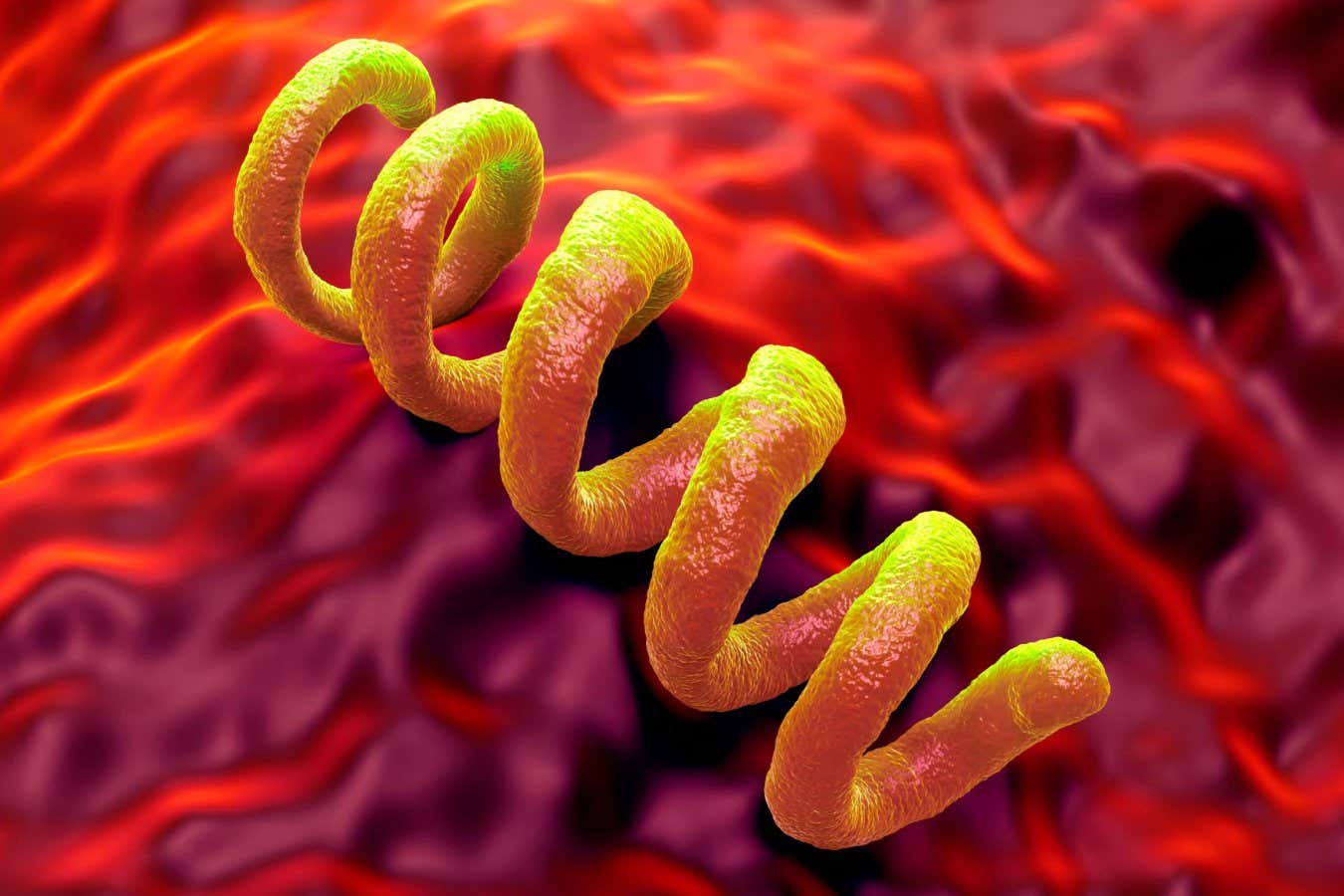
    Treponema pallidum bacteria cause diseases including syphilis

    Science Photo Library / Alamy

    Traces of a bacterium related to syphilis have been found in a bone from a person who lived in the mountains of Colombia over 5000 years ago.

    The discovery shows that this group of corkscrew-shaped bacteria was infecting humans thousands of years earlier than previously thought, before the rise of intensive agriculture, which many researchers consider a catalyst for the spread of pathogens.

    Today, three subspecies of the bacterium Treponema pallidum cause the diseases syphilis, bejel and yaws. The deep history of these ailments is murky, and researchers have debated where diseases like syphilis arose and how they became widespread. Ancient bacterial DNA and markers of infection on skeletal remains lend us some clues, but these are rare and can be ambiguous.

    So, when researchers studying the ancient DNA of 5500-year-old human remains in the Bogotá savannah detected the genome of Treponema pallidum in a human leg bone sample, it was a surprise.

    “This finding was completely unexpected, because the individual studied had no skeletal evidence of a Treponema infection,” says Nasreen Broomandkhoshbacht at the University of California, Santa Cruz.

    It is widely thought that many common diseases started to affect humanity after the dawn of intensive agriculture, when people began living in denser communities. But this individual lived in a very different context, where small hunter-gatherer groups travelled frequently and were in close contact with wildlife.

    “Our results can tell us a lot about the long-term evolutionary history of [this bacterium] by revealing a long-standing association with human populations,” says Davide Bozzi at the University of Lausanne in Switzerland.

    When Broomandkhoshbacht, Bozzi and their colleagues compared the ancient genome to those of other T. pallidum bacteria, they found it was part of a completely different lineage from any known modern relatives. This indicates that, millennia ago, ancient relatives of syphilis had already diversified in the Americas and were infecting humans, and the team’s analysis suggests they had many of the same genetic features that make today’s strains harmful.

    The findings point to an early presence of these pathogens in the Americas, but it is also possible that they have been infecting humans for even longer across the world.

    Rodrigo Barquera at the Max Planck Institute for Evolutionary Anthropology in Leipzig, Germany, notes that the ancient strain might belong to an elusive, “missing” pathogen: Treponema carateum, which causes a skin disease called pinta. The bacterium is only known from physical descriptions, not genetics.

    Kerttu Majander at the University of Zurich, Switzerland, wonders what additional ancient genomes can tell us. “Were there perhaps many extinct lineages and perhaps different diseases caused by these pathogens in the past?” she says.

    For Bozzi, understanding how pathogens evolve to cause diseases like syphilis and yaws is a crucial step in finding the genetic quirks that allow pathogens to infect new hosts and make their associated illnesses more dangerous.

    Topics:


    Source link

    Share. Facebook Twitter Pinterest LinkedIn Tumblr Email Telegram Copy Link

    Related Posts

    Science

    How do earthquakes end? A seismic ‘stop sign’ could help predict earthquake risk

    April 24, 2026
    Science

    ‘Kraken’ fossils show enormous, intelligent octopuses were top predators in Cretaceous seas

    April 24, 2026
    Science

    Largest ever octopus was great white shark of invertebrate predators

    April 24, 2026
    Science

    Do you need to worry about Mythos, Anthropic’s computer-hacking AI?

    April 23, 2026
    Science

    How many dachshunds would it take to get to the moon?

    April 23, 2026
    Science

    The Age Code review: Can you slow ageing with your diet? A new book gives it a go

    April 23, 2026
    Editors Picks

    Aaron Rodgers Shares NSFW Reason Why He Still Works Out

    March 5, 2026

    The banality of Jeffery Epstein’s expanding online world

    December 27, 2025

    Why Prince Harry’s New Life In Hollywood Is Allegedly In Shambles

    January 27, 2026

    The advantages of being a young entrepreneur

    January 23, 2026

    Members Of The Royal Family Gathered For The Queen’s Coffin Procession In London

    November 21, 2025
    About Us
    About Us

    Welcome to Benjamin Franklin Institute, your premier destination for insightful, engaging, and diverse Political News and Opinions.

    The Benjamin Franklin Institute supports free speech, the U.S. Constitution and political candidates and organizations that promote and protect both of these important features of the American Experiment.

    We are passionate about delivering high-quality, accurate, and engaging content that resonates with our readers. Sign up for our text alerts and email newsletter to stay informed.

    Latest Posts

    Beijing’s new supply chain rules deepen concerns for US firms in China

    April 24, 2026

    India denounces ‘hellhole’ remark shared by Trump | Donald Trump News

    April 24, 2026

    New photos of Mike Vrabel and Dianna Russini emerge

    April 24, 2026

    Subscribe for Updates

    Stay informed by signing up for our free news alerts.

    Paid for by the Benjamin Franklin Institute. Not authorized by any candidate or candidate’s committee.
    • Privacy Policy
    • About us
    • Contact us

    Type above and press Enter to search. Press Esc to cancel.