

During the Hollywood strikes of 2023, a major sticking point for members of the Writers Guild of America and SAG-AFTRA was artificial intelligence. When the unions ultimately came to an agreement with Hollywood studios, they won key protections for actors regarding digital replicas and guardrails for how generative AI could be used in writers’ rooms.
The stipulation that studios could not create digital replicas of actors—at least not without their consent—reflects growing concerns over how AI might compromise the livelihoods of artists and creatives.
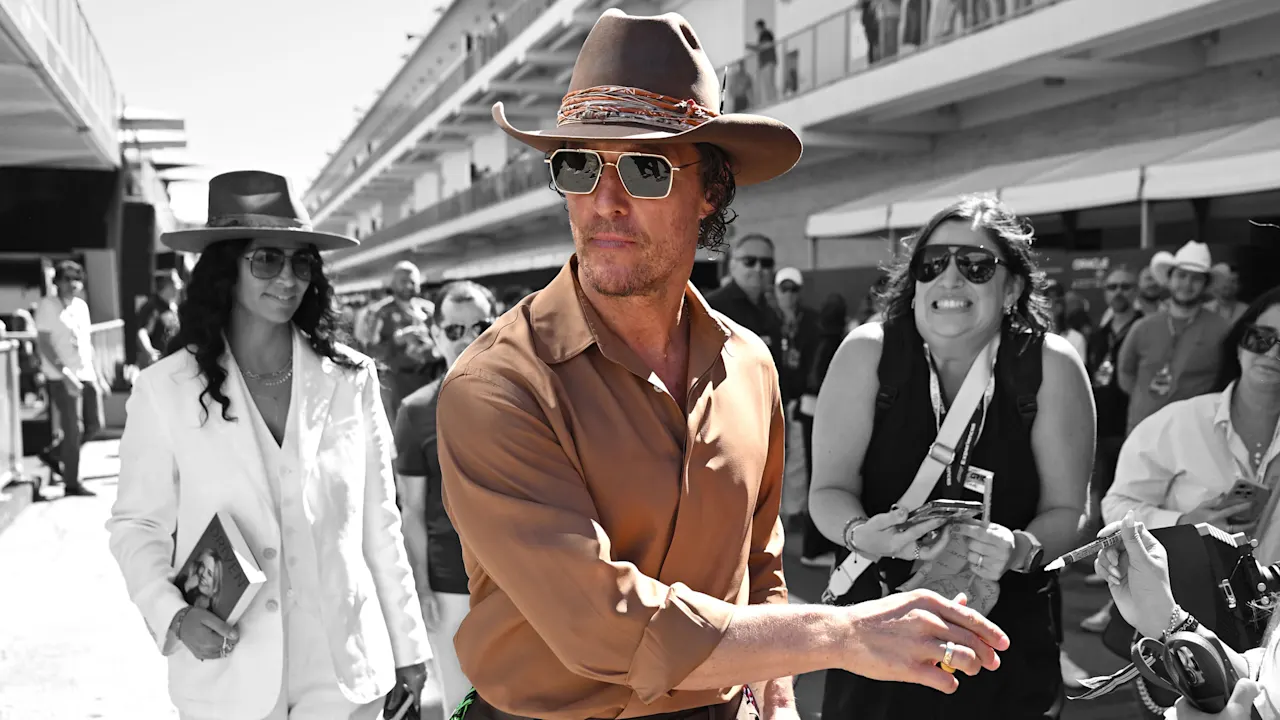
Now it seems some performers may be looking for new ways to protect themselves against more general misuse: A January 13 Wall Street Journal report revealed that actor Matthew McConaughey filed eight trademark applications that are intended to deter unauthorized AI-generated simulations of his voice or likeness.
The trademarks, which have been approved by the U.S. Patent and Trademark Office, include several video clips of McConaughey, along with one of his most iconic moments: audio of him saying, “Alright, alright, alright,” a line from the 1993 movie Dazed and Confused that has since become a catchphrase.
“My team and I want to know that when my voice or likeness is ever used, it’s because I approved and signed off on it,” McConaughey told The Journal. “We want to create a clear perimeter around ownership, with consent and attribution the norm in an AI world.”
McConaughey has reason to take preemptive action. AI has already enabled fraudulent ads that used the likeness of actors like Tom Hanks to promote “wonder drugs.” Just this week, there was a deepfake video circulating on the internet that featured eerily realistic face swaps with the cast of Stranger Things—an example of how easily AI can be exploited by virtually anyone. The video has more than 15 million views (and counting) on X. Another creator shared a similar video using the likeness of Leonardo DiCaprio in The Wolf of Wall Street.
By trademarking himself, McConaughey is looking to prevent this kind of content from being monetized.
From a legal perspective, Orly Lobel—a law professor and the director of the Center for Employment and Labor Policy at the University of San Diego—says this is a “novel way to combat deepfakes.” The traditional name and likeness protections under state law, otherwise known as publicity rights, are meant to protect against the unauthorized use of an actor’s image to sell products.
But those laws are inadequate in the new era of generative AI, according to Lobel, since AI content can be monetized on the internet. There is less clarity on what constitutes commercial use on those platforms. McConaughey’s decision to trademark his voice and likeness is “a hybrid approach, and it elevates the protections to federal claims,” Lobel says.
Even McConaughey’s lawyers—among them prominent entertainment attorney Kevin Yorn—have noted that they’re not entirely sure whether this measure of protection would hold up in court. “I don’t know what a court will say in the end,” Yorn told The Journal. “But we have to at least test this.”
A trademark also primarily protects commercial use, though McConaughey’s lawyers seem to believe the risk of federal claims may act as a deterrent and discourage people from creating any kind of AI-generated content with his likeness.
Still, this could set a precedent for other actors and performers to take similar action at a time when creatives are fighting an uphill battle against the use of AI—and gearing up for another contract negotiation that will likely revive a number of AI-related concerns.
“I think [this] is a signal that actors and others want attribution and consent and are ready to fight back,” Lobel says.