
Close Menu
    Trending
    • Bobbi Althoff Reveals What Keeps Her Up At Night
    • Commentary: UAE’s OPEC exit has been long in the works
    • Carney ‘strong’ in year one, now must deliver on promises in Canada | Donald Trump News
    • LeBron James finally opens up on Michael Jordan, GOAT debate
    • Opinion | Why Texas Is Winning the Housing War
    • Alphabet’s Q1 profit beats expectations with Google’s big AI bets paying off
    • Simple treatment tweak drastically reduces blood loss from severe cuts
    • Market Talk – April 29, 2026
    Benjamin Franklin Institute
    Thursday, April 30
    • Home
    • Politics
    • Business
    • Science
    • Technology
    • Arts & Entertainment
    • International
    Benjamin Franklin Institute
    Home»Trending News»High Seas Treaty: Why Southeast Asia can’t ignore the new rulebook for the deep blue
    Trending News

    High Seas Treaty: Why Southeast Asia can’t ignore the new rulebook for the deep blue

    Team_Benjamin Franklin InstituteBy Team_Benjamin Franklin InstituteJanuary 17, 2026No Comments3 Mins Read
    Share Facebook Twitter Pinterest Copy Link LinkedIn Tumblr Email VKontakte Telegram
    Share
    Facebook Twitter Pinterest Email Copy Link


    SOUTHEAST ASIA’S SHARED GOALS

    For Southeast Asia, observers said the new pact also promises new tools, the potential for more scientific knowledge, increased access to oceans data and capacity building and financing.

    Many Association of Southeast Asian Nations (ASEAN) states are biodiversity-rich, highly reliant on fisheries for protein and jobs and still building scientific and enforcement capacity.

    The region is surrounded by the ocean, said Rena Lee, Singapore’s Ambassador for International Law and president of the Treaty negotiations, raising the stakes for involvement and leadership on high seas issues, even as many countries understandably focus first on coastal waters, where most fishing activity and community livelihoods are concentrated.

    “What happens far out in the high seas, in the Pacific or Indian Ocean or even in the Atlantic, does have an impact on what happens in our near shore waters, in the coastal waters,” she said. “And what we do in our waters has an impact on the areas beyond national jurisdictions.”

    Even landlocked nations like Laos have ratified the agreement, a reflection, Lee said, of regional keenness to tap into open science and the transfer of technology, which the treaty provisions for.

    Migratory fish, ocean currents and climate processes are part of a single, fluid system. That ecological connectivity means high-seas governance can have direct effects on coastal fisheries, food security and the “blue economy” plans of ASEAN states, said Rizza Sacra-Dejucos, Asia Regional Coordinator of the High Seas Alliance.

    Those might include sustainable fishing, marine tourism, aquaculture or offshore energy.

    “We cannot talk about the blue economy without talking about a sustainable ocean economy, and about the high seas,” she added, giving an example of highly-valued commercial species like tuna, which migrate in international waters.

    “Protecting these waters is very essential so that we maintain a balanced ecosystem where these species can thrive and eventually continue to support coastal communities,” she said.

    For ASEAN, the experts said it could be an opportunity for better regional cooperation. But internal dynamics, varying maritime priorities and institutional capacities means a unified regional front is not assured, Nightingale said.

    “It’s very hard to find those sort of common agendas and collaborative objectives. But yes, of course, the door stands open for ASEAN to play that leadership role,” she said.

    She described Indonesia as having had a pivotal influence in advancing the high seas agenda to this point.

    Sacra-Dejucos added that Singapore had acted as a “bridge builder” for stronger regional cooperation and the Philippines “very vocal as a champion” for MPAs.

    One practical way Southeast Asian nations could advance a shared goal would be to push for an MPA in nearby international waters.

    Under the treaty, acting collectively would provide greater ecological impact, political weight and practical benefits than acting alone. 

    Tanthanawit said she had seen firsthand the type of environment, seemingly in the middle of an ocean expanse, that could receive critical global protection in the years to come.

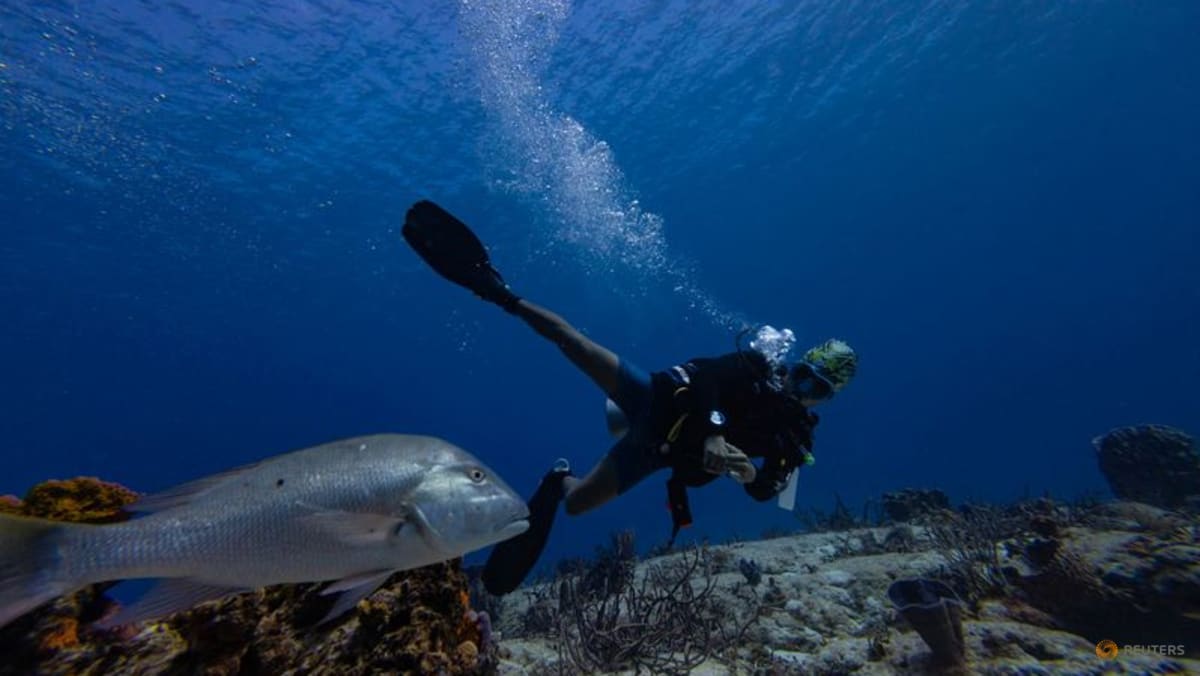
    She spent a month travelling to and from the Saya de Malha Bank in the Indian Ocean in 2024. It is a vast, shallow underwater plateau that scientists believe could be the largest seagrass meadow in the world, despite its remoteness and being barely visible from the surface.

    It is considered a strong candidate as a future high-sea MPA.

    “In a remote area, you didn’t expect so much life underwater. And you see sea grass that looks like a football field,” she said. “It was quite an experience to be able to witness that.”


    Source link

    Share. Facebook Twitter Pinterest LinkedIn Tumblr Email Telegram Copy Link

    Related Posts

    Trending News

    Commentary: UAE’s OPEC exit has been long in the works

    April 29, 2026
    Trending News

    Man charged with trying to kill Trump at dinner took photo with knife in hotel, investigators say

    April 29, 2026
    Trending News

    Kevin Warsh one step closer to becoming Fed chair after Senate committee approval

    April 29, 2026
    Trending News

    UK police arrest man after two people stabbed in Jewish area of London: Security group

    April 29, 2026
    Trending News

    Panama Canal reaffirms ‘neutrality’ amid Mideast war

    April 29, 2026
    Trending News

    US, allies release joint statement supporting Panama’s sovereignty

    April 29, 2026
    Editors Picks

    JPMorgan Is Reportedly Laying Off Around 1,000 Workers

    February 13, 2025

    Pelicans’ James Borrego no longer needs interim tag

    December 23, 2025

    Afghanistan bombing: What’s Pakistan’s strategy as India-Taliban ties grow? | Conflict News

    February 24, 2026

    2026 NFL free-agency winners, losers: Vikings get their quarterback

    March 13, 2026

    3 signs your meetings have a culture problem

    March 8, 2026
    About Us
    About Us

    Welcome to Benjamin Franklin Institute, your premier destination for insightful, engaging, and diverse Political News and Opinions.

    The Benjamin Franklin Institute supports free speech, the U.S. Constitution and political candidates and organizations that promote and protect both of these important features of the American Experiment.

    We are passionate about delivering high-quality, accurate, and engaging content that resonates with our readers. Sign up for our text alerts and email newsletter to stay informed.

    Latest Posts

    Bobbi Althoff Reveals What Keeps Her Up At Night

    April 29, 2026

    Commentary: UAE’s OPEC exit has been long in the works

    April 29, 2026

    Carney ‘strong’ in year one, now must deliver on promises in Canada | Donald Trump News

    April 29, 2026

    Subscribe for Updates

    Stay informed by signing up for our free news alerts.

    Paid for by the Benjamin Franklin Institute. Not authorized by any candidate or candidate’s committee.
    • Privacy Policy
    • About us
    • Contact us

    Type above and press Enter to search. Press Esc to cancel.