
Close Menu
    Trending
    • NHTSA considers new car door safety rules after fatal Tesla crashes
    • PlayStation Network outage resolved after thousands of gamers unable to play
    • Market Talk – July 24, 2026
    • Joe Biden Gives Up, Declines to Seek Further Review of Appeals Court Ruling on Release of Audiotapes with Ghostwriter
    • Meghan McCain Claps Back At Being Called ‘Old And Ugly’
    • Mixed day for global equities as oil prices retreat
    • Venezuela to exit International Criminal Court, accusing it of ‘bias’ | ICC News
    • Andy Reid shares massive Patrick Mahomes recovery update
    Benjamin Franklin Institute
    Friday, July 24
    • Home
    • Politics
    • Business
    • Science
    • Technology
    • Arts & Entertainment
    • International
    Benjamin Franklin Institute
    Home»Science»Why stroking seedlings can help them grow big and strong
    Science

    Why stroking seedlings can help them grow big and strong

    Team_Benjamin Franklin InstituteBy Team_Benjamin Franklin InstituteJanuary 11, 2026No Comments3 Mins Read
    Share Facebook Twitter Pinterest Copy Link LinkedIn Tumblr Email VKontakte Telegram
    Share
    Facebook Twitter Pinterest Email Copy Link


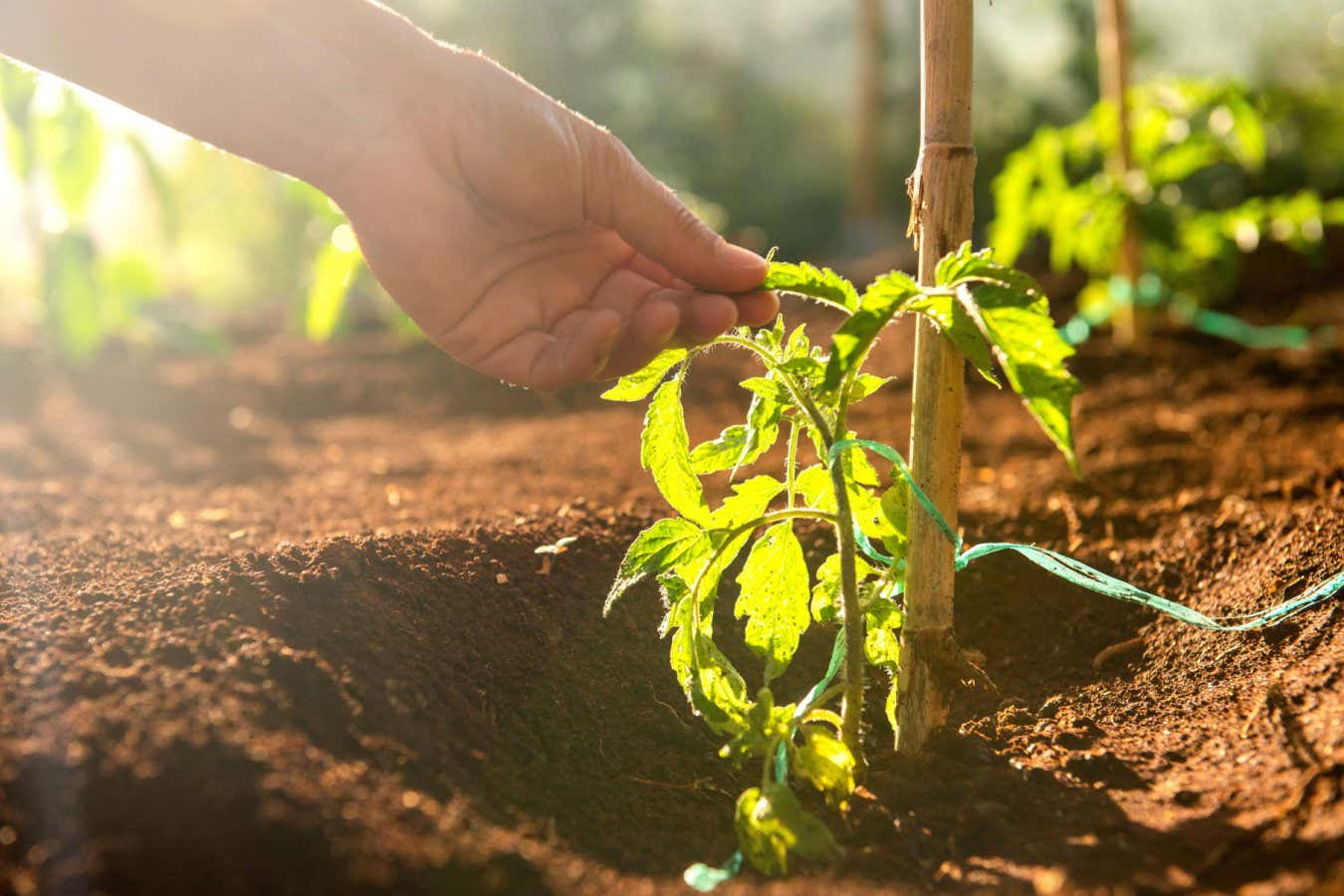
    If your windowsills are anything like mine, they are filling up with the first batches of seed sowings for the year ahead. The challenge is that seedlings raised in the cosseted environment of the great indoors are notoriously prone to growing long and leggy, often collapsing just a few weeks after sprouting. But could a colourful old-school technique help keep our gardening hopes for 2026 alive and well? Here’s the science behind why stroking your plants isn’t quite as mad as it sounds.

    Plant propagation is often a balancing act. Starting tender seedlings under glass, away from temperature extremes, harsh wind and the constant threat of pests and diseases, greatly boosts their early survival. Yet this lack of environmental stress can have unintended consequences. Etiolation – where plants grow tall but fragile – is a common issue for indoor plants, including those in commercial nurseries. Once outdoors, these specimens are far more likely to physically collapse. With billions of dollars at stake worldwide, it’s no surprise that commercial growers have spent decades searching for effective, scalable solutions.

    Chemical growth regulators are one answer, helping produce sturdier, more compact plants. However, many of these substances aren’t available to home gardeners. Fortunately, research has shown that mechanical stimulation – simply rubbing, shaking or stroking seedlings – is also remarkably effective at reducing etiolation. This is all down to a phenomenon called thigmomorphogenesis, where plants alter their growth patterns in response to forces such as touch, wind, rain or vibration, by growing thicker stems, more supportive tissues and an overall shorter, stockier stature. Although scientists are still unravelling exactly how plants sense and translate these signals at the cellular level, numerous studies demonstrate that mechanically stimulated seedlings are not only structurally sturdier, but also more resilient to threats like pests and drought.

    This has been demonstrated across a range of popular garden species, from tomatoes and lettuce to petunias and marigolds. Experiments using fans, vibrating benches or even a sheet of paper brushed across the foliage have shown these interventions can reduce excessive stem elongation by 20 to 50 per cent.

    But here’s the best part: while commercial producers have been using machines to deliver this kind of physical stimulus since the 1970s, it is easy to replicate at home. Trials have shown that gently stroking seedlings as little as 10 times, just once a day, is enough to trigger the effect. You can do this with an old envelope, a soft feather duster or even your hands. Not a bad payback for the 10 seconds a day it will take, and all backed by solid science.

    These articles are posted each week at
    newscientist.com/maker

    James Wong is a botanist and science writer, with a particular interest in food crops, conservation and the environment. Trained at the Royal Botanic Gardens, Kew, in London, he shares his tiny flat with more than 500 houseplants. You can follow him on X and Instagram @botanygeek


    Source link

    Share. Facebook Twitter Pinterest LinkedIn Tumblr Email Telegram Copy Link

    Related Posts

    Science

    NHTSA considers new car door safety rules after fatal Tesla crashes

    July 24, 2026
    Science

    Fungus made fashion—researchers turn living organisms into textiles

    July 24, 2026
    Science

    How a 99-year-old mathematician unraveled a century-old braid mystery

    July 24, 2026
    Science

    Is it possible to regain a sense of smell? These scientists are working on it

    July 24, 2026
    Science

    Why don’t insects live in the ocean?

    July 24, 2026
    Science

    Why environmental groups are suing over SpaceX’s land swap deal

    July 24, 2026
    Editors Picks

    Chappell Roan Bodyguard Past Raises Serious Questions

    March 25, 2026

    Bomb blast at Damascus cafe kills nine, authorities say

    July 2, 2026

    Venezuela releases dozens of post-election detainees on Christmas

    December 25, 2025

    FIFA World Cup: Which semifinal team has best chance to win the trophy? | World Cup 2026 News

    July 13, 2026

    Russia-US nuclear pact is about to end and we won’t see another

    January 10, 2026
    About Us
    About Us

    Welcome to Benjamin Franklin Institute, your premier destination for insightful, engaging, and diverse Political News and Opinions.

    The Benjamin Franklin Institute supports free speech, the U.S. Constitution and political candidates and organizations that promote and protect both of these important features of the American Experiment.

    We are passionate about delivering high-quality, accurate, and engaging content that resonates with our readers. Sign up for our text alerts and email newsletter to stay informed.

    Latest Posts

    NHTSA considers new car door safety rules after fatal Tesla crashes

    July 24, 2026

    PlayStation Network outage resolved after thousands of gamers unable to play

    July 24, 2026

    Market Talk – July 24, 2026

    July 24, 2026

    Subscribe for Updates

    Stay informed by signing up for our free news alerts.

    Paid for by the Benjamin Franklin Institute. Not authorized by any candidate or candidate’s committee.
    • Privacy Policy
    • About us
    • Contact us

    Type above and press Enter to search. Press Esc to cancel.