
Close Menu
    Trending
    • Mamdani, Who Said Israel ‘Not a Place,’ Gets Roasted for Wishing Jewish NYCers ‘Peaceful’ Holiday That’s Definitely About Israel Being a Place
    • ‘The Ultimatum’ Star Blake Robertson Shares Relationship Update
    • US missiles hit Iran as path towards de-escalation uncertain
    • UN rights chief Turk wins second term despite US and Israeli opposition | United Nations News
    • LeBron’s decision might force Jalen Brunson to do the unthinkable
    • 8 Unique Side Hustle Ideas for Summer 2026 and Beyond
    • NHTSA considers new car door safety rules after fatal Tesla crashes
    • PlayStation Network outage resolved after thousands of gamers unable to play
    Benjamin Franklin Institute
    Saturday, July 25
    • Home
    • Politics
    • Business
    • Science
    • Technology
    • Arts & Entertainment
    • International
    Benjamin Franklin Institute
    Home»Science»Sinking trees in Arctic Ocean could remove 1 billion tonnes of CO2
    Science

    Sinking trees in Arctic Ocean could remove 1 billion tonnes of CO2

    Team_Benjamin Franklin InstituteBy Team_Benjamin Franklin InstituteJanuary 10, 2026No Comments4 Mins Read
    Share Facebook Twitter Pinterest Copy Link LinkedIn Tumblr Email VKontakte Telegram
    Share
    Facebook Twitter Pinterest Email Copy Link


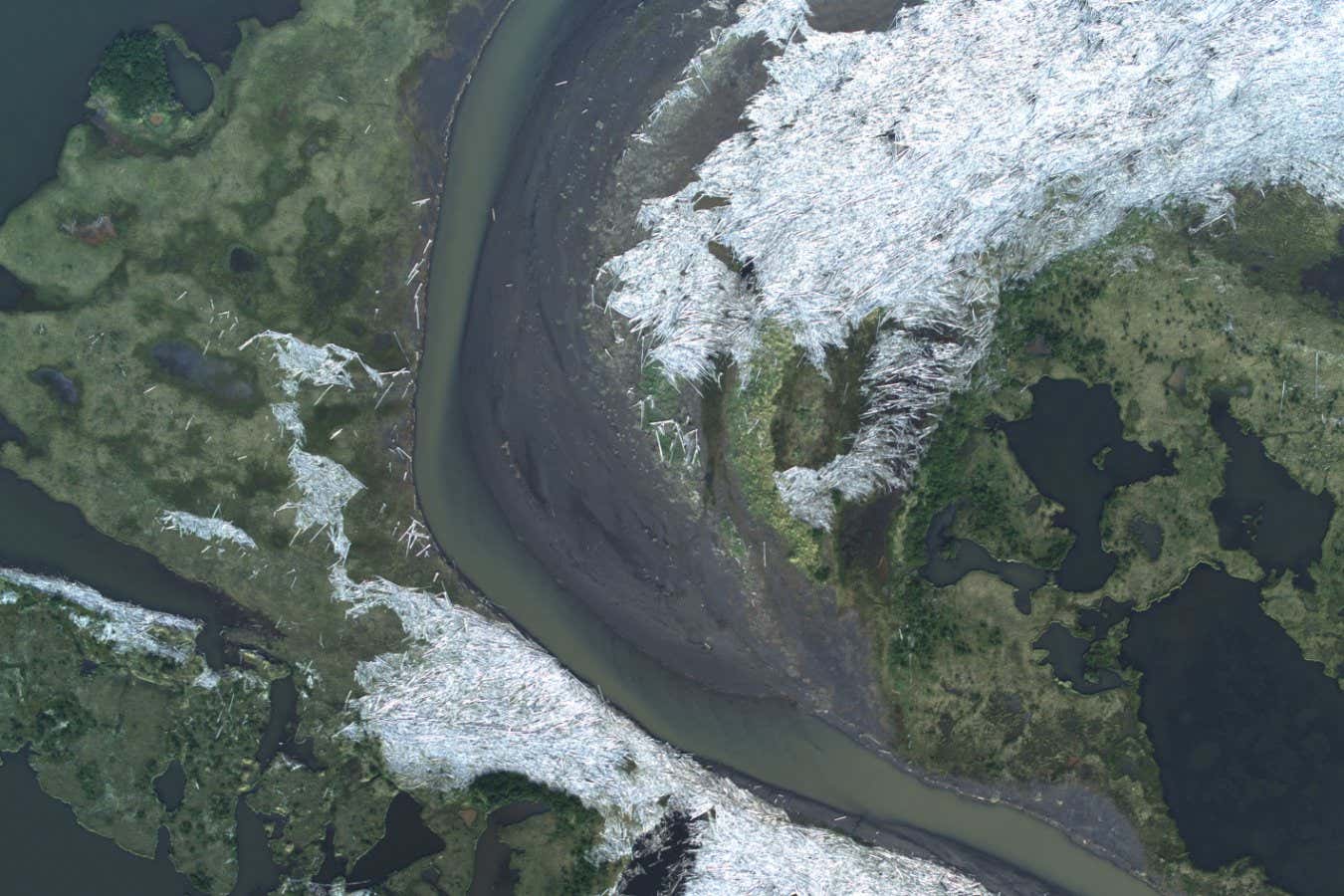
    Trees floating towards the Arctic Ocean

    Carl Christoph Stadie/The Alfred Wegener Institute

    Cutting down swathes of boreal forest and sinking the trees into the depths of the Arctic Ocean could remove up to 1 billion tonnes of carbon dioxide from the atmosphere each year.

    Coniferous trees prone to wildfires could be felled and carried to the ocean by six major Arctic rivers including the Yukon and Mackenzie, where they would sink in about a year, according to a team of researchers.

    “There is now a forest that is sequestering lots of carbon, but now the next thing is how to store it in a way that won’t get burned,” says Ulf Büntgen at the University of Cambridge.

    Humanity will need to find ways to remove carbon dioxide from the atmosphere to compensate for industries that are hard to electrify – or even to begin reducing atmospheric CO2 levels. Direct air capture machines are expensive, however, and planting trees can backfire if they die or burn.

    Several companies are burying wood, and US firm Running Tide sank 25,000 tonnes of wood chips off Iceland, although it was accused of endangering the environment and later shut down.

    Up to 1 trillion tonnes of carbon are stored in wood, soils and peat in the boreal forest that stretches across northern Eurasia and North America, a number likely to rise as global warming accelerates plant growth. But more frequent and intense wildfires are increasingly releasing that carbon.

    Büntgen and his colleagues previously found that wood had survived without rotting and releasing CO2 for 8000 years in cold, low-oxygen Alpine lakes. And the six Arctic rivers export huge amounts of logs, with beached driftwood in their deltas holding 20 million tonnes of carbon or more, estimates Carl Stadie at the Alfred Wegener Institute in Germany, who wasn’t involved in the new research.

    If 30,000 square kilometres could be logged along each river each year – probably in winter when timber could be piled on the river ice – and then replanted, that growth could absorb 1 billion tonnes of CO2 annually, the researchers say.

    But some US rivers still suffer reduced biodiversity a century after timber floating, warns Ellen Wohl at Colorado State University.

    “You run a giant mass of logs through, and it’s like you’re ramming a scouring brush down” the river, she says.

    Moreover, if timber gets trapped on shore or in tributaries and causes flooding, that could thaw permafrost and stimulate methane emissions by microbes.

    “We could see a situation in which the wood itself promotes marine sequestration, but flooding or thaw on land promotes upland carbon release,” says Merritt Turetsky at the University of Colorado Boulder.

    Some wood could also sink where conditions are not cold or anoxic enough to prevent decomposition. Driftwood frozen in sea ice is often carried as far as the Faroe Islands.

    “In the worst case, you have just deforested tremendous areas of forest… that stores carbon on its own,” says Stadie.

    Roman Dial at Alaska Pacific University, is concerned the proposal would be ripe for abuse by commercial logging and might face attack from both sides of the political spectrum.

    “And how long is the list of possible, unavoidable and potentially nasty unintended consequences in the Arctic, a place we hardly understand even now?” he says.

    Some areas of the Arctic seafloor probably aren’t good for preservation, says Morgan Raven at the University of California, Santa Barbara. But others are, and they are worth investigating, she says, as massive volumes of wood washing into the Arctic and other oceans may have cooled Earth after a period of hothouse climate 56 million years ago.

    “We can go and look in the sediments and in the rocks and in Earth’s history for examples of how this experiment has run in the past,” says Raven.

    Topics:


    Source link

    Share. Facebook Twitter Pinterest LinkedIn Tumblr Email Telegram Copy Link

    Related Posts

    Science

    NHTSA considers new car door safety rules after fatal Tesla crashes

    July 24, 2026
    Science

    Fungus made fashion—researchers turn living organisms into textiles

    July 24, 2026
    Science

    How a 99-year-old mathematician unraveled a century-old braid mystery

    July 24, 2026
    Science

    Is it possible to regain a sense of smell? These scientists are working on it

    July 24, 2026
    Science

    Why don’t insects live in the ocean?

    July 24, 2026
    Science

    Why environmental groups are suing over SpaceX’s land swap deal

    July 24, 2026
    Editors Picks

    Israeli airstrike in southern Lebanon kills 3 journalists covering the war

    March 28, 2026

    Ilhan Omar renews push for US to join ICC amid Trump pressure | Courts News

    July 16, 2026

    JD Vance says Iran would be ‘dumb’ to let talks collapse over Lebanon | US-Israel war on Iran News

    April 9, 2026

    Hold the onions – and see if they make you cry

    June 26, 2026

    Meghan Trainor Speaks Out About Toxic Mom Group Drama

    April 16, 2026
    About Us
    About Us

    Welcome to Benjamin Franklin Institute, your premier destination for insightful, engaging, and diverse Political News and Opinions.

    The Benjamin Franklin Institute supports free speech, the U.S. Constitution and political candidates and organizations that promote and protect both of these important features of the American Experiment.

    We are passionate about delivering high-quality, accurate, and engaging content that resonates with our readers. Sign up for our text alerts and email newsletter to stay informed.

    Latest Posts

    Mamdani, Who Said Israel ‘Not a Place,’ Gets Roasted for Wishing Jewish NYCers ‘Peaceful’ Holiday That’s Definitely About Israel Being a Place

    July 25, 2026

    ‘The Ultimatum’ Star Blake Robertson Shares Relationship Update

    July 25, 2026

    US missiles hit Iran as path towards de-escalation uncertain

    July 25, 2026

    Subscribe for Updates

    Stay informed by signing up for our free news alerts.

    Paid for by the Benjamin Franklin Institute. Not authorized by any candidate or candidate’s committee.
    • Privacy Policy
    • About us
    • Contact us

    Type above and press Enter to search. Press Esc to cancel.