
Close Menu
    Trending
    • India denounces ‘hellhole’ remark shared by Trump | Donald Trump News
    • New photos of Mike Vrabel and Dianna Russini emerge
    • AI search demands a new audience playbook
    • How do earthquakes end? A seismic ‘stop sign’ could help predict earthquake risk
    • Trump Announces Cease-Fire Between Israel and Lebanon
    • Google Is Tracking Your Life – Photo Cloud Feeding AI System
    • Rachel Zoe Confronts Amanda Frances In ‘RHOBH’ Reunion Clip
    • China’s DeepSeek says it released long-awaited new AI model
    Benjamin Franklin Institute
    Friday, April 24
    • Home
    • Politics
    • Business
    • Science
    • Technology
    • Arts & Entertainment
    • International
    Benjamin Franklin Institute
    Home»Science»Controversial satellites launching in 2026 will reflect light to Earth
    Science

    Controversial satellites launching in 2026 will reflect light to Earth

    Team_Benjamin Franklin InstituteBy Team_Benjamin Franklin InstituteJanuary 9, 2026No Comments2 Mins Read
    Share Facebook Twitter Pinterest Copy Link LinkedIn Tumblr Email VKontakte Telegram
    Share
    Facebook Twitter Pinterest Email Copy Link


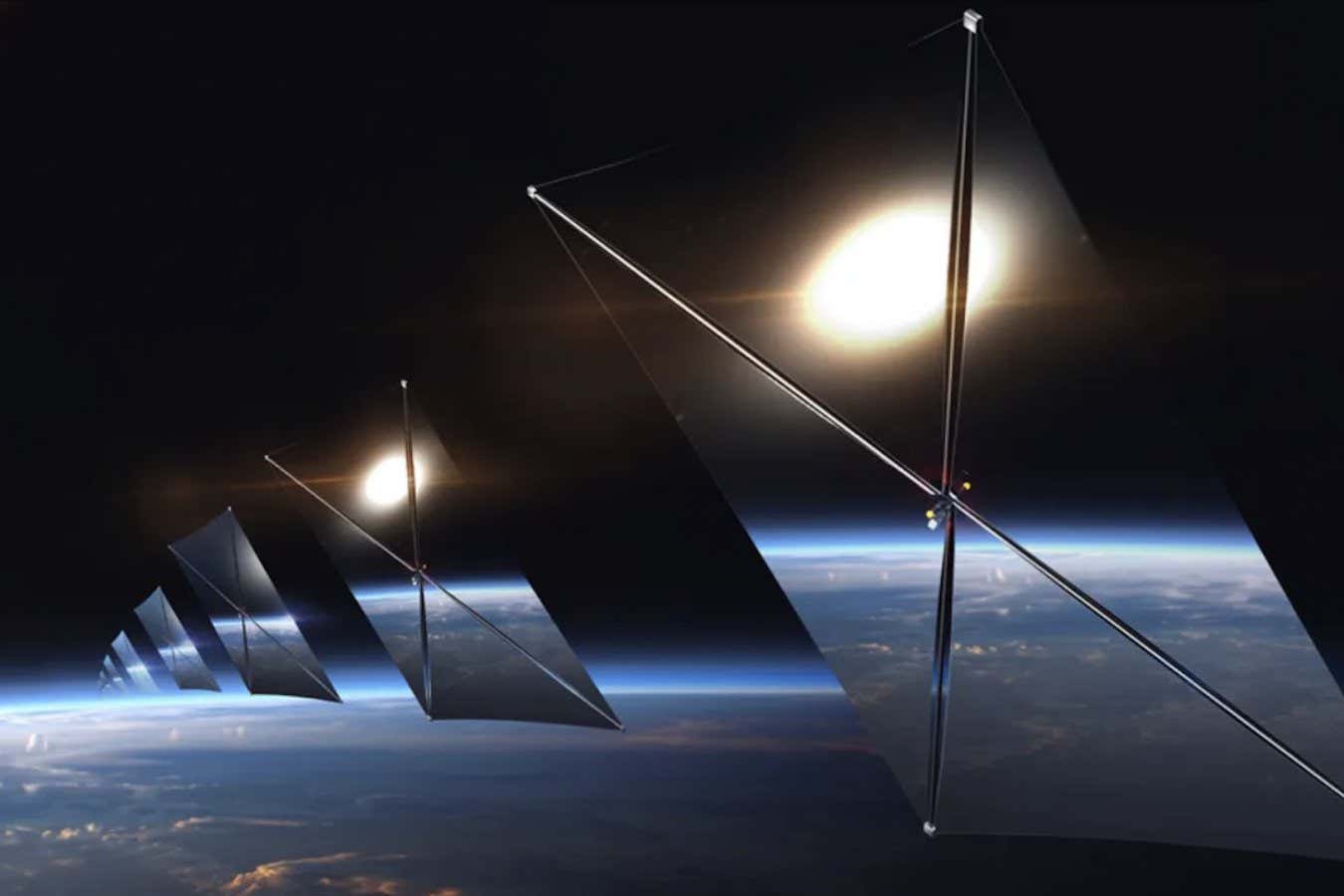
    Artist’s rendering of the Reflect Orbital satellites

    Reflect Orbital

    A controversial scheme will begin to reflect sunlight to Earth with satellites next year, so that dark places can be temporarily lit for visibility or energy production. But astronomers are sceptical about the plan’s efficacy and possible scientific consequences.

    US company Reflect Orbital, which aims to provide “sunlight on demand”, intends to launch its first satellite as soon as early 2026, beaming sunlight to 10 locations as part of an initial “World Tour”. The company then plans to launch thousands of satellites, equipped with mirrors spanning tens of metres, so that light can be reflected to Earth for “remote operations, defense, civil infrastructure, and energy generation.”

    By 2030, Reflect Orbital says it will have sufficient satellite coverage to beam 200 watts per square metre to solar farms on Earth, equivalent to levels of sunlight at dusk and dawn, so places with less natural sunlight can still generate reliable energy.

    But according to specifications of the company’s first satellite in filings with the US Federal Communications Commission (FCC), the useful light reflected to Earth will be much less than that.

    John Barentine at Dark Sky Consulting, a company based in Tucson, Arizona, and astronomers from the American Astronomical Society, used the FCC filing to calculate how much power the satellite would generate from solar panels on Earth. “For a single reflector, the amount of light that’s delivered at ground level is vastly insufficient to power solar farms,” he says.

    The level of light would be equivalent to four times the full moon, which over a large surface area wouldn’t generate much electricity, says Barentine. To produce more light than this would require satellites with thousands of reflectors in total, which would be extremely expensive to launch and complex to fly in formation.

    However, the satellites could pose problems for astronomers by causing momentary flashes of sunlight when their mirrors change position, says Barentine. Some scattering and dissipation of light in the atmosphere, sending it towards unintended locations, is unavoidable, especially if the satellite’s reflectors are damaged by micrometeorites and become imperfect reflectors, he says.

    Reflect Orbital has contacted scientists to discuss potential mitigations for these issues, says Barentine. Reflect Orbital did not respond to an interview request from New Scientist. 

    Topics:

    • satellites/
    • 2026 news preview


    Source link

    Share. Facebook Twitter Pinterest LinkedIn Tumblr Email Telegram Copy Link

    Related Posts

    Science

    How do earthquakes end? A seismic ‘stop sign’ could help predict earthquake risk

    April 24, 2026
    Science

    ‘Kraken’ fossils show enormous, intelligent octopuses were top predators in Cretaceous seas

    April 24, 2026
    Science

    Largest ever octopus was great white shark of invertebrate predators

    April 24, 2026
    Science

    Do you need to worry about Mythos, Anthropic’s computer-hacking AI?

    April 23, 2026
    Science

    How many dachshunds would it take to get to the moon?

    April 23, 2026
    Science

    The Age Code review: Can you slow ageing with your diet? A new book gives it a go

    April 23, 2026
    Editors Picks

    Your partner may wake you up six times a night – but does it matter?

    March 17, 2026

    Gwyneth Paltrow Unlocked The Secret For The Best Homemade French Fries

    January 23, 2026

    Could the US really take over Greenland? | Donald Trump

    January 12, 2026

    Could an end to the Ukraine war be near? | Russia-Ukraine war

    December 11, 2025

    Donald Trump threatens to raise tariffs again on Japan

    July 2, 2025
    About Us
    About Us

    Welcome to Benjamin Franklin Institute, your premier destination for insightful, engaging, and diverse Political News and Opinions.

    The Benjamin Franklin Institute supports free speech, the U.S. Constitution and political candidates and organizations that promote and protect both of these important features of the American Experiment.

    We are passionate about delivering high-quality, accurate, and engaging content that resonates with our readers. Sign up for our text alerts and email newsletter to stay informed.

    Latest Posts

    India denounces ‘hellhole’ remark shared by Trump | Donald Trump News

    April 24, 2026

    New photos of Mike Vrabel and Dianna Russini emerge

    April 24, 2026

    AI search demands a new audience playbook

    April 24, 2026

    Subscribe for Updates

    Stay informed by signing up for our free news alerts.

    Paid for by the Benjamin Franklin Institute. Not authorized by any candidate or candidate’s committee.
    • Privacy Policy
    • About us
    • Contact us

    Type above and press Enter to search. Press Esc to cancel.