
Close Menu
    Trending
    • Warning shot or publicity stunt – how worried should we be about the OpenAI hack?
    • Mamdani, Who Said Israel ‘Not a Place,’ Gets Roasted for Wishing Jewish NYCers ‘Peaceful’ Holiday That’s Definitely About Israel Being a Place
    • ‘The Ultimatum’ Star Blake Robertson Shares Relationship Update
    • US missiles hit Iran as path towards de-escalation uncertain
    • UN rights chief Turk wins second term despite US and Israeli opposition | United Nations News
    • LeBron’s decision might force Jalen Brunson to do the unthinkable
    • 8 Unique Side Hustle Ideas for Summer 2026 and Beyond
    • NHTSA considers new car door safety rules after fatal Tesla crashes
    Benjamin Franklin Institute
    Saturday, July 25
    • Home
    • Politics
    • Business
    • Science
    • Technology
    • Arts & Entertainment
    • International
    Benjamin Franklin Institute
    Home»Science»Jellyfish sleep about as much as humans do – and nap like us too
    Science

    Jellyfish sleep about as much as humans do – and nap like us too

    Team_Benjamin Franklin InstituteBy Team_Benjamin Franklin InstituteJanuary 6, 2026No Comments3 Mins Read
    Share Facebook Twitter Pinterest Copy Link LinkedIn Tumblr Email VKontakte Telegram
    Share
    Facebook Twitter Pinterest Email Copy Link


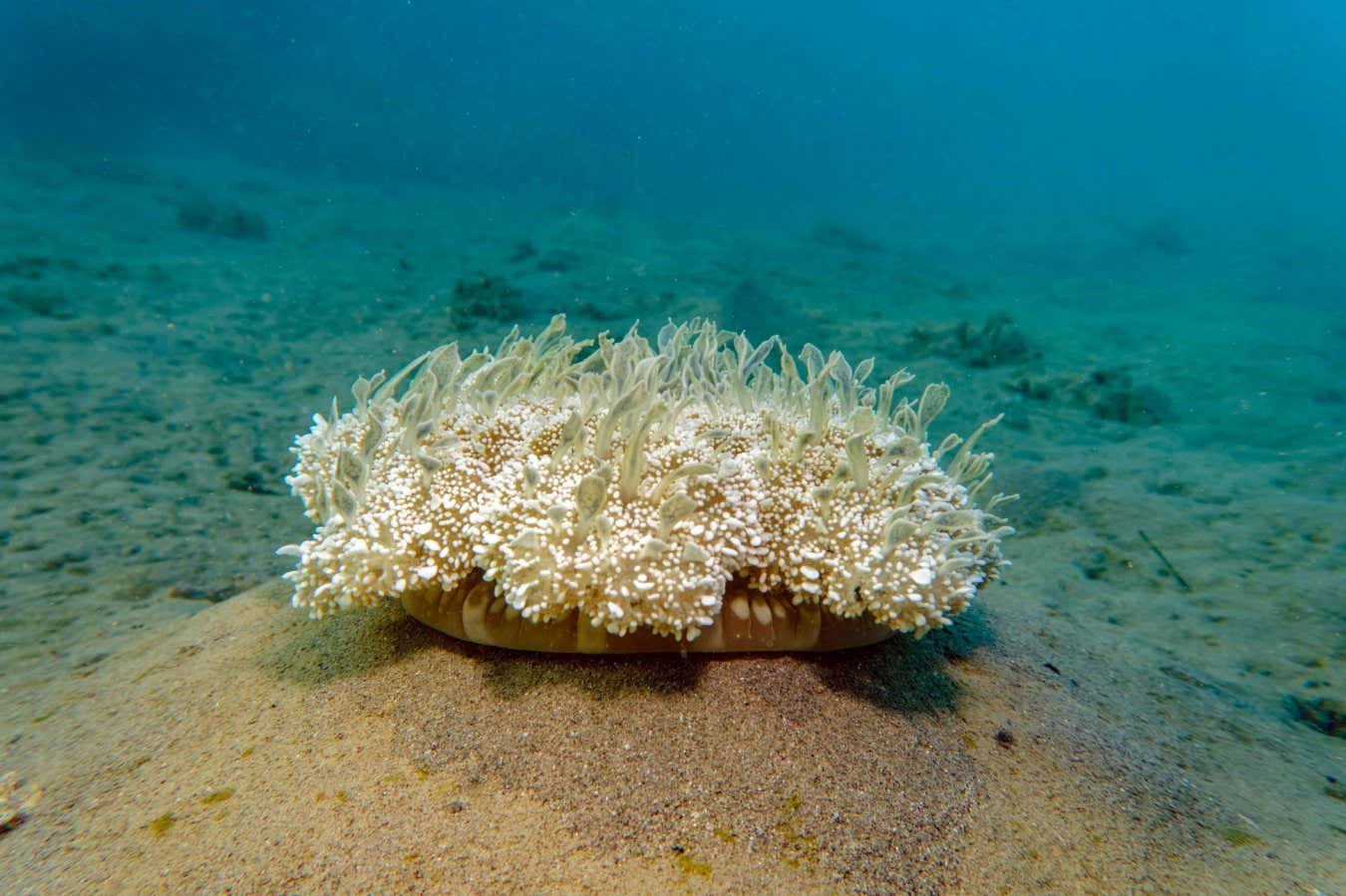
    An upside-down jellyfish in its natural habit on the seabed

    Eilat. Gil Koplovitch

    Jellyfish seem to sleep for about 8 hours a day, take midday naps and snooze more after a bad night’s sleep – just like us. Sleep is thought to have first evolved in marine creatures like these, and having a better understanding of their precise sleep patterns may help explain why it came about at all.

    “It’s funny: just like humans, they spend about a third of their time asleep,” says Lior Appelbaum at Bar-Ilan University in Ramat Gan, Israel.

    In animals with brains, such as mammals, sleep is crucial for things like storing memories and clearing metabolic waste from the brain. But it was unclear why sleep evolved in jellyfish, which belong to a group of brainless animals called cnidarians, in which neurons – arranged in a relatively simple network across the body – are also thought to have first evolved.

    Appelbaum and his colleagues used cameras to record Cassiopea andromeda, a species of upside-down jellyfish, in tanks for 24 hours. The jellyfish, which usually sit tentacles-up in shallow waters on the seabed, were exposed to light half the time to simulate day and night.

    The team found that during the simulated daylight, C. andromeda individuals pulsed their bell-shaped bodies more than 37 times per minute, on average, and rapidly responded to sudden bright light or food, suggesting they were awake. In contrast, at night, they pulsed less often and took longer to respond to the light or food, indicating they were asleep. Such pulsing is thought to help the animals feed and spread oxygen throughout their bodies, says Appelbaum.

    Overall, the jellyfish slept for about 8 hours, mostly at night, with a short midday nap lasting roughly 1 to 2 hours. Prior studies had already shown that C. andromeda sleeps at night, but until now its exact sleep patterns were unclear, he says.

    In another experiment where the researchers pulsed water at the jellyfish to disrupt their sleep, the animals slept more the next day. “This is like us: if we’re sleep deprived during the night, we sleep during the day because we’re tired,” says Appelbaum.

    Crucially, further analysis revealed that DNA damage accumulates in C. andromeda’s neurons while it is awake, but sleep seems to reduce this damage, which would otherwise degrade and impair neurons, he says. Supporting this idea, when the team used ultraviolet light to dial up DNA damage, the jellyfish slept more.

    Further research is needed to see if the same occurs in other jellyfish species, or even mammals, but the researchers saw similar results when they repeated the experiments in the starlet sea anemone (Nematostella vectensis) – providing the first evidence that sea anemones sleep, says Appelbaum.

    Topics:


    Source link

    Share. Facebook Twitter Pinterest LinkedIn Tumblr Email Telegram Copy Link

    Related Posts

    Science

    NHTSA considers new car door safety rules after fatal Tesla crashes

    July 24, 2026
    Science

    Fungus made fashion—researchers turn living organisms into textiles

    July 24, 2026
    Science

    How a 99-year-old mathematician unraveled a century-old braid mystery

    July 24, 2026
    Science

    Is it possible to regain a sense of smell? These scientists are working on it

    July 24, 2026
    Science

    Why don’t insects live in the ocean?

    July 24, 2026
    Science

    Why environmental groups are suing over SpaceX’s land swap deal

    July 24, 2026
    Editors Picks

    The 33 best books, films, games and TV to entertain you this Christmas

    December 28, 2025

    Fuel supply fears after blaze tears through crucial Australian refinery

    April 16, 2026

    Alibaba sues Pentagon over blacklist designation

    June 24, 2026

    One Year Later: DEI Law Enforcement Initiatives Questioned After Assassination Attempt

    July 15, 2025

    Spain’s train drivers call for strike as deadly derailments fuel concern | Transport News

    January 21, 2026
    About Us
    About Us

    Welcome to Benjamin Franklin Institute, your premier destination for insightful, engaging, and diverse Political News and Opinions.

    The Benjamin Franklin Institute supports free speech, the U.S. Constitution and political candidates and organizations that promote and protect both of these important features of the American Experiment.

    We are passionate about delivering high-quality, accurate, and engaging content that resonates with our readers. Sign up for our text alerts and email newsletter to stay informed.

    Latest Posts

    Warning shot or publicity stunt – how worried should we be about the OpenAI hack?

    July 25, 2026

    Mamdani, Who Said Israel ‘Not a Place,’ Gets Roasted for Wishing Jewish NYCers ‘Peaceful’ Holiday That’s Definitely About Israel Being a Place

    July 25, 2026

    ‘The Ultimatum’ Star Blake Robertson Shares Relationship Update

    July 25, 2026

    Subscribe for Updates

    Stay informed by signing up for our free news alerts.

    Paid for by the Benjamin Franklin Institute. Not authorized by any candidate or candidate’s committee.
    • Privacy Policy
    • About us
    • Contact us

    Type above and press Enter to search. Press Esc to cancel.