
Close Menu
    Trending
    • Beijing’s new supply chain rules deepen concerns for US firms in China
    • India denounces ‘hellhole’ remark shared by Trump | Donald Trump News
    • New photos of Mike Vrabel and Dianna Russini emerge
    • AI search demands a new audience playbook
    • How do earthquakes end? A seismic ‘stop sign’ could help predict earthquake risk
    • Trump Announces Cease-Fire Between Israel and Lebanon
    • Google Is Tracking Your Life – Photo Cloud Feeding AI System
    • Rachel Zoe Confronts Amanda Frances In ‘RHOBH’ Reunion Clip
    Benjamin Franklin Institute
    Friday, April 24
    • Home
    • Politics
    • Business
    • Science
    • Technology
    • Arts & Entertainment
    • International
    Benjamin Franklin Institute
    Home»International»China Destroyed Muslim Culture In This Ancient City — Then Turned It Into Disneyland
    International

    China Destroyed Muslim Culture In This Ancient City — Then Turned It Into Disneyland

    Team_Benjamin Franklin InstituteBy Team_Benjamin Franklin InstituteDecember 13, 2025No Comments4 Mins Read
    Share Facebook Twitter Pinterest Copy Link LinkedIn Tumblr Email VKontakte Telegram
    Share
    Facebook Twitter Pinterest Email Copy Link


    Abduweli Ayup has not been back to Kashgar since 2015, and his chances of doing so anytime soon seem slim. The Chinese government has canceled his passport, he said.

    Sometimes he watches videos on YouTube of his hometown. They do not make him feel better. It feels compulsive, he said, “like eating bad food.”

    “You know, you want to keep eating it, but afterward your stomach feels upset,” he added. As he watched one video while speaking with a BuzzFeed News reporter, Ayup pointed to a giant sculpture of a traditional stringed instrument by the gates of the city. “See that, that’s just for tourists,” he said.

    The city is now full of these sorts of photogenic additions. There are giant teapots at the main junction near the city gate. Elsewhere, murals show maps of Xinjiang or carry slogans such as “Xinjiang Impressions” where visitors stop to take holiday snaps. A new entrance has been added to the metalwork market, with a large sign featuring silhouetted figures hammering iron. The anvil statue at the corner now comes with projection-mapped fire, as well as sparks and a piped soundtrack of metal being struck. Camel rides are available too.

    In the videos he has seen, Ayup has also noticed footage of people dancing while wearing traditional Uyghur dress — costumes that they might have worn more than a century ago. Figures like these can be seen on Chinese state television and at the country’s annual rubber-stamp parliamentary session. “Nobody would wear that clothing anymore unless it was for show,” Ayup said.

    Tourism is now booming in Xinjiang. Last year, even as global numbers fell as a consequence of the pandemic, 190 million tourists visited the region — more than a 20% increase from the previous year. Revenue increased by 43%. As part of its “Xinjiang is a wonderful land” campaign, the Chinese government has produced English-language videos and held events to promote a vision of the region as peaceful, newly prosperous, and full of dramatic landscapes and rich culture.

    Chinese state media has portrayed this as an economic growth engine for Xinjiang natives, too. One article described how a former camp detainee named Aliye Ablimit had, upon her release, received hospitality training. “After graduation, I became a tour guide for Kashgar Ancient City,” Ablimit said, according to the article. “And later, I turned my home into a Bed and Breakfast. Tourists love my house very much because of its Uygur style. All the rooms are fully booked these days. Now I have a monthly income of about 50,000 yuan,” or about $7,475.

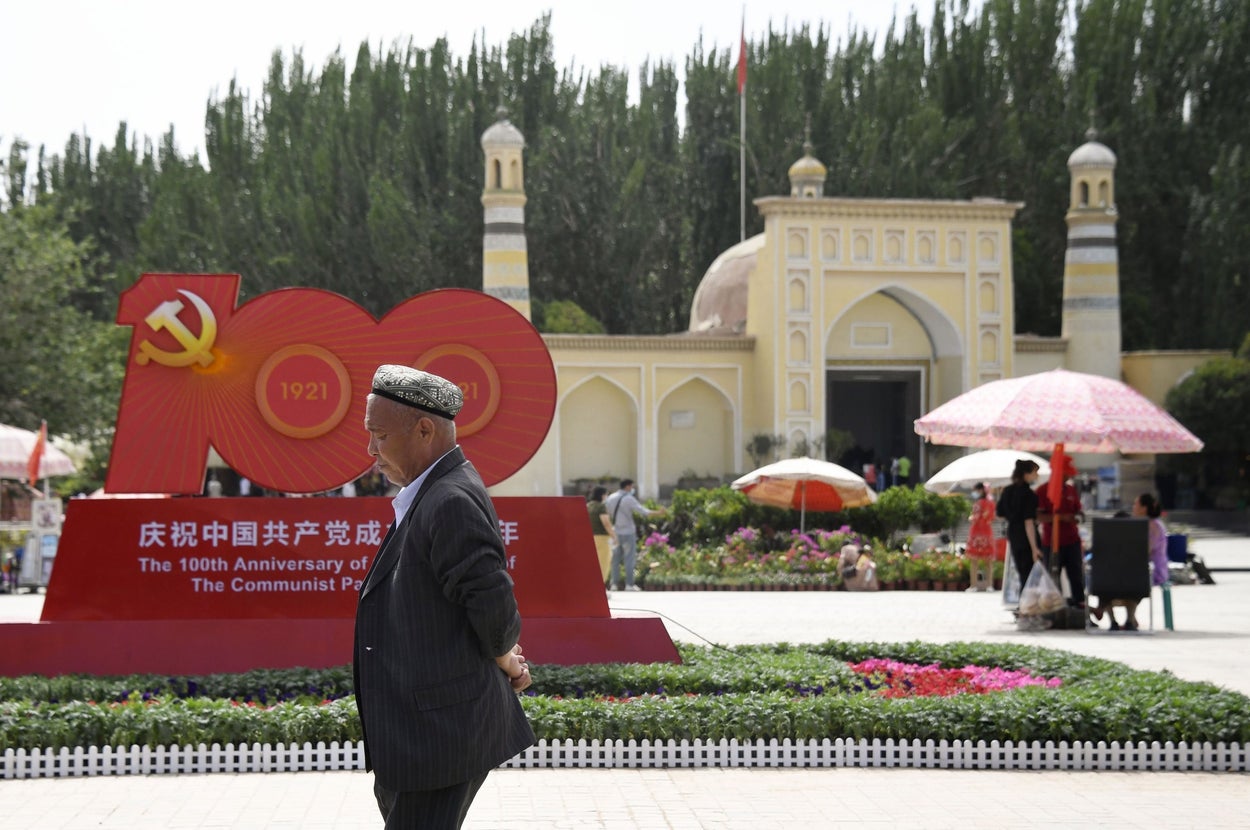
    The facade holds up less well with Kashgar’s mosques. Many of the smaller neighborhood mosques appear to be out of use, their wooden doors damaged and padlocked shut — and others have been demolished completely or converted to other uses, including cafés and public toilets.

    Inside the Id Kah mosque, many of the cameras, including inside the prayer halls, have disappeared. But as might be expected given the past five years, many of the worshippers have disappeared too, down from 4,000–5,000 at Friday prayers in 2011 to just 800 or so today.

    The mosque’s imam, Mamat Juma, acknowledged as much in an interview with a vlogger who often produces videos that support Chinese government narratives, posted in April 2021. Speaking through a translator, he is at pains to point out that not all Uyghurs are Muslims and to diminish the role of the religion in Uyghur culture. “I really worry that the number of believers will decrease,” he said, “but that shouldn’t be a reason to force them to pray here.” ●

    Additional reporting by Irene Benedicto


    Source link

    Share. Facebook Twitter Pinterest LinkedIn Tumblr Email Telegram Copy Link

    Related Posts

    International

    Trump Announces Cease-Fire Between Israel and Lebanon

    April 24, 2026
    International

    Top Condom Producer to Increase Prices Due to War in Iran

    April 23, 2026
    International

    Ice Sculpture Promoting Drake Album Melted by Fire Crews

    April 22, 2026
    International

    Quiz: Can You Tell Real British Insults From Fakes?

    April 22, 2026
    International

    How China Is Building Its Next Outpost at Sea

    April 22, 2026
    International

    Keir Starmer Addresses Parliament on Mandelson Vetting Process

    April 20, 2026
    Editors Picks

    Disney and OpenAI have made a surprise deal – what happens next?

    December 11, 2025

    Who owns the Arctic? | Climate

    January 16, 2026

    Gaza ministry says Israeli strike on police vehicle kills nine

    March 15, 2026

    Yankees star Aaron Judge’s offensive struggles reach notable low

    April 12, 2026

    NASA Announces Return Date for ISS Astronauts After Medical Evacuation Announcement

    January 11, 2026
    About Us
    About Us

    Welcome to Benjamin Franklin Institute, your premier destination for insightful, engaging, and diverse Political News and Opinions.

    The Benjamin Franklin Institute supports free speech, the U.S. Constitution and political candidates and organizations that promote and protect both of these important features of the American Experiment.

    We are passionate about delivering high-quality, accurate, and engaging content that resonates with our readers. Sign up for our text alerts and email newsletter to stay informed.

    Latest Posts

    Beijing’s new supply chain rules deepen concerns for US firms in China

    April 24, 2026

    India denounces ‘hellhole’ remark shared by Trump | Donald Trump News

    April 24, 2026

    New photos of Mike Vrabel and Dianna Russini emerge

    April 24, 2026

    Subscribe for Updates

    Stay informed by signing up for our free news alerts.

    Paid for by the Benjamin Franklin Institute. Not authorized by any candidate or candidate’s committee.
    • Privacy Policy
    • About us
    • Contact us

    Type above and press Enter to search. Press Esc to cancel.