

Close Menu
    Trending
    • Amsterdam Bans Meat Ads As The War On Food Expands
    • Katie Holmes And Joshua Jackson Spark ‘Soul-Level’ Love Chatter
    • Singapore Airlines, Southwest Airlines partner to expand access to nearly 120 US destinations
    • Trump warns Netanyahu: ‘You’ll be on your own’ if attacks on Iran continue | US-Israel war on Iran News
    • Cristiano Ronaldo, ‘The Bosnian Diamond’ headline the World Cup 40-and-over club
    • How housing market inventory is shifting across every state
    • What is a ‘normal’ memory slowdown, and when should I worry?
    • Ariana Grande And Ethan Slater Are ‘Still Friends’ Following Split
    Benjamin Franklin Institute
    Tuesday, June 9
    • Home
    • Politics
    • Business
    • Science
    • Technology
    • Arts & Entertainment
    • International
    Benjamin Franklin Institute
    Home»Technology»US Judge sides with AI firm Anthropic over copyright issue
    Technology

    US Judge sides with AI firm Anthropic over copyright issue

    Team_Benjamin Franklin InstituteBy Team_Benjamin Franklin InstituteJune 25, 2025No Comments3 Mins Read
    Share Facebook Twitter Pinterest Copy Link LinkedIn Tumblr Email VKontakte Telegram
    Share
    Facebook Twitter Pinterest Email Copy Link


    Natalie Sherman and Lucy Hooker

    BBC News

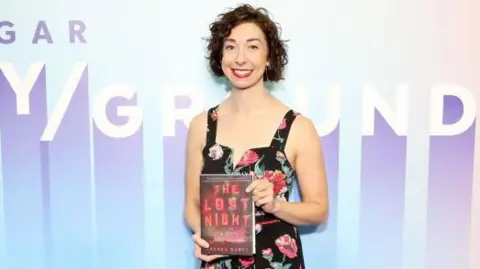
    Getty Images Author Andrea Bartz at an event holding a hardback copy of her novel The Lost Night. She is wearing a black sleeveless dress with a rose pattern  Getty Images

    Andrea Bartz is one of a number of writers who have taken legal action over AI

    A US judge has ruled that using books to train artificial intelligence (AI) software is not a violation of US copyright law.

    The decision came out of a lawsuit brought last year against AI firm Anthropic by three authors, including best-selling mystery thriller writer Andrea Bartz, who accused it of stealing her work to train its Claude AI model and build a multi-billion dollar business.

    In his ruling, Judge William Alsup said Anthropic’s use of the authors’ books was “exceedingly transformative” and therefore allowed under US law.

    But he rejected Anthropic’s request to dismiss the case, ruling the firm would have to stand trial over its use of pirated copies to build its library of material.

    Bringing the lawsuit alongside Ms Bartz, whose novels include We Were Never Here and The Last Ferry Out, were non-fiction writers Charles Graeber, author of The Good Nurse: A True Story of Medicine, Madness and Murder and Kirk Wallace Johnson who wrote The Feather Thief.

    Anthropic, a firm backed by Amazon and Google’s parent company, Alphabet, could face up to $150,000 in damages per copyrighted work.

    The firm holds more than seven million pirated books in a “central library” according to the judge.

    The ruling is among the first to weigh in on a question that is the subject of numerous legal battles across the industry – how Large Language Models (LLMs) can legitimately learn from existing material.

    “Like any reader aspiring to be a writer, Anthropic’s LLMs trained upon works, not to race ahead and replicate or supplant them — but to turn a hard corner and create something different,” Judge Alsup wrote.

    “If this training process reasonably required making copies within the LLM or otherwise, those copies were engaged in a transformative use,” he said.

    He noted that the authors did not claim that the training led to “infringing knockoffs” with replicas of their works being generated for users of the Claude tool.

    If they had, he wrote, “this would be a different case”.

    Similar legal battles have emerged over the AI industry’s use of other media and content, from journalistic articles to music and video.

    This month, Disney and Universal filed a lawsuit against AI image generator Midjourney, accusing it of piracy.

    The BBC is also considering legal action over the unauthorised use of its content.

    In response to the legal battles, some AI companies have responded by striking deals with creators of the original materials, or their publishers, to license material for use.

    Judge Alsup allowed Anthropic’s “fair use” defence, paving the way for future legal judgements.

    However, he said Anthropic had violated the authors’ rights by saving pirated copies of their books as part of a “central library of all the books in the world”.

    In a statement Anthropic said it was pleased by the judge’s recognition that its use of the works was transformative, but disagreed with the decision to hold a trial about how some of the books were obtained and used.

    The company said it remained confident in its case, and was evaluating its options.

    A lawyer for the authors declined to comment.


    Source link

    Share. Facebook Twitter Pinterest LinkedIn Tumblr Email Telegram Copy Link

    Related Posts

    Technology

    IEEE Celebrates Technology’s Brightest at Annual Event

    June 8, 2026
    Technology

    50 Years of The Institute

    June 5, 2026
    Technology

    What It Takes for Future-Ready Power Distribution

    June 4, 2026
    Technology

    7 Ways New Engineers Can Flourish in the Age of AI

    June 3, 2026
    Technology

    Tech Life – Microsoft’s big quantum bet

    June 2, 2026
    Technology

    Direct-to-Cell Technology: Enabling Satellite Connectivity for Legacy Devices

    June 2, 2026
    Editors Picks

    US, Ukraine say they have an ‘updated and refined’ peace framework, but questions remain

    November 24, 2025

    Moltbook: The social network for AI looks disturbing, but it’s not what you think

    February 5, 2026

    New Scientist changed the UK’s freedom of information laws in 2025

    December 22, 2025

    Adidas just dropped its best World Cup ad in 20 years

    May 11, 2026

    New JWST images reveal cosmic question marks and buckyballs in a planetary nebula

    April 26, 2026
    About Us
    About Us

    Welcome to Benjamin Franklin Institute, your premier destination for insightful, engaging, and diverse Political News and Opinions.

    The Benjamin Franklin Institute supports free speech, the U.S. Constitution and political candidates and organizations that promote and protect both of these important features of the American Experiment.

    We are passionate about delivering high-quality, accurate, and engaging content that resonates with our readers. Sign up for our text alerts and email newsletter to stay informed.

    Latest Posts

    Amsterdam Bans Meat Ads As The War On Food Expands

    June 9, 2026

    Katie Holmes And Joshua Jackson Spark ‘Soul-Level’ Love Chatter

    June 9, 2026

    Singapore Airlines, Southwest Airlines partner to expand access to nearly 120 US destinations

    June 9, 2026

    Subscribe for Updates

    Stay informed by signing up for our free news alerts.

    Paid for by the Benjamin Franklin Institute. Not authorized by any candidate or candidate’s committee.
    • Privacy Policy
    • About us
    • Contact us

    Type above and press Enter to search. Press Esc to cancel.