
Close Menu
    Trending
    • Career Politicians Do NOT Represent The People
    • Selena Gomez’s Mother Sparks ‘Issues’ With Daughter
    • Singapore pledges US$2 million to support Ebola response in DR Congo and Uganda
    • Bangkok bar fire death toll rises to 30 as police probe possible negligence | News
    • NASCAR Quaker State 400 takeaways: Blaney dominates overtime thriller
    • How to Scale Without Compromising Your Company’s Core Values
    • Scientists overwhelmingly against rule change that would give political appointees say over science grants
    • Turkish FM Believes Israel A Global Security Threat
    Benjamin Franklin Institute
    Tuesday, July 14
    • Home
    • Politics
    • Business
    • Science
    • Technology
    • Arts & Entertainment
    • International
    Benjamin Franklin Institute
    Home»Science»The best sci-fi novel in 2026 so far – plus 6 other great reads
    Science

    The best sci-fi novel in 2026 so far – plus 6 other great reads

    Team_Benjamin Franklin InstituteBy Team_Benjamin Franklin InstituteJuly 1, 2026No Comments4 Mins Read
    Share Facebook Twitter Pinterest Copy Link LinkedIn Tumblr Email VKontakte Telegram
    Share
    Facebook Twitter Pinterest Email Copy Link


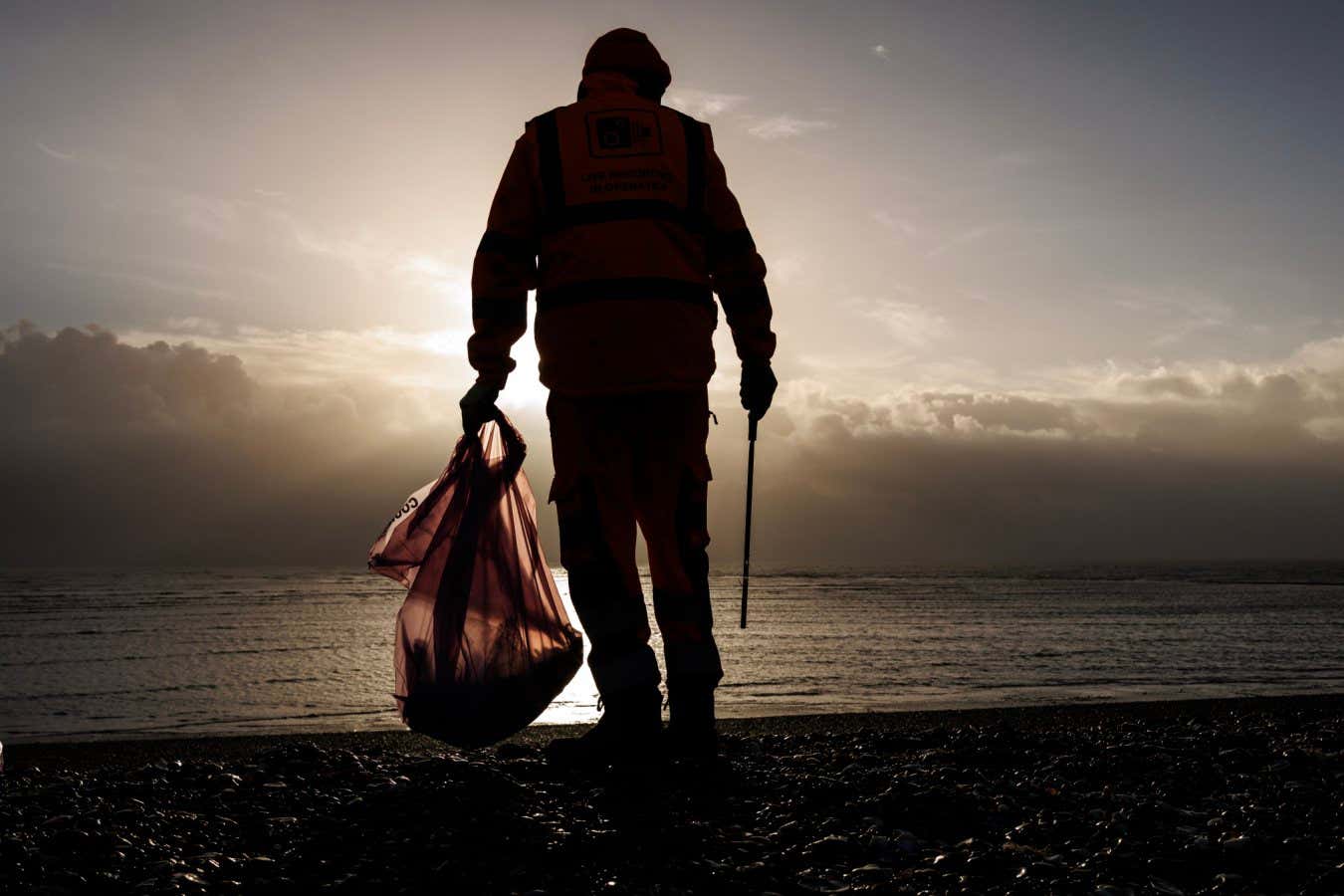
    Weird and dangerous flotsam washes up in The End of Everything

    Dan Kitwood/Getty Images

    The best science-fiction book of the year so far has only just been published. The End of Everything, by M. John Harrison, is about half the length of a regular novel, but it’s so powerful and complete that there is nothing slight about it. I consumed it in one greedy gulp before getting up one morning.

    New Scientist. Science news and long reads from expert journalists, covering developments in science, technology, health and the environment on the website and the magazine.

    Our main characters, Phillip and his grandmother Marnie, live along the south coast of England in the wake of an alien invasion. Since the iGhetti began to appear, the European mainland seems to have disappeared, and it has become very hard indeed to work out what is real and what isn’t. Strange, dangerous artefacts wash up out of the sea. Something called “a bad patch” periodically settles over people, causing them to see things or behave out of character. Maybe. Nothing is clear.

    Phillip hunts for alien artefacts, hoping to sell them, and Marnie is an artist. That sounds simple, but right from the start, our heroes don’t behave as we would expect.

    There are echoes of Roadside Picnic, the 1972 work by the brothers Arkady and Boris Strugatsky, in which aliens visit Earth but with no interest in humans, leaving dangerous detritus behind them. There are also reminders of John Wyndham’s 1957 novel The Midwich Cuckoos, in which the alien invasion begins with pregnancies rather than spaceships. But then again, this is wholly original. It’s a work of genius.

    Two other books out this June are worth a mention in this roundup of the year so far. First, The Traveler, by Joseph Eckert.

    New Scientist. Science news and long reads from expert journalists, covering developments in science, technology, health and the environment on the website and the magazine.

    Every day at 7.52am, our hero, Scott Treder, leaps forward in time. The first time, he jumps forward a day. The next time, two days; it’s going to keep doubling.

    Early on, Scott’s son, Lyle, does the maths. “Dad?” says Lyle. “Did you know that if it keeps doubling, the fifteenth time it happens you’ll go almost forty-five years into the future?”

    Lyle becomes a theoretical physicist and spends his life trying to help his father. His devotion is moving, but after only a few forward jumps, Lyle is dust in our rearview mirror. (Sort of. I won’t say more.)

    As we travel into the far future, the book jumps out of thriller territory and into science fiction proper. This isn’t high art, like The End of Everything, but I was dragged forward by the question at the core of the book: what future being is doing this to Scott, and why?

    New Scientist. Science news and long reads from expert journalists, covering developments in science, technology, health and the environment on the website and the magazine.

    Green City Wars by Adrian Tchaikovsky is also out this month. Now, Tchaikovsky has already written one of the best books of the year so far, that being the fourth instalment in his Children of Time series. Children of Strife, set in a far future where efforts to terraform a distant planet have gone disturbingly wrong, is a brilliant achievement.

    New Scientist. Science news and long reads from expert journalists, covering developments in science, technology, health and the environment on the website and the magazine.

    By rights, Tchaikovsky’s second book of the year should be second-rate. (I speak as a jealous writer.) However, while Green City Wars is what is these days termed as “cosy”, and may not be to everyone’s taste, the quality shines through. Our hero is an IQ-augmented racoon. He’s also a private investigator who is looking for a missing mouse in a city of the future. So far, so Zootopia, the movie.

    Here though, unlike in Zootopia, the augmented animals exist only to clean up after the humans who live above them.

    The green city is built on the suffering of the animals who scrabble to serve so that they can go on receiving the elixir that keeps their brains working at a higher level. So, it’s sort of political, but the vibe is comic and joyful. If you like your books extremely whimsical, this may be for you.

    New Scientist. Science news and long reads from expert journalists, covering developments in science, technology, health and the environment on the website and the magazine.

    Casting further back into the year, a standout for me remains Radiant Star by Ann Leckie. It’s not my favourite in her Imperial Radch universe, but a fantastic addition, nonetheless.

    New Scientist. Science news and long reads from expert journalists, covering developments in science, technology, health and the environment on the website and the magazine.

    Luminous, by Silvia Park, is uneven, but full of heart and big ideas about the future of AI, and well worth a read. And Vigil, by George Saunders, has also stayed with me. Its ghostly protagonist Jill Blaine is a delight, even if the man she is trying to help to his death, an oil tycoon, is irredeemable.

    Emily H. Wilson is the author of the Sumerians series. A former editor of New Scientist, she is working on her first sci-fi novel.

    When you make a purchase via the links on this page, we receive a commission.

    Topics:


    Source link

    Share. Facebook Twitter Pinterest LinkedIn Tumblr Email Telegram Copy Link

    Related Posts

    Science

    Scientists overwhelmingly against rule change that would give political appointees say over science grants

    July 14, 2026
    Science

    Why have their been so many record-breaking heat waves this summer?

    July 14, 2026
    Science

    We finally know the name of a Maya mathematician

    July 13, 2026
    Science

    Scientists spot sugar in interstellar space for the first time ever

    July 13, 2026
    Science

    Mathematicians still don’t know the fastest way to multiply numbers

    July 13, 2026
    Science

    RFK, Jr. is turning his attention to the U.S. Preventive Services Taskforce

    July 13, 2026
    Editors Picks

    You Can’t Scale a People-Based Business by Burning Through People. Here’s a Better Strategy

    July 8, 2026

    Opinion | Advice on Living From a Dying Man

    April 10, 2026

    Why the world’s militaries are scrambling to create their own Starlink

    March 12, 2026

    Russia & Impossibility Of Peace

    January 9, 2026

    Ivory Coast fight back against Gabon to top AFCON group ahead of Cameroon | Football News

    December 31, 2025
    About Us
    About Us

    Welcome to Benjamin Franklin Institute, your premier destination for insightful, engaging, and diverse Political News and Opinions.

    The Benjamin Franklin Institute supports free speech, the U.S. Constitution and political candidates and organizations that promote and protect both of these important features of the American Experiment.

    We are passionate about delivering high-quality, accurate, and engaging content that resonates with our readers. Sign up for our text alerts and email newsletter to stay informed.

    Latest Posts

    Career Politicians Do NOT Represent The People

    July 14, 2026

    Selena Gomez’s Mother Sparks ‘Issues’ With Daughter

    July 14, 2026

    Singapore pledges US$2 million to support Ebola response in DR Congo and Uganda

    July 14, 2026

    Subscribe for Updates

    Stay informed by signing up for our free news alerts.

    Paid for by the Benjamin Franklin Institute. Not authorized by any candidate or candidate’s committee.
    • Privacy Policy
    • About us
    • Contact us

    Type above and press Enter to search. Press Esc to cancel.