

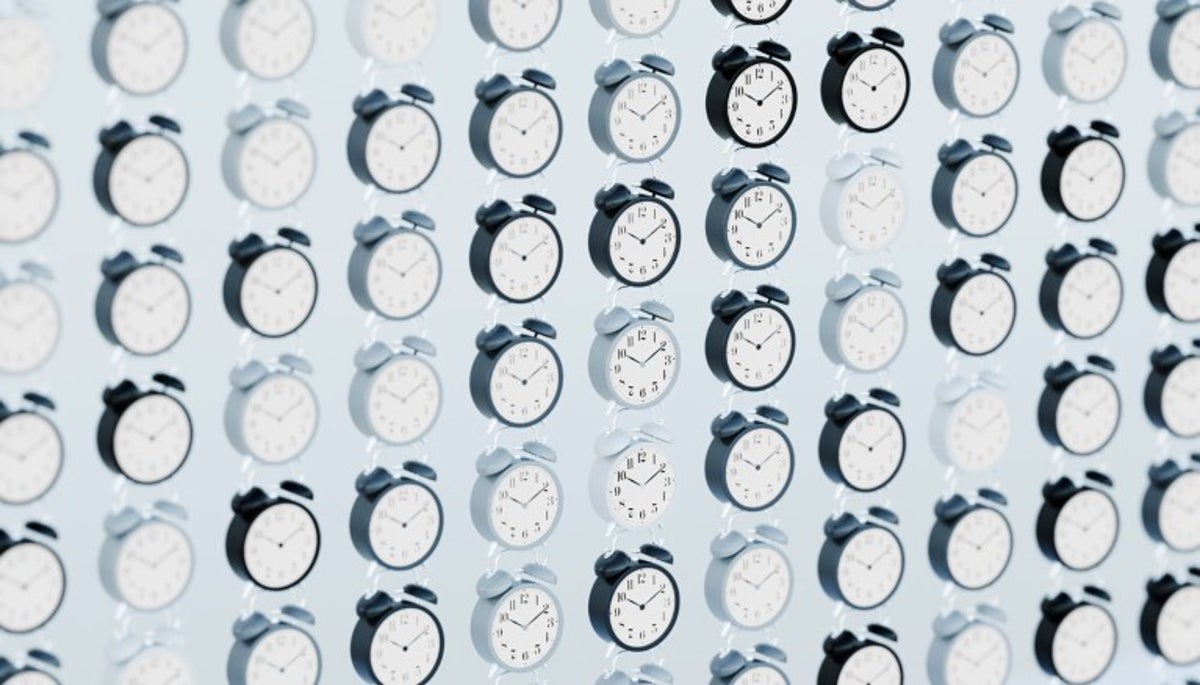
Two teams of physicists have made the world’s first nuclear clocks. These radical new devices keep time using fluctuations in the energy states of an atom’s nucleus, rather than those of its electrons, which atomic clocks currently use to define the length of a second.
Working out how to extract the ‘tick’ from a nucleus and use it to keep time has taken more than 20 years. Nuclear clocks should be more robust and portable than the best available clocks today because nuclei are hard to perturb and are protected in a crystal. As well as potentially one day being more precise, they also give physicists an unprecedented way to probe the forces at play inside a nucleus.
Two nuclear clocks have been presented in two studies, which were posted on the preprint server arXiv on 3 and 7 June, by teams in Europe1 and China2. They show that nuclear clocks have gone from a system with “potential” to “a functioning precision instrument” that can be used to search for new physics, says Gilad Perez, a theoretical physicist at the Weizmann Institute of Science in Rehovot, Israel.
On supporting science journalism
If you’re enjoying this article, consider supporting our award-winning journalism by subscribing. By purchasing a subscription you are helping to ensure the future of impactful stories about the discoveries and ideas shaping our world today.
Creating a nuclear clock is “a dream come true”, says Thorsten Schumm, an atomic physicist at the Vienna University of Technology and a lead member of the European team. Until recently the field had been “a calm niche” to work in, he says. “Now we have a fierce but friendly global competition.”
Tick tock
All clocks require a stable oscillation — like that of a swinging pendulum — to keep time. In the best atomic clocks, this swing is the oscillation of the visible wavelength of light that is absorbed as electrons jump up between energy levels. Physicists determine the specific frequency of laser light required to trigger this shift in electron state, then use that frequency to keep time.
A nuclear clock is different. Rather than causing electrons to jump between energy levels, it keeps time by boosting the protons and neutrons inside the nucleus of thorium-229 atoms to a higher energy state. Most elements require an enormous amount of energy to reorganize their nuclei, but thorium is unusual because it has stable energy levels that are so close together that just the nudge of ultraviolet laser light can prompt the shift.
Physicists had suspected thorium’s special properties for decades, but it wasn’t until 2024 that they finally succeeded in triggering the nuclear transition in a millimetre-sized crystal of calcium fluoride loaded with trillions of thorium-229 atoms. Later that year, another team pinpointed the precise frequency at which it happens.
The only thing that was missing for a nuclear clock to work was a way to lock the frequency of the laser with the natural timekeeper and keep the clock’s tick speed from drifting over time. Both teams achieved this by monitoring how much the laser light was absorbed by the thorium-229 atoms. When the laser is in the right range, the signal’s strength dips as photons get absorbed, says Schumm. But if the frequency drifts, “you see the signal coming up again and can immediately correct for that”, he says.
The groups differed in their exact methods: the group in China, led by Shiqian Ding, a physicist at Tsinghua University in Beijing, used a laser much more powerful than the European one, but a crystal with a lower concentration of thorium-229 atoms, so overall the signals produced by the two clocks were comparable.
Both teams’ clocks ticked reliably, drifting over the course of a day by only the equivalent of around one second in three million years (although, for now, that is still below the stability of the best optical atomic clocks, which gain or lose a second every 40 billion years).
New window
Plans to develop the clocks further are now accelerating. Compared with atomic clocks, crystal-based nuclear clocks are less sensitive to environmental perturbations and can function without extreme cooling. This “opens a possible route to compact and robust optical clocks”, says Ding, for use in navigation and communication devices. Nuclear clocks using crystals are already being developed commercially, says Schumm.
Other researchers are working on making nuclear clocks that could be more precise than the best atomic clocks. Because the light that triggers the nuclear transition is of a higher frequency than that used for an atomic clock, in theory, nuclear clocks should be able to slice time more finely. But this will require thorium-229 to be isolated, rather than embedded in a crystal. This is an “important route that remains to be explored”, says Ekkehard Peik, a physicist at the PTB, Germany’s national metrology institute in Braunschweig, who co-led the European team.
Even now, nuclear clocks are providing a fresh way to probe fundamental physics. Theorists predict that some forms of dark matter would change the strength of fundamental forces that bind the nucleus of an atom, causing a measurable change in transition frequency. Having an operating clock creates a continuously functioning sensor that allows for cleaner and faster studies than were possible before, adds Perez. “This is amazing,” he says. “I think we are witnessing the birth of a new field.”
Schumm says he gets several e-mails a week from theoretical physicists who want to use the clocks to probe their own exotic theory that creates specific observable effects. “Ultimately, we will have to use many different kinds of clocks, that correspond to the different effects.”
This article is reproduced with permission and was first published on June 22, 2026.
It’s Time to Stand Up for Science
If you enjoyed this article, I’d like to ask for your support. Scientific American has served as an advocate for science and industry for 180 years, and right now may be the most critical moment in that two-century history.
I’ve been a Scientific American subscriber since I was 12 years old, and it helped shape the way I look at the world. SciAm always educates and delights me, and inspires a sense of awe for our vast, beautiful universe. I hope it does that for you, too.
If you subscribe to Scientific American, you help ensure that our coverage is centered on meaningful research and discovery; that we have the resources to report on the decisions that threaten labs across the U.S.; and that we support both budding and working scientists at a time when the value of science itself too often goes unrecognized.
In return, you get essential news, captivating podcasts, brilliant infographics, can’t-miss newsletters, must-watch videos, challenging games, and the science world’s best writing and reporting. You can even gift someone a subscription.
There has never been a more important time for us to stand up and show why science matters. I hope you’ll support us in that mission.