

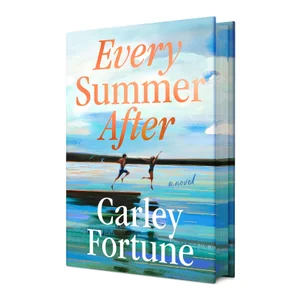
When Carley Fortune started writing her debut novel Every Summer After, she had one goal: to create something for herself. Frustrated by corporate pressures, the then-executive editor of Refinery29 Canada returned to the lake where she grew up.
Everything that followed—five best-selling books published in five years, two projects in development at Netflix, a television adaptation charting in the top 10 on Amazon Prime Video, and the mania surrounding her romances set in idyllic nooks of Canada—she never anticipated.
Every Summer After, a coming-of-age romance set in Barry’s Bay—the corner of Ontario where Fortune spent her adolescence—was published in 2022 and has sold over a million copies. The television adaptation of Fortune’s debut, dubbed Every Year After, premiered on Prime Video two weeks ago.
Fast Company spoke to Fortune about the series, other upcoming projects, how her journalism background influenced her as an author, and the current renaissance of romance book-to-screen adaptations.
This interview was edited for length and clarity.
Your books have become synonymous with summer. What is it about that time of year that keeps pulling you back?
I’ve been thinking a lot about this lately. I think what it comes down to is how fleeting summer is—especially in Canada where I live. Because it’s so short, there’s this sense of mourning summer even when it begins. It has this magical quality to it. It feels like there’s so much anticipation and hope and nostalgia around summer. I love that. It feels very Canadian in that way.
And then what I love about writing summer books is that I’m writing in the fall and winter. So when I write about summer, I feel like I’m experiencing summer throughout those months. I’m not a winter person; I am a summer person through and through.
If someone who had never read your work asked what a Carley Fortune novel feels like, what would you tell them?
They are very transportive. You are whisked away to a beautiful location within Canada, whether that’s on a lake or on the coast. That immersive experience is the number one thing. And then you have these sweeping love stories that take place in these gorgeous locations—it’s very emotional. Hopefully it’s a book that you can feel and smell and see, but also one that gives you a physical reaction. I really try to make you laugh and cry and make your chest squeeze. I think those two things—those big emotions and those beautiful places—are what a Carley Fortune novel is about.
Are you more like any of your protagonists than you’d like to admit? Which character do you resonate with the most?
Every Summer After is my debut novel and I set it in Barry’s Bay, which is where I grew up on the lake. I’m very much like the character of Sam in that novel. I grew up on the lake, my family ran a restaurant in Barry’s Bay, I was really determined to do well in school, get a scholarship, and leave for university. I feel like the way he grew up is very much my story. But I gave all of my anxieties as a young woman to Percy in that book. I kind of split myself apart to write those two characters.
Were there moments from the book that you specifically advocated to keep in Every Year After?
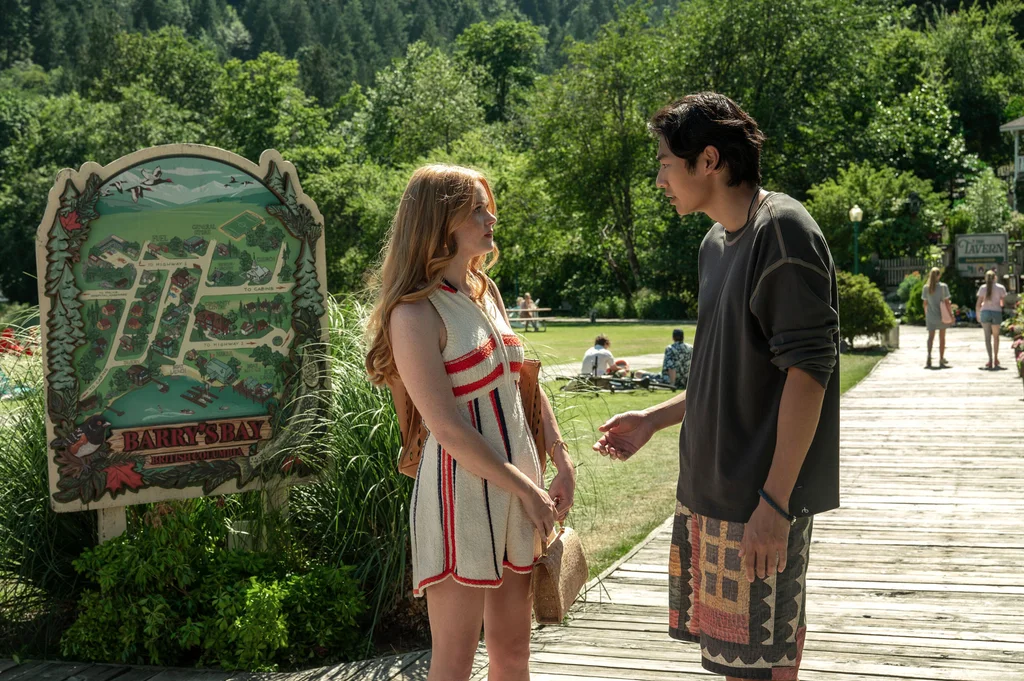
Not really, but only because our showrunner Amy Harris really knew what the moments readers wanted to see. I think with another showrunner it may have been a different conversation, but she felt a lot of pressure to get certain things right. The big one for both of us, even without having discussed it, was the “you came home” scene, when Percy and Sam see each other for the first time as adults. It’s such an emotional moment in the book and it needed to land right in the show. And it’s done so well. Somebody online took that scene from the book and matched it up to how it plays out on the show, and it is beat for beat. So, so perfect.
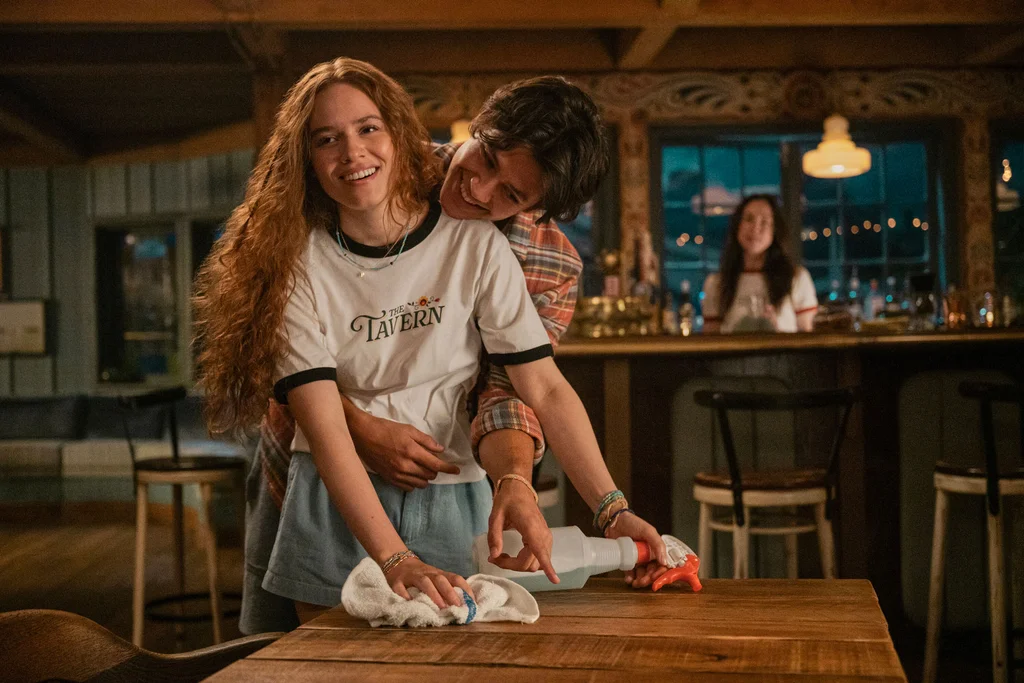
There’s so much pressure when adaptations happen. You were an executive producer on Every Year After. How did you manage all of those different expectations?
I think what I was most focused on was making sure the adaptation preserved the spirit and tone of the book—so it felt like the book—while also growing it, because this is a show we’re really hoping has multiple seasons. We wanted Percy and Sam’s story at the heart of it, but also to build out the world. I wanted to make sure that even with the changes, it still felt like the world of Every Summer After.
With casting, it just so happened that the people we loved looked like the characters, but that wasn’t the priority. You’re really trying to find an embodiment of the characters—the feeling that the actors give you. Fans want to see what they read in the book, and it just so happened to work out that way. But that’s not my number one thing. It was more: does this character feel like Percy? Do they feel like Sam? Is there chemistry? We were just really lucky to have a cast that delivered on what readers were picturing.
The ensemble nature of it felt so much like an expansion of your original novel.
Yes! I like to think of it as Every Summer After and more. Delilah and Chantal in particular—because Jordie is really just mentioned in the books, he doesn’t take up much time at all—but Chantal and Delilah as Percy’s friends have new roles in the series. It was really important to Amy that Percy have sounding boards, and that Sam have one in Jordie, so that you can understand what’s happening because the book is told from Percy’s point of view and so much of it is interior. You need to bring that out. Bringing Chantal and Delilah to the lake really helped with that.
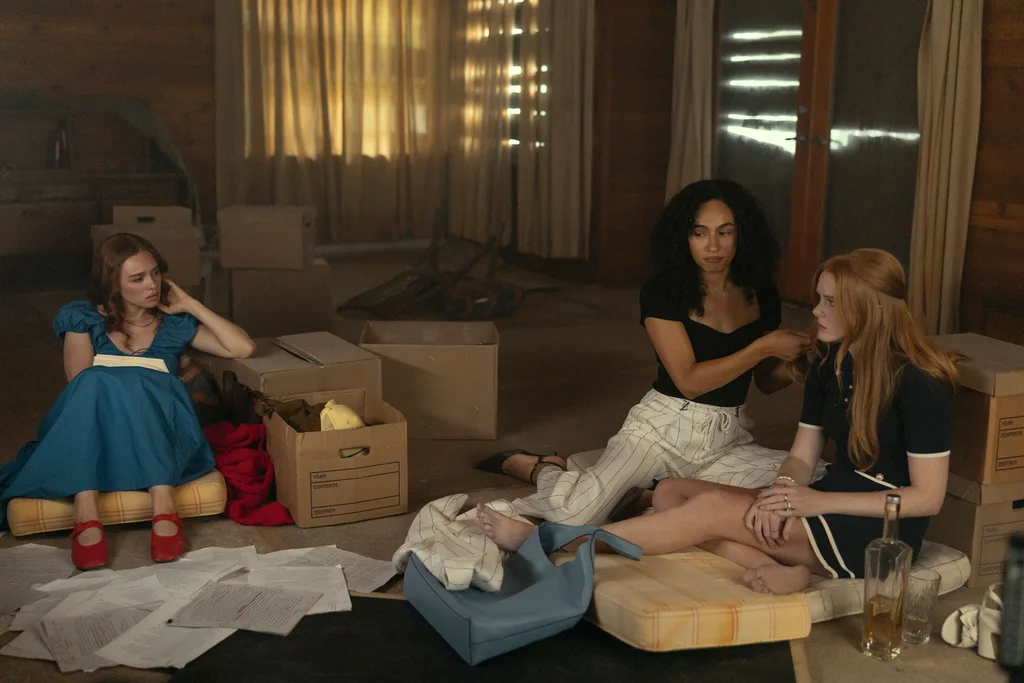
But then they also have their own storylines. Some of my favorite parts are the three women together and how the friendships are shifting—I’m always exploring female relationships in my books. And what was so great with Amy, and just such good luck really, is that we’re very similar storytellers. We lean into empathy, into characters who have a lot of heart but are flawed and are on a journey. We’re both very into coming-of-age stories and the idea that you’re always coming of age. When I watch the stuff that’s not in the books, I’m such a fan of it—it feels so true to the spirit of what I write about.
Speaking of your showrunner Amy Harris, I know you and her have talked about seeing this as a multi-season show. Where do you want to see Every Year After go next?
I’m so excited by the way the series ended. The finale really sets us up for One Golden Summer, and Alice, who is Charlie’s love interest from that book. I’m very hopeful we’ll get a second season so we can begin to weave that story into everything else that’s happening in Barry’s Bay.
I also want to see what’s happening with Chantal, Delilah, and Jordie. Amy put it really beautifully. With Percy and Sam in season one, it’s a “will they, won’t they?” In season two it would be a “how will they?” which I think is so smart.
Streamers have really leaned into romance IP and young adult novels. What does it feel like to be an author in this particular moment where there’s so much investment in this genre?
It’s really exciting. I published Every Summer After in 2022, and at that time Hollywood wasn’t very interested in romantic stories. To see that shift so quickly… is quite incredible. I’m very fortunate to have projects that have been greenlit.
What’s really satisfying to me is that publishing has long known the power of these audiences—audiences of young women and women primarily. For so long there wasn’t this recognition of how powerful that fandom is. When we thought about fandoms, we thought about comic books and superheroes. What [Prime Video] has so smartly identified is that readers show up. Women and girls are fans and they’re powerful.
I used to be a journalist for 15 years, and I worked in women’s media for the last seven. It was always a bit of a shock—how an outside audience perceives content largely made by women, largely consumed by women. I’ve grown quite used to it, but now I love that we’re in this moment where people are saying, yes, women do show up. Women are fans. And it’s amazing.
You have other adaptations in the works. Do you see TV and film as the next chapter of your business as an author? And are there any projects in development you can talk about?
Yes. My third novel, This Summer Will Be Different, which is set in Toronto and Prince Edward Island, is shooting as a ten-episode series for Netflix this summer, which is extremely exciting. We’re casting right now. It’s a dream of mine to shoot on the Island, because I fell in love with Prince Edward Island when I visited and through Anne of Green Gables and its adaptations.
Meet Me at the Lake is in development with Netflix as a film. One Golden Summer, Amazon has the rights to that, and the idea is to weave that into Every Year After, should we get a second season, fingers crossed. And then we’re working on Our Perfect Storm, which I feel very strongly should be a film, not a series.
Adaptations are definitely a big part of my business now. This has been a very wild few months. I’ve been on book tour then traveling for promotion of the show. I need to take some time this summer to think about where I’ve come. I’ve published five books in five years, and now we have these adaptations going. I want to think about what the next phase looks like. Having come up in media, journalism, and audience building, I’m very ambitious about what I want to do. We have a merchandising line of business, but I think there’s more I’d like to do as well.
You were at Refinery29 Canada for a while. How did your time there shape how you approach storytelling?
That was my last job in journalism. I launched the Canadian edition of Refinery29. I was the executive editor, hired the editorial team, oversaw our audience strategy. I think I built a team that was the most phenomenal group of individuals. I did my best work as a journalist and editor there.
I was also really, really unhappy. It was so stressful on the business and corporate side of things. Refinery29 was an American-based company and they felt very mixed about whether they should keep the Canadian edition going. I was constantly fighting for it. That’s when I decided to write my first novel. I was so frustrated at work and I wanted to do something creative for myself.
But it taught me so much. Working as a Canadian with Americans—we are very different in how we work, and learning to push harder was something I really learned at Refinery29. My boss, Christine Barberich, was the first person who told me I should be writing. The degree to which she pushed you to be ambitious was so inspiring.
Also, having spent all that time as an editor, I knew when I sat down to write that the challenge would be just getting a draft done. Writers really struggle to let go, write the draft, and trust the editorial process. I just gave myself a word count goal every day, hit it, didn’t allow myself to be a perfectionist or go back and polish, I just got to the end of it.
And throughout my career, it’s always been about the importance of audience. The conversations you’re having and when you’re having them and how to connect. I don’t think I would continue writing if I weren’t writing for an audience. The first book was for me, but now I really do care about reaching people. That’s something I bring with me from journalism for sure.
Where should someone vacation in Canada if they want that “everything is better at the lake” feeling from your books?
You can come to the real Barry’s Bay in Ontario—though it’s a drive from any airport. It’s two hours from Ottawa, four hours from Toronto. But there are so many lakes. You can go to the tavern the book is based on, do all the fun Barry’s Bay things. You could also go to Muskoka, which is a region north of Toronto, also full of lakes but much fancier. That’s where Cindy Crawford, Goldie Hawn, and Steven Spielberg have their cottages. There are some pretty posh lakes, but lots of options.