

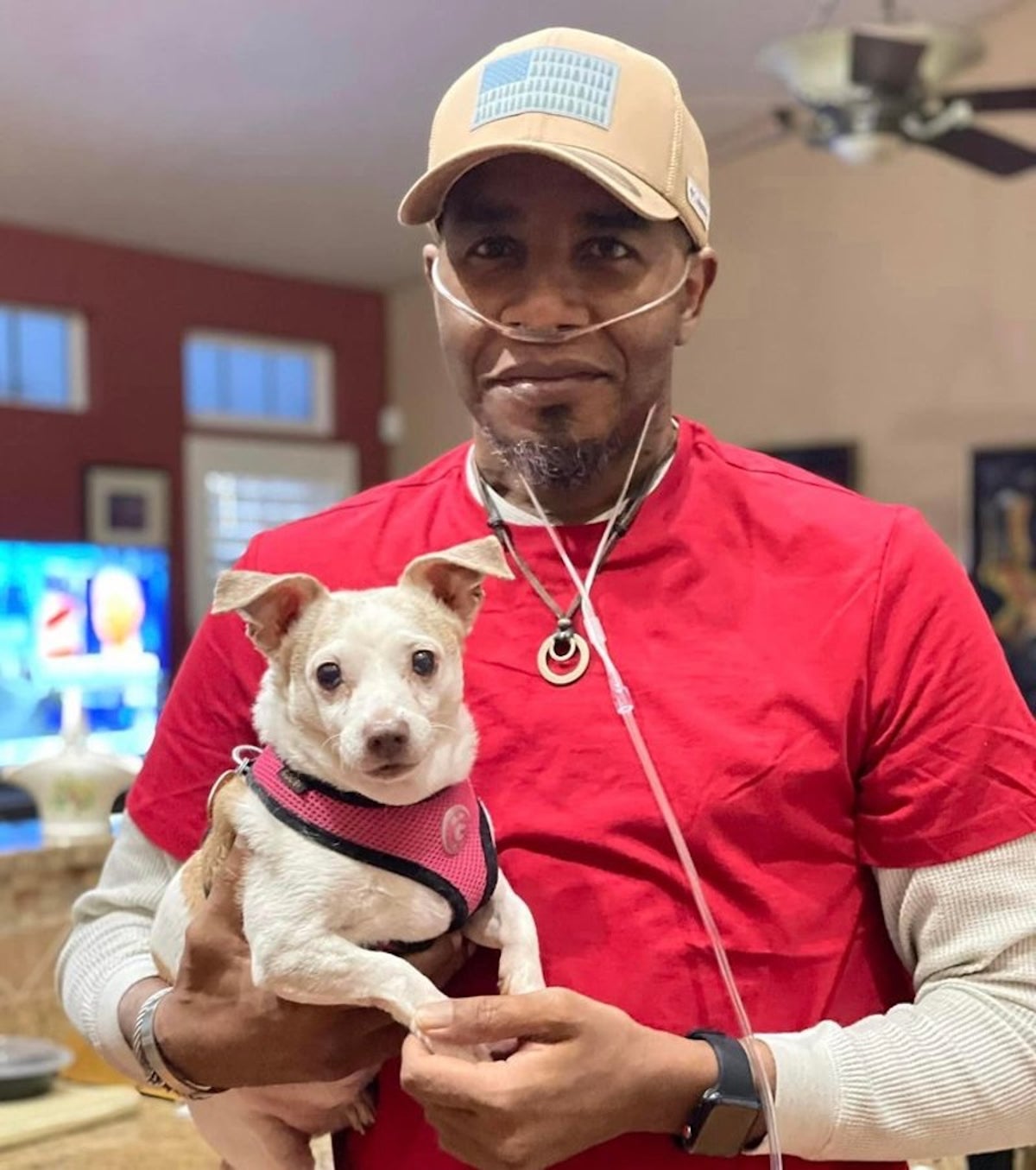
For the first time, a person living with human immunodeficiency virus (HIV) has received a lung transplant from a donor who was also HIV-positive. The feat could open the door to more transplants for people living with HIV who have end-stage organ disease.
On March 21 Bertrand Nelson, a 56-year-old man in New Jersey who has lived with HIV for more than 20 years, received a double lung and liver transplant from a deceased donor who also had HIV. The surgery was successful, and Nelson was discharged and returned home a couple of weeks ago.
Nelson says he is glad he got the transplant, not least because he wants to counteract the stigma that people living with HIV experience. People with HIV should know that they are eligible to be organ donors and that they could potentially save the life of one or even several people, he says. And for those living with HIV who need a transplant, his message is: “You are worthy.”
On supporting science journalism
If you’re enjoying this article, consider supporting our award-winning journalism by subscribing. By purchasing a subscription you are helping to ensure the future of impactful stories about the discoveries and ideas shaping our world today.
He also feels gratitude for his donor and their family. “Those of us who are recipients, we never forget the donor,” he says.
People with HIV are living longer thanks to drugs that effectively suppress the virus to undetectable levels in the body. In turn, they are also becoming more likely to develop age-related health problems, such as end-stage heart or lung disease. As a result, there’s a growing need for organ transplants among people with HIV.
“It’s a milestone for a few reasons,” says Sapna Mehta, clinical director of the NYU Langone Transplant Institute and co-architect of the research protocol that enabled Nelson to get his lung transplant. “It’s a real testament to how far we have come in the care of patients with HIV. They are living long lives and are able to be organ donors.”
The procedure, which was performed by surgeons at NYU Langone Health in New York City, was made possible by the HIV Organ Policy Equity (HOPE) Act. Passed in 2013 under then president Barack Obama, the law allows people with HIV to donate organs to others with the infection. Previously, it was a federal crime to transplant organs from a person who was HIV-positive.
Since the program began, people living with HIV have been able to receive kidneys or livers from HIV-positive donors, but until 2024, these surgeries were done as part of a research program and required approval from an independent review board. Under the Biden administration, the Department of Health and Human Services amended this rule, enabling kidney and liver transplants from HIV-positive donors to take place outside of research. But transplants with hearts and lungs are still considered too experimental.
The lung transplant at NYU Langone is the world’s first transplant of lungs from an HIV-positive donor to an HIV-positive recipient. HIV-positive recipients could already receive organs from HIV-negative donors, but the achievement opens up a new supply of potentially transplantable organs at a time when organs are in seriously short supply.
Nelson was diagnosed with HIV and sarcoidosis in 2000. Sarcoidosis causes pockets of immune cells to accumulate throughout the body, especially the lungs. After Nelson received treatment for the disease, his sarcoidosis went into remission for 20 years. But in 2021 he came down with Legionnaire’s disease, a severe form of pneumonia caused by Legionella bacteria. This reactivated his sarcoidosis, and his lung function declined rapidly. He was put on oxygen, and by the fall of 2024, he needed a lung transplant.
After being declined by a transplant program in Pennsylvania, Nelson approached NYU Langone, where he started the arduous process of being evaluated for transplant listing. He got on the list on October 2, 2024. And just months later, he got the call that a pair of lungs and a liver were available.
On the operating table, Nelson went into respiratory arrest. “They lost me on the table,” he says. But doctors resuscitated him, and he spent 67 days in the hospital before they discharged him home to New Jersey, where his 81-year-old mother has been caring for him with the help of a cousin.
“My mother is such a strong woman,” Nelson says. “She’s really a cool cat.” In 2017 she had cared for his brother after a kidney transplant, so she’s had a lot of experience taking care of someone after a transplant, he says.
As for Nelson, he says he is doing well mentally, although he is still weak after spending so long in hospital. He hopes to start physical therapy soon.
“As we ramp this up, it will offer a quicker pathway to live-saving transplant for those with severe lung disease who live with HIV,” says Cameron Wolfe, a professor of medicine and a transplant-related infectious disease specialist at the Duke University School of Medicine, which is one of the only other health care facilities approved to do HOPE lung transplants. “It’s also an amazing opportunity to learn more about HIV,” he adds. “A single transplant like this will offer an incredible window into helping us hopefully get a little closer to a durable cure—that work is underway, but transplants like this will push it further!”
Editor’s Note (6/19/26): This article was updated to correct a detail about Bertrand Nelson’s operation and to add comments from Cameron Wolfe.
It’s Time to Stand Up for Science
If you enjoyed this article, I’d like to ask for your support. Scientific American has served as an advocate for science and industry for 180 years, and right now may be the most critical moment in that two-century history.
I’ve been a Scientific American subscriber since I was 12 years old, and it helped shape the way I look at the world. SciAm always educates and delights me, and inspires a sense of awe for our vast, beautiful universe. I hope it does that for you, too.
If you subscribe to Scientific American, you help ensure that our coverage is centered on meaningful research and discovery; that we have the resources to report on the decisions that threaten labs across the U.S.; and that we support both budding and working scientists at a time when the value of science itself too often goes unrecognized.
In return, you get essential news, captivating podcasts, brilliant infographics, can’t-miss newsletters, must-watch videos, challenging games, and the science world’s best writing and reporting. You can even gift someone a subscription.
There has never been a more important time for us to stand up and show why science matters. I hope you’ll support us in that mission.