
Close Menu
    Trending
    • Hints About Why Jelly Roll Ended Bunnie Xo Marriage Surface
    • Macron winds up G7 with AI, Trump dinner
    • Ghosts of empire: A quarantine centre and Laikipia’s colonial past | Ebola News
    • NFC North schedule breakdown: The toughest four-game stretches in 2026
    • Opinion | ‘Reddit Posts Are the Median Voter’
    • Work-life balance doesn’t exist for working parents
    • Proposed White House regulations could kill 5,000 clinical trials, analysis finds
    • Ousted ‘Love Island’ Star Responds To PA Mayor Over Jab
    Benjamin Franklin Institute
    Wednesday, June 17
    • Home
    • Politics
    • Business
    • Science
    • Technology
    • Arts & Entertainment
    • International
    Benjamin Franklin Institute
    Home»Science»Walking shark found in Papua New Guinea is new to science
    Science

    Walking shark found in Papua New Guinea is new to science

    Team_Benjamin Franklin InstituteBy Team_Benjamin Franklin InstituteJune 16, 2026No Comments3 Mins Read
    Share Facebook Twitter Pinterest Copy Link LinkedIn Tumblr Email VKontakte Telegram
    Share
    Facebook Twitter Pinterest Email Copy Link


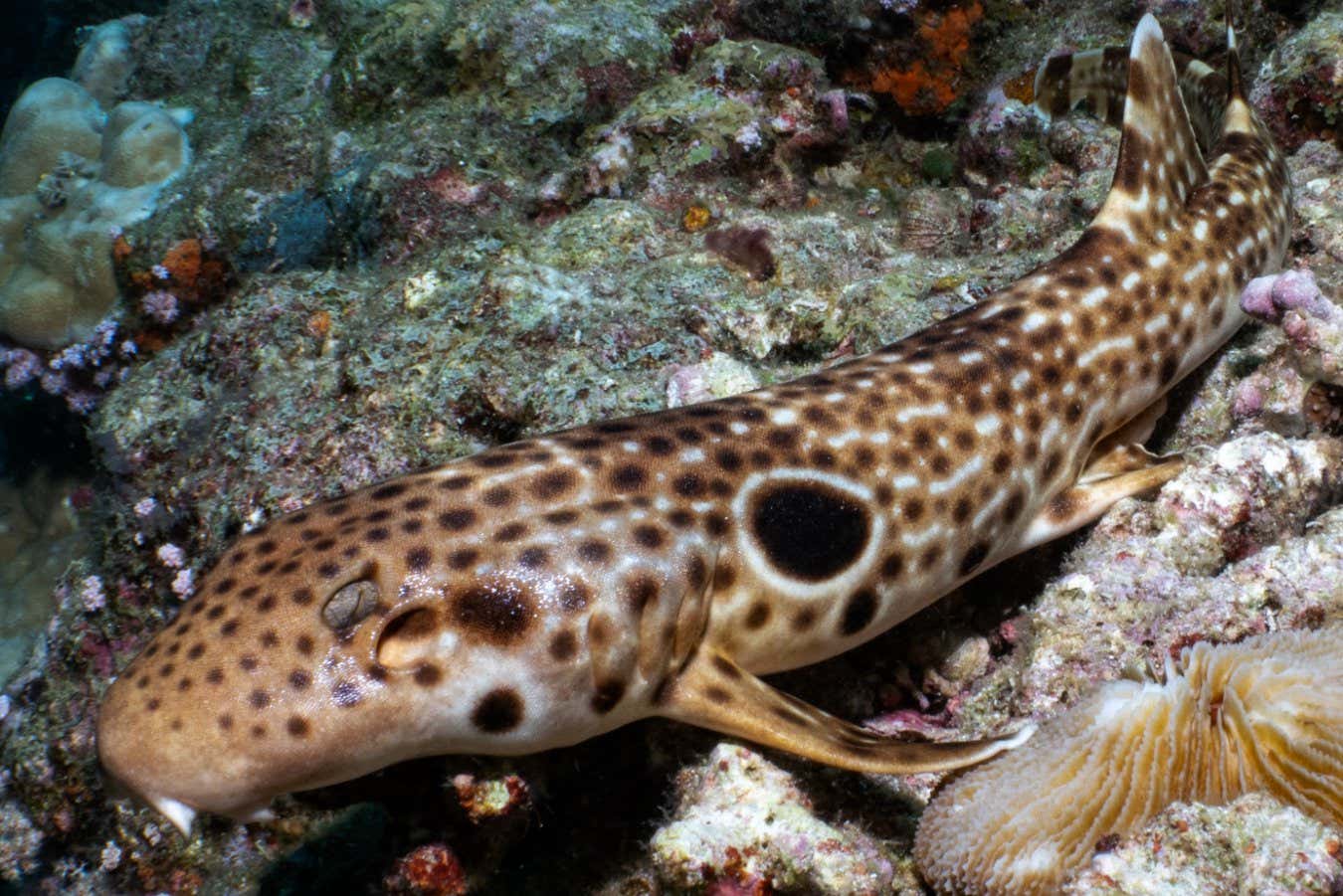
    The newly identified walking shark, Hemiscyllium dudgeonae

    MV Erdmann

    A shark that can walk with most of its body out of the water, found on the shores of Papua New Guinea, has been identified as a new species.

    Locals have long been aware of the strange fish, which they sometimes see waddling across reef flats at low tide. They call it kadedekedewa, which means “dog shark” or “lazy shark”.

    Sharks in the genus Hemiscyllium, commonly known as walking sharks or epaulette sharks, use their pectoral fins like legs to move around and are only known to be in Australia and New Guinea.

    The new species has been named Hemiscyllium dudgeonae after Christine Dudgeon at the University of the Sunshine Coast in Queensland, Australia, who was part of the team that formally identified it.

    She first encountered the shark after midnight one day in March 2025, swimming in just a metre of water covering a meadow of seagrass in Milne Bay, Papua New Guinea.

    Dudgeon was looking for a different species, Hemiscyllium michaeli, known to inhabit nearby waters. “Because it was so late and I had been in the water for a while, I was a bit over it,” she says. “Then I just saw one swimming along the bottom.”

    She shone her torch in front of the shark, which was nearly three-quarters of a metre long, making it freeze as a defensive response. Then she grabbed it and gently employed a jiujitsu-like move that researchers call the “flip and tuck”. “You sort of just flip them over and tuck the tail under your armpit and it stops them from wriggling away,” she says.

    Christine Dudgeon with the shark named after her, Hemiscyllium dudgeonae

    Nesha Ichida

    Once the shark was secure, she handed it over to her colleague, Jess Blakeway, who was in a boat drifting nearby.

    “Straight away, just from the colour pattern, I could see it was very distinctively different to the other species that we work with and the other species that we know of,” says Blakeway, who is also at the University of the Sunshine Coast.

    The other nine species of walking shark we know of, which all feed on small invertebrates that live on the seafloor, are very similar in their body size and shape. They are most easily distinguished from each other by their skin patterning and colouring.

    The species that the team had been expecting to find has a more leopard-like pattern. “This new one has got lots of spots and dashes that reminded me of braille or morse code,” says Blakeway.

    Over the next few days at three nearby locations, the researchers caught another 11 individuals, three of which were kept for further study and nine of which had samples taken from them before being released.

    The species is thought to live only among the coral reefs of Milne Bay in Papua New Guinea

    Nesha Ichida

    Once back in the laboratory, the team carried out DNA tests that confirmed the new shark was genetically distinct from all the other species in the genus.

    Papua New Guinea’s walking sharks face grave threats from habitat loss caused by coastal development, expansion of palm oil plantations and coral bleaching.

    The researchers think H. dudgeonae is found only in Milne Bay and it is probably the most endangered of all the species in the group.

    “This species adds to Papua New Guinea’s extraordinary biodiversity, yet it faces local extinction without urgent conservation action,” says Blakeway.

    Topics:


    Source link

    Share. Facebook Twitter Pinterest LinkedIn Tumblr Email Telegram Copy Link

    Related Posts

    Science

    Proposed White House regulations could kill 5,000 clinical trials, analysis finds

    June 17, 2026
    Science

    Ozempic maker Novo Nordisk breach exposed patients’ clinical trial data

    June 16, 2026
    Science

    The secrets to keeping your brain sharp in old age

    June 16, 2026
    Science

    Technology is changing our perspective on nature – at every scale

    June 16, 2026
    Science

    Anthony Fauci | Scientific American

    June 16, 2026
    Science

    NASA’s Chandra Observatory spots possible supernova remnant in the middle of our galaxy

    June 16, 2026
    Editors Picks

    AI is helping funders evaluate more ideas more fairly

    February 5, 2026

    Portraits of China’s Changing Work force

    October 22, 2025

    Police probe missing Briton case in Malaysia

    June 3, 2025

    Trump urges new nuclear treaty after Russia agreement ends

    February 5, 2026

    Iran cannot participate in World Cup, sports minister says

    March 11, 2026
    About Us
    About Us

    Welcome to Benjamin Franklin Institute, your premier destination for insightful, engaging, and diverse Political News and Opinions.

    The Benjamin Franklin Institute supports free speech, the U.S. Constitution and political candidates and organizations that promote and protect both of these important features of the American Experiment.

    We are passionate about delivering high-quality, accurate, and engaging content that resonates with our readers. Sign up for our text alerts and email newsletter to stay informed.

    Latest Posts

    Hints About Why Jelly Roll Ended Bunnie Xo Marriage Surface

    June 17, 2026

    Macron winds up G7 with AI, Trump dinner

    June 17, 2026

    Ghosts of empire: A quarantine centre and Laikipia’s colonial past | Ebola News

    June 17, 2026

    Subscribe for Updates

    Stay informed by signing up for our free news alerts.

    Paid for by the Benjamin Franklin Institute. Not authorized by any candidate or candidate’s committee.
    • Privacy Policy
    • About us
    • Contact us

    Type above and press Enter to search. Press Esc to cancel.