

After weeks of warning that continuing Israeli attacks on Lebanon would jeopardise diplomacy, Iran launched its first direct strikes on Israel in two months overnight on Sunday, casting new doubts about the likelihood of a US-Iran peace deal.
While Israel and the US have sought to separate Israel’s occupation of southern Lebanon from the wider US-Israeli war on Iran, Iran has consistently stated that it will not entertain a peace deal that does not extend to Lebanon as well.
Recommended Stories
list of 3 itemsend of list
Last night’s attacks confirmed this.
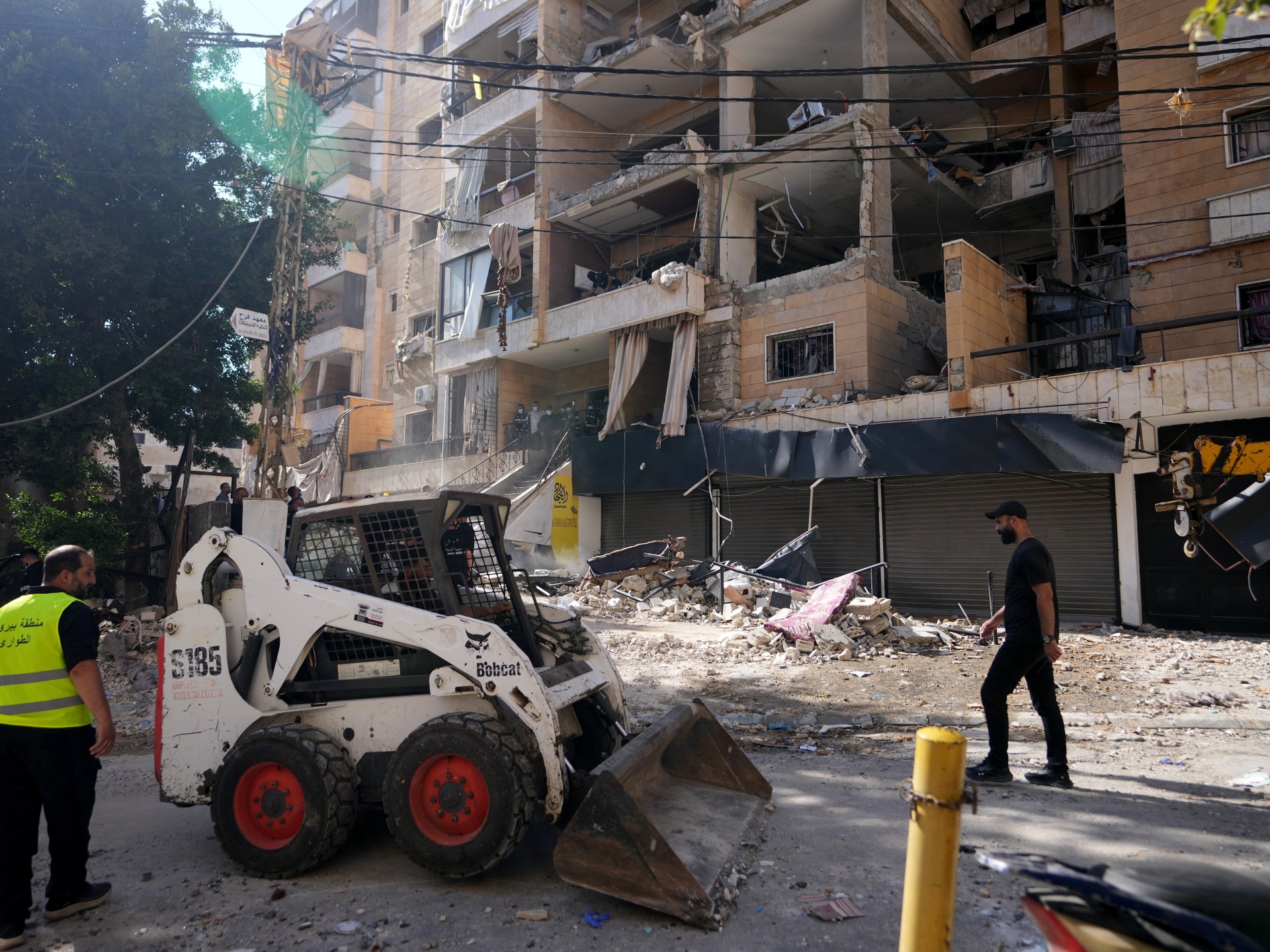
Following an initial Israeli raid on the southern suburbs of Beirut on Sunday – despite US assurances last week that Israel would not attack the Lebanese capital as long as Hezbollah refrained from strikes on northern Israel – Iran launched missiles at Israel overnight in retaliation.
“Tonight’s operation was a warning, and if the aggressions are repeated, the responses will be broader and will encompass all American-Zionist targets in the region,” Iran’s Revolutionary Guards (IRGC) said in a statement.
Israel responded to that by carrying out multiple attacks across Iran on Monday, including the capital Tehran, despite US President Donald Trump reportedly telling Israeli Prime Minister Benjamin Netanyahu not to escalate. “I call the shots … he [Israeli Prime Minister Netanyahu] doesn’t call the shots,” he told the UK’s Financial Times on Sunday.
Tehran returned fire with a second volley of missiles towards Israel. Iranian missiles have largely been intercepted and no-one has been reported killed in Israel.
Nevertheless, the US president still felt compelled to take to social media later on Monday to remonstrate with both parties. “Israel and Iran must immediately stop ‘shooting’,” he said in a brief post on his Truth Social platform.
Beirut: The red line
After its second wave of strikes, Iran’s armed forces declared an end to operations targeting Israel but warned that further Israeli strikes in Lebanon would be met with “harsher” attacks, Iran’s semi-official Fars news agency reported.
“Tehran had been tolerating recent Israeli attacks on southern Lebanon but drew a red line on Beirut,” senior fellow at the Center for International Policy and founder of The Iran Podcast, Negar Mortazavi, told Al Jazeera.
“When Israel wanted to attack Beirut last week, Tehran sent a serious warning to Washington that they would not tolerate attacks on Beirut, and they just proved that the warning was not a mere threat,” Mortazavi added.
The escalation has raised a critical question: Has Iran’s direct attack in defence of Hezbollah now shown that it is ready to enforce its red line that any Israeli attack on its allies will lead to direct Iranian attacks?
More broadly, observers are asking if Washington has any chance of negotiating an end to the US-Israeli war on Iran, and potentially a lasting agreement with Tehran, while Israel continues military operations against Hezbollah in Lebanon?
Fighting in Lebanon
Lebanon was drawn into the US and Israel’s war on Iran on March 2 after Tehran-aligned Hezbollah launched attacks on northern Israel.
Hezbollah said the attacks were in retaliation for Israel’s killing of Iran’s Supreme Leader, Ayatollah Ali Khamenei, on the first day of the US-Israeli war on Iran, on February 28, as well as Israel’s near-daily violations of a ceasefire it agreed to in Lebanon in November 2024.
At least 3,613 people have been killed and 11,072 others injured in Israeli attacks across Lebanon since the fighting began again in March, according to the latest figures from Lebanon’s Health Ministry. More than one-million people have been displaced from their homes as Israel has occupied nearly one-fifth of the country.
Although a US-mediated ceasefire aimed at halting the fighting between Israel and Hezbollah began on April 17, Israeli attacks continued throughout the following weeks, including on the capital Beirut, where Israel said it is targeting a Hezbollah stronghold in the southern suburbs of the city.
Earlier this week, Lebanese and Israeli negotiators announced yet another conditional ceasefire following talks in Washington.
However, Hezbollah leader Naim Qassem rejected that ceasefire, calling it a “farce” and stating that attacks on northern Israel would continue for as long as bombs were dropping on Lebanon.
‘Together in war, together in peace’
One of the most significant developments of the current conflict is that Iran is increasingly abandoning the logic that has defined its regional posture for years, says Rob Geist Pinfold, international security lecturer at King’s College London.
“Initially, the whole point of ‘forward defence’ was to prevent a state-on-state conflict between Israel and Iran,” Geist Pinfold told Al Jazeera.
Iran invested heavily in Hezbollah and other allied groups in the region – including the Houthis in Yemen and a number of armed groups in Iraq and Syria – because it believed they could project proxy power, and deter Israel more effectively than Iran’s conventional military capabilities alone, he noted.
“What we’re seeing here is that Iran has completely changed that dynamic. Rather than using these proxy groups to fight for Iran, it is escalating itself as a state to fight for its proxy groups.”
Iran’s fear is that if it looks like it cannot protect Hezbollah, then its proxies will be undermined one after the other
Mortazavi says Iran has now bound any peace framework to the fate of its regional allies. “Tehran’s message is: Together in war, together in peace,” she added.
Nadim Houry, executive director of the Arab Reform Initiative (ARI) in Lebanon, similarly argues that Iran is trying to preserve its long-standing “unity of fronts” strategy, to keep its network of regional allies intact.
“To do this, it needs to show that it can deter Israel from acting unilaterally against Lebanon,” Houry said.
“Iran’s fear is that if it looks like it cannot protect Hezbollah, its most important proxy, then its regional proxies will be undermined one after the other.”
‘Calculated risk’ or new line in the sand?
The latest escalation appears to be both strategic and a statement of resolve, experts say.
“I would not say Iran has created an automatic trigger where every Israel-Hezbollah clash now brings direct Iranian intervention,” Andreas Krieg, professor at the Department of Security at King’s College London, told Al Jazeera.
“But Iran has drawn a much harder ‘red line’ around Lebanon than before.”
Krieg argues that Iran is attempting to redraw the boundaries of the ceasefire through controlled force, rather than abandoning diplomacy altogether.
“This is a new ‘red line’, but it is a flexible ‘red line’,” he said. “Iran wants ambiguity. It wants Israel to believe further escalation in Lebanon could bring direct Iranian retaliation, but it also wants enough room to avoid being dragged into a full war on Israel’s timetable.”
Beirut-based analyst Ali Rizk said Tehran is likely banking on the calculation that Trump is keen to avoid a wider conflict and secure a negotiated outcome instead. “There is now a clear difference in American and Israeli priorities,” Rizk told Al Jazeera.
“Trump, I think, would be willing to somewhat accommodate Iranian interests in Lebanon if that allows for an agreement that would address Trump’s main issues, like the nuclear file and the Strait of Hormuz.”
Ending the war ‘much harder’ now
If Washington cannot prevent Israeli actions that Tehran considers unacceptable, analysts warn that Iran may conclude that the US is incapable of delivering the comprehensive ceasefire it is seeking.
“The key question is whether Trump is willing to really rein in Israel in any meaningful way,” Houry said. “Will Trump take concrete measures to pressure Israel or will he simply go along?”
Rizk said Trump finds himself in a “very difficult” position but is likely to exert pressure on Israel to stop escalating in Lebanon.
“Sacrificing talks with Iran just for the sake of Netanyahu bombing Lebanon exposes him more than ever as an Israeli stooge, which may be detrimental in the American midterms,” he warned. “There is, therefore, a strong possibility he will exert intense efforts to prevent the escalation from torpedoing diplomacy with Iran.”
For now, experts believe a temporary freeze in hostilities remains possible, but a durable peace appears much more difficult.
“The more likely outcome is a violent holding pattern: talks continue, Iran and Israel keep testing each other, Hezbollah remains active, and the US tries to prevent the system from tipping into a wider campaign,” Krieg said.