

In 2004, the designer Tory Burch launched her first store specializing in women’s apparel in Manhattan. She and her ex-husband, the retailer and investor Christopher Burch, funded it by pooling $2 million of their own money. Later, Christopher helped her raise another $10 million. Today, her Reva ballet flats and handbags are so popular, they’ve become closet staples. The eponymous brand has over 370 stores across the globe and generates about $1.8 billion in revenue, and Burch is a billionaire.
However, Burch is well aware that for many other women, raising capital to build their own businesses can be an insurmountable task: Today, women-led companies get only about 2% of venture capital funding.
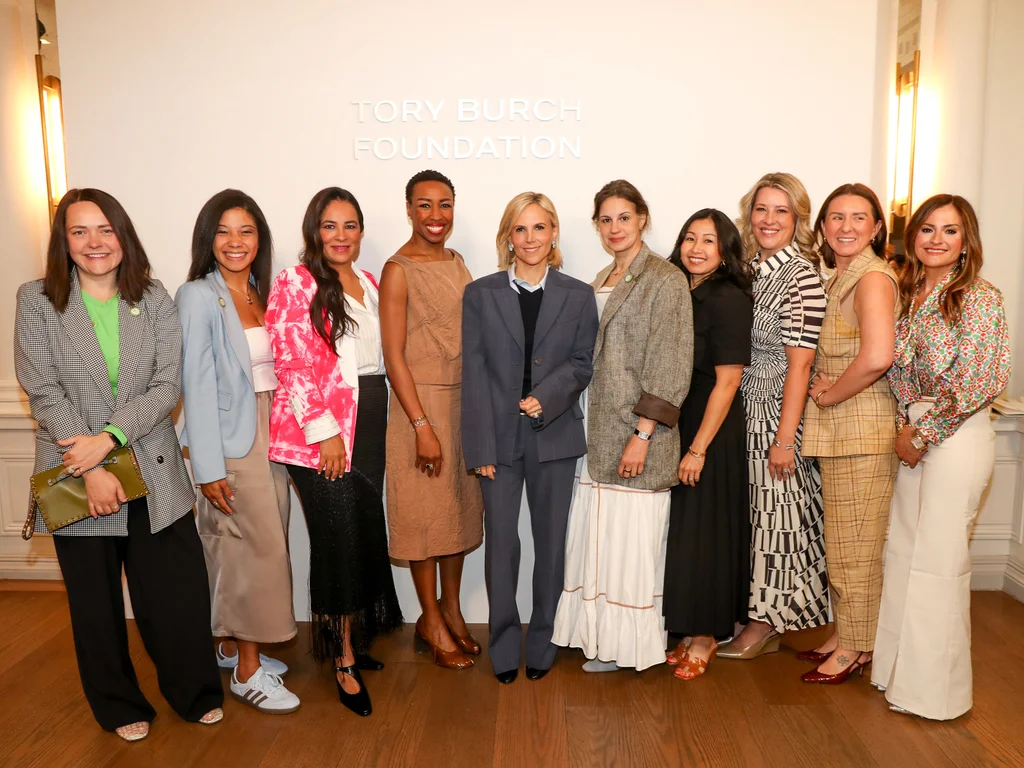
That’s why in 2009, she started the Tory Burch Foundation to advance women’s economic power. Female entrepreneurs can apply to become fellows at the foundation, where they receive coaching and funding. Today there are over 500 fellows in the program and over 91% are still in business after five years.
Last year, the Tory Burch Foundation announced a goal to add $1 billion to the economy through women entrepreneurs by 2030. Since then, its fellows have generated $470 million in revenue. Burch sat down with Fast Company to discuss the unique barriers female entrepreneurs face, and her advice for women in business.
[The following has been lightly edited for clarity.]
What was the genesis of the Tory Burch foundation?
It started very early on. Even as a child, I always wanted to help and give back to people. My mom said I was 4 years old, I was constantly talking about that. Fast forward to college: I went on a program called Semester at Sea, which involved going around the world. I saw a lot of places and developing countries that have incredible poverty.
When I went into the workforce, I knew that at some point I wanted to start a foundation. I didn’t know how that would ever happen. Then I got pregnant with my third son, and realized that I couldn’t have three babies under the age of 4 and have the career that I was having. So I left to become a stay-at-home mom but [was] fully thinking about going back to work.
During that time, I started to think about a foundation around women and children. I started thinking about if I could build a successful company, I could have the company finance the foundation, and business and purpose could go hand in hand.
Instinctually, I felt that doing good was good for business and would be good for the bottom line.
When you started your own company, what unique challenges did you face because of gender?
I was raised with three brothers and a mother who always taught me that being financially independent was critical, and that I shouldn’t depend on anyone. So it never occurred to me going into the workforce that gender would be an issue, or that I would be treated differently.
And certainly I did see that. People dismissed it as a vanity project. Ambition itself was considered distasteful in 2004 when talking about women, not to mention I was often the only woman in boardrooms. Also there was the complexity of taking care of my family and the business, and setting up a culture and a company that would celebrate when women are mothers, making it okay to go take your kid to a doctor appointment or go to a lacrosse game.
What did you find essential to your success that you wish other women could have access to?
Access to capital is one of them. [When I started] I went to 120 friends and family members and said, ‘Invest what you can lose,’ because I was terrified of taking people’s money. A lot of women don’t have that [access] or a lot of people don’t have the interest in investing in women. When you look at venture capital, we know [investment in women is] at less than 2%. So if we can have a network to help women get access to low-interest capital, that’s going to be a win for everyone. Because when women succeed, everyone succeeds. We know that the data shows women reinvest into their communities. They’re the most underinvested economic force in the world.
Even though we’ve progressed considerably from 2004, the figures that have been coming out about women in the workforce have been alarming. We’re seeing a record number of women leaving work because of caregiving. What do we need to be doing to create a world that is friendlier and a better place for women to work?
Well, that goes back to societal changes. Women shouldn’t be expected to be the only caregivers. When women have a baby, many think that they’re going to be left behind, and they are. I talked to a lot of friends, basically in every industry that feel that once they have a baby, they’re discounted for promotions.
Until we change society’s expectations around women’s roles and family, that’s going to be hard to fix. We need to have those conversations. We need to not have women being the only ones expected to be caregivers for their kids and their parents. And I think if we give them the networks, the access to capital, the education and the community, it’s going to continue to build. And we see them leaving the workforce, but we also see them growing and opening businesses—they’re the fastest growing group of entrepreneurs.
We see that when we can get a woman on business to reach a million in revenue, there’s a sustainable business.
What advice do you have for female entrepreneurs for reaching that first million?
Believe in yourself and never let anyone put you in a box. Trust your instincts. Financial literacy is critical. I remember [former CEO of Google] Eric Schmidt was on our board, and he had this expression that cash is king. And I used to say, well, if cash is king, culture is queen. Manage your balance sheet, but also create a culture that is worthy of a great company.
What does a culture that’s worthy of a great company look like in your mind?
We have a culture that celebrates great work, of course, but also we want to be a great place to work. I want to create a place where people come and they feel safe, and we shine the light on them. I was raised treating a cab driver the same as the Queen of England. And I think that that’s our culture: It’s respect and humor and honesty.