
Close Menu
    Trending
    • The FBI just dropped its 2025 internet crime report. Here are 6 big takeaways
    • Embryos made without sperm or eggs reveal why many pregnancies fail
    • Rescuers Reach Five Miners Trapped in Laos Cave
    • South Africa AI Policy Leverage as Africa’s Test Case
    • Even Therapists Have Become A Data Mine
    • Gayle King Details Catching Her Ex-Husband Cheating
    • UFC fighting cage rises on White House lawn for bout celebrating America’s 250th anniversary
    • Mogadishu gathers for Eid with prayers, family meals and outings | Religion News
    Benjamin Franklin Institute
    Wednesday, May 27
    • Home
    • Politics
    • Business
    • Science
    • Technology
    • Arts & Entertainment
    • International
    Benjamin Franklin Institute
    Home»Science»We may finally know why gold stays so shiny
    Science

    We may finally know why gold stays so shiny

    Team_Benjamin Franklin InstituteBy Team_Benjamin Franklin InstituteMay 27, 2026No Comments3 Mins Read
    Share Facebook Twitter Pinterest Copy Link LinkedIn Tumblr Email VKontakte Telegram
    Share
    Facebook Twitter Pinterest Email Copy Link


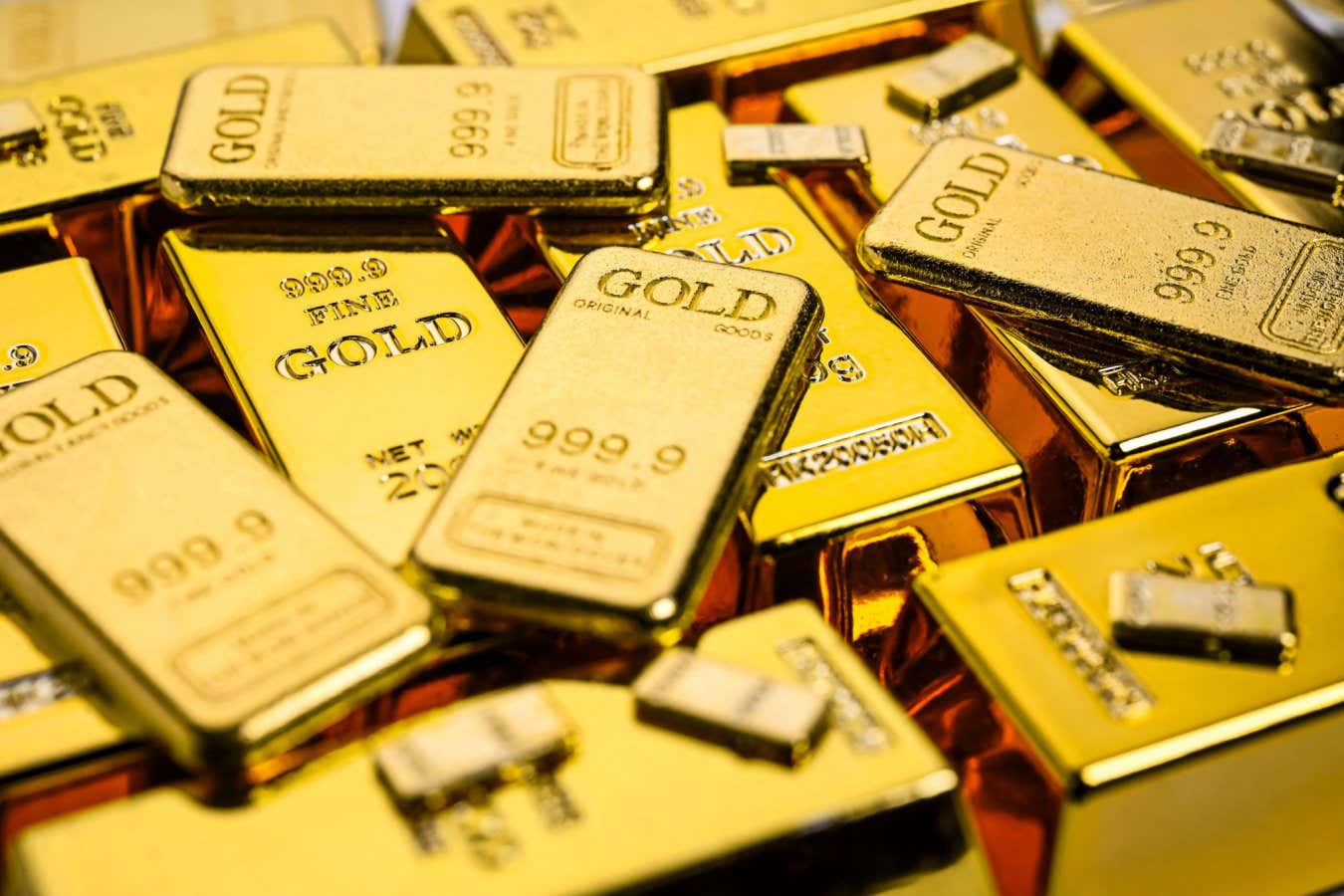
    Gold doesn’t tarnish like other metals

    mauritius images GmbH/Alamy

    Silver goes dull, copper turns green and iron rusts, but gold always stays shiny. Why this is the case has remained a mystery, but researchers may have finally figured out what makes the valuable metal so resistant to change and how to tarnish it.

    Gold is chemically inert, meaning that it doesn’t react with molecules from its surroundings, such as oxygen in the air. This is great news for jewelry, but it limits gold’s usefulness in chemistry, where researchers think it could be a useful catalyst – if only it could be nudged out of its inertness.

    Matthew Montemore and Santu Biswas at Tulane University in Louisiana investigated a phenomenon called reconstruction, which happens when a piece of gold is cut, creating a new surface.

    “The atoms just hate being on a surface so much that they completely rearrange,” says Montemore. Often, they rearrange into a pattern resembling repeating hexagons, then don’t shuffle further because their energy is low in this arrangement. Reconstruction isn’t common among metals, so the researchers wondered whether it contributes to gold’s inertness.

    They used a supercomputer to simulate the quantum states of atoms for several different rearrangements that can happen during reconstruction and to analyse their interactions with oxygen. For a reconstructed gold surface to lose some of its luster, a molecule of oxygen would have to first split in two upon hitting it. The researchers’ simulations revealed that such splitting requires a lot of energy for atoms in a hexagonal pattern, which makes tarnishing very unlikely, but a lot less energy when their arrangement is rectangular.

    Because the hexagonal pattern is more common, gold tends to stay shiny. Biswas says that this connection between atoms’ geometry, reconstruction and oxidation has never been considered before.

    Understanding it now could help researchers make gold more useful as a catalyst, says Hongliang Xin at Virginia Tech. “The exciting takeaway is that gold’s catalytic behaviour may be tuned by controlling surface reconstruction,” he says. Montemore says that one way to control reconstruction, like nudging atoms into rectangular patterns that are less inert to oxygen, could be by placing a piece of gold in an electrical circuit and applying a voltage.

    “[This work] is telling us something that perhaps hadn’t been considered before. Definitely there’s something here for experimentalists to go and look at,” says Andrew Beale at University College London. He says that the idea of using gold as a catalyst has already been proven for certain reactions by using nano-sized particles of the precious metal. The project of making gold useful in this new way is then rather realistic, but questions remain about how the team’s analysis can be connected to objects like such nanoparticles, which tend to have curved surfaces, says Beale.

    Going forward, the researchers want to extend their analysis to reactions with molecules other than oxygen, as well as gold alloys in addition to pure gold.

    Topics:


    Source link

    Share. Facebook Twitter Pinterest LinkedIn Tumblr Email Telegram Copy Link

    Related Posts

    Science

    Embryos made without sperm or eggs reveal why many pregnancies fail

    May 27, 2026
    Science

    NASA plans a base on the moon spanning hundreds of square kilometres

    May 27, 2026
    Science

    How the mathematician Gödel proved that not everything can be proven

    May 27, 2026
    Science

    Anthropic asks religious thinkers to help shape Claude as pope warns about AI

    May 27, 2026
    Science

    Attack on Iran’s oil released as much pollution as a volcano

    May 27, 2026
    Science

    How a radical new view of life could reveal its origin – and aliens

    May 26, 2026
    Editors Picks

    The No-Nonsense Guide to Tariffs: What Are They, Who Pays Them, Who Makes Them

    February 4, 2025

    Opinion | Trump’s First Year Back, in 10 Charts

    December 27, 2025

    Anthropic asks religious thinkers to help shape Claude as pope warns about AI

    May 27, 2026

    CNA Explains: What’s behind the separatist push in Canada’s Alberta – and why Trump is paying attention

    January 30, 2026

    Stop Leaving Marmalade And Paddington Bears For Queen: Officials

    December 11, 2025
    About Us
    About Us

    Welcome to Benjamin Franklin Institute, your premier destination for insightful, engaging, and diverse Political News and Opinions.

    The Benjamin Franklin Institute supports free speech, the U.S. Constitution and political candidates and organizations that promote and protect both of these important features of the American Experiment.

    We are passionate about delivering high-quality, accurate, and engaging content that resonates with our readers. Sign up for our text alerts and email newsletter to stay informed.

    Latest Posts

    The FBI just dropped its 2025 internet crime report. Here are 6 big takeaways

    May 27, 2026

    Embryos made without sperm or eggs reveal why many pregnancies fail

    May 27, 2026

    Rescuers Reach Five Miners Trapped in Laos Cave

    May 27, 2026

    Subscribe for Updates

    Stay informed by signing up for our free news alerts.

    Paid for by the Benjamin Franklin Institute. Not authorized by any candidate or candidate’s committee.
    • Privacy Policy
    • About us
    • Contact us

    Type above and press Enter to search. Press Esc to cancel.