

Beirut, Lebanon – Israel’s war has created a lost generation of Lebanese students, widening societal disparities and, in turn, damaging national unity, experts have told Al Jazeera.
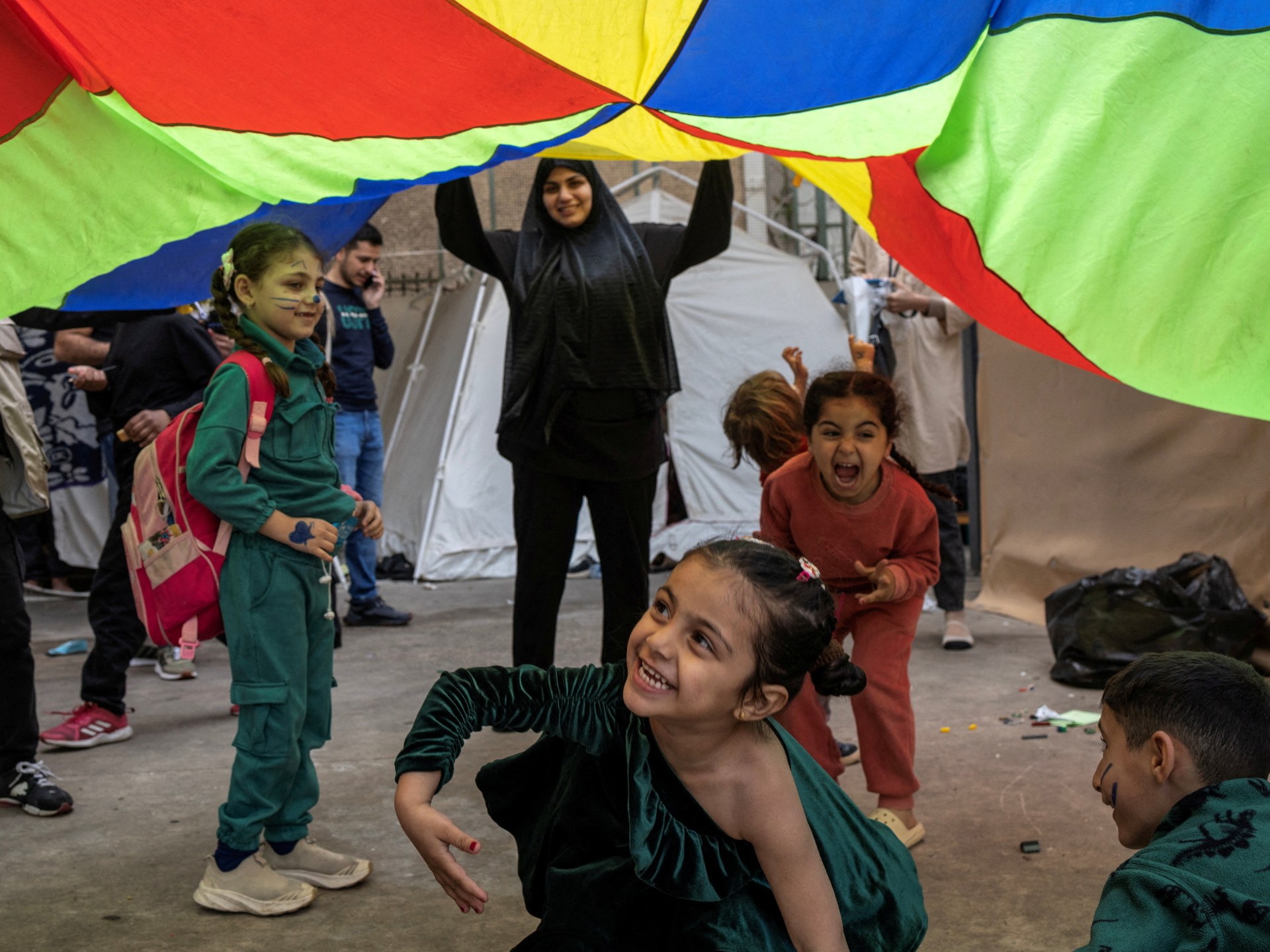
Israel has destroyed schools across southern Lebanon and displaced hundreds of thousands of students. Hundreds of educational institutions have turned into makeshift shelters for thousands of displaced people, causing a compounding series of disruptions to an education system that was already struggling as a result of a debilitating economic crisis.
Recommended Stories
list of 3 itemsend of list
Schools in Lebanon have responded by using online learning and other programs to reach students, but education experts in the country said many were still falling through the gaps. And in an effort to catch up on all the lost schooling, the focus has been on subjects such as the sciences and mathematics, with topics such as citizenship ignored.
In a country like Lebanon, with its numerous religious sects, that could lead to a dangerous future.
“The mission of an education system is to build citizens,” Carlos Naffah, an academic researcher, told Al Jazeera.
“We don’t want to face the fact that we lost a generation,” said Naffah.
Stop-gap solutions
On March 2, Israel intensified its war on Lebanon for the second time in under two years. It came on the back of Hezbollah’s first response to months of unanswered Israeli attacks on Lebanon, including more than 10,000 violations of the November 2024 ceasefire between the two sides.
Since March, Israeli attacks have displaced more than 1.2 million people in Lebanon, among them 500,000 school-aged children, according to UNESCO. Not only are hundreds of thousands of students displaced, but many of the schools they learned in are no longer accessible.
According to UNESCO, 339 schools are located in warzones in Lebanon, while hundreds more are now acting as collective shelters to the displaced, affecting access to education for another 250,000 children. Another 100 schools are in high-risk areas, meaning they could soon become inaccessible to students.
With so many students out of school, some learning institutions have turned to online learning. But education experts said this had its drawbacks, particularly for students from lower-income families, and that a series of compounding crises has meant that every year of schooling since 2019 has been interrupted for one reason or another.
“Hybrid learning has become the de facto norm in Lebanon over the past several years due to continuous instability, from the October 2019 revolution to COVID-19, the economic crisis, and now the ongoing war,” Tala Abdulghani, a senior researcher at the Asfari Institute for Civil Society and Citizenship, told Al Jazeera. “However, it has often proven ineffective, particularly for vulnerable students, due to limited internet access, electricity shortages, lack of devices, and unstable living conditions, leaving many children unable to consistently access education.”
Other solutions have also been put forward by the Ministry of Higher Education, in coordination with UNESCO, including opening multiple shifts to public schools and setting up temporary learning centres. They have also worked on integrating psychosocial and mental health services for students.
“Children are losing routine, stability, friendships and normal life,” Maysoun Chehab, senior education programme specialist at UNESCO, told Al Jazeera. “Many are carrying trauma, anxiety, fear, uncertainty over repeated displacement, exposure to violence, being around violence and listening to the news, and prolonged instability.”
Increasing inequalities
Experts said the Ministry of Education and other NGOs are providing support to students where they can, but Lebanon’s economic crisis and a global reduction in humanitarian support have made it more difficult for families to find solutions.
“Poverty has dramatically increased, placing additional pressure on families already struggling to survive,” Chehab said. “Families face impossible choices between paying for transportation, food, heating or keeping kids connected to their education by the internet.”
Chehab said that those choices lead to some students dropping out, which in turn increases cases of child labour and child marriage. “All this is happening when humanitarian funding is under immense strain and educational emergencies are one of the most underfunded worldwide,” she added.
Even before the start of hostilities with Israel in October 2023, Lebanon’s education system was in bad shape. The economic crisis in particular has seen an erosion of the country’s once thriving middle class, with Lebanon’s Gini coefficient, which measures income inequality, rising from 0.32 in 2011 to 0.61 in 2023, according to the Lebanese Center for Policy Studies. According to a 2024 study by ESCWA (PDF), Lebanon was in the top 1 percent of most unequal countries in the world, and that is all before the latest Israeli attacks.
“The war has had an uneven impact across the country, in which we’re seeing a growing educational inequality where geography and socioeconomic status increasingly determine whether a child can access learning at all,” Abdulghani said. “In the south, many students have stopped going to school entirely because of displacement, insecurity, and schools being located in active conflict zones.”
Overlapping shocks to the system
While students and school-age children are among the primary victims of the war, the education system is also being deeply affected by the pain being suffered by teachers as a result of the fighting.
“What we are witnessing is the emergence of a deeply unequal education where some children are continuing their education while others are experiencing prolonged interruptions, learning loss, trauma, and isolation,” Abdulghani said. “This is on top of economic barriers, the collapse of infrastructure, limited access to remote learning, and the immense psychological toll the war has had on children and teachers alike.”
Lebanon’s public sector teachers have fought for livable wages for years. With low salaries, many take on additional workloads, such as tutoring. Recent years have been particularly brutal on teachers as the economic crisis and currency devaluation meant their already meagre salaries decreased by about 80 percent.
“Teachers are the backbone of any education system, and they are paying a tremendous price,” Chehab said. “From 2019 onwards, 30 percent of the sector left the country or changed professions entirely.”
Among those displaced by the war are many teachers, who, in addition to facing economic difficulties, are facing threats to their lives.
“Education systems may survive one shock, but these are overlapping shocks ongoing for years,” Chehab said.
Most experts believe the current minister of education, Rima Karami, is competent, but said that numerous structural factors, including the ongoing economic crisis, political corruption, and the shortage of humanitarian aid, mean that a lot more needs to be done, requiring what one researcher called “out-of-the-box thinking”.
“The fear is that without serious nationwide intervention, these disparities will have long-term consequences and leave an entire generation further behind,” Abdulghani said.