
Close Menu
    Trending
    • Lizzo’s Accusers Speak Out Amid Album’s Poor Reception
    • South Korea, Ukraine hold ‘constructive’ talks about North Korean POWs
    • Paraguay’s shock win against Germany headlines all-time World Cup upsets | World Cup 2026 News
    • World Cup takeaways: Penalty shootouts highlight knockout stage
    • How great leaders create a shared identity
    • Ancient human DNA found on cave art for the first time
    • A different type of G7 central bank divergence
    • Angelina Jolie Makes Rare Admission About Her Love Life
    Benjamin Franklin Institute
    Tuesday, June 30
    • Home
    • Politics
    • Business
    • Science
    • Technology
    • Arts & Entertainment
    • International
    Benjamin Franklin Institute
    Home»Science»Coffee’s mood-boosting effects aren’t just down to caffeine
    Science

    Coffee’s mood-boosting effects aren’t just down to caffeine

    Team_Benjamin Franklin InstituteBy Team_Benjamin Franklin InstituteMay 7, 2026No Comments3 Mins Read
    Share Facebook Twitter Pinterest Copy Link LinkedIn Tumblr Email VKontakte Telegram
    Share
    Facebook Twitter Pinterest Email Copy Link


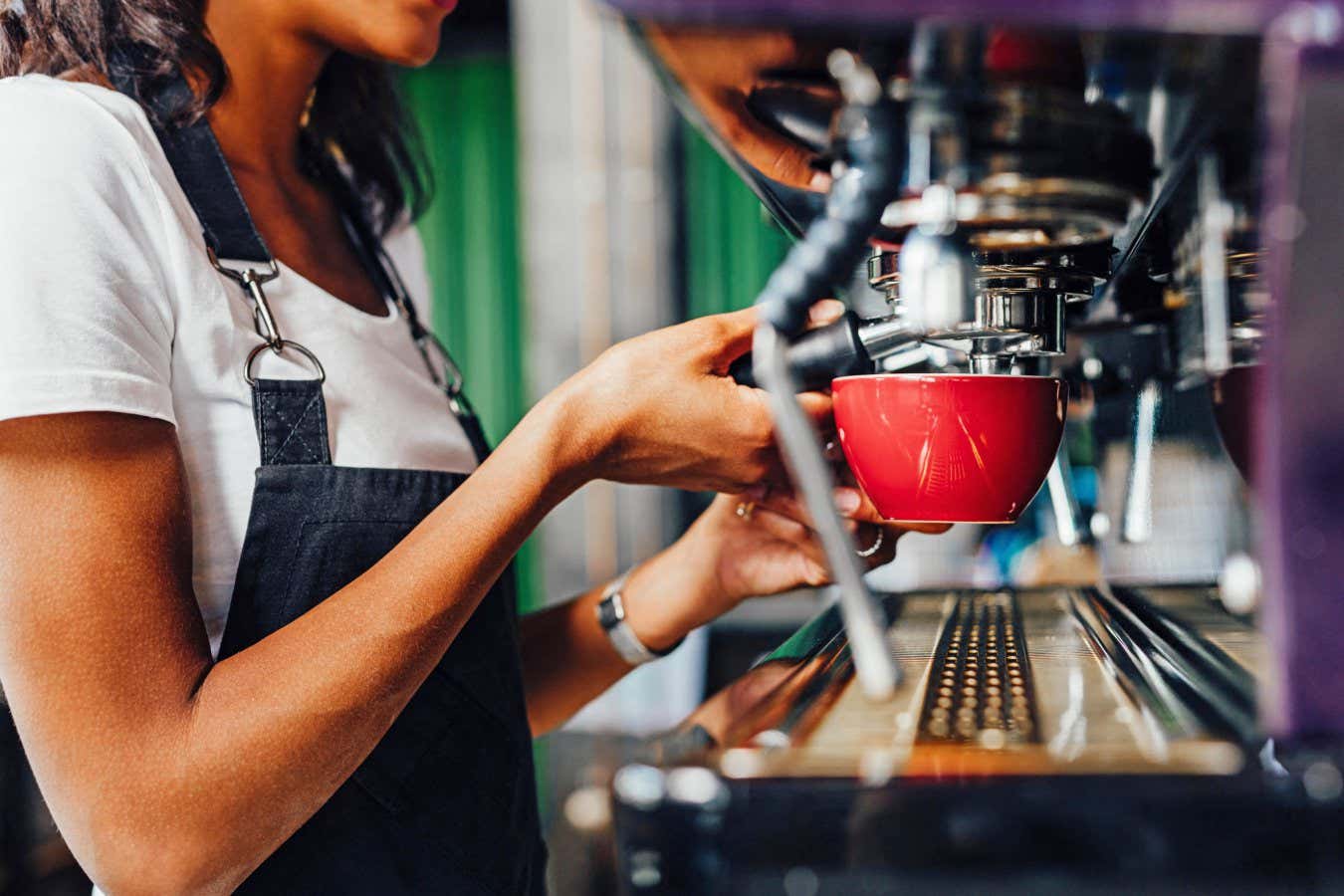
    Coffee can influence our mood and microbiome

    Artem Varnitsin / Alamy

    Both caffeinated and decaffeinated coffee can lead to improvements in mood and cognitive performance, possibly through their effects on the gut microbiome.

    Scientists have long known that coffee can influence digestion, cognition and mood, thanks partly to interactions with gut microbes. But while most research on coffee’s effects has focused on caffeine, coffee is also one of the richest sources of polyphenols – plant-derived compounds that gut microbes convert into biologically active molecules. These metabolites have been linked to anti-inflammatory effects and may influence brain function.

    To get a clearer view of these interactions, John Cryan at University College Cork in Ireland and his colleagues recruited 62 healthy participants, half of whom were regular coffee-drinkers and half of whom were non-coffee-drinkers. After an initial comparison, regular drinkers abstained from coffee for 14 days, followed by a 21-day reintroduction phase in which participants were randomly assigned to consume either caffeinated or decaffeinated coffee.

    The researchers collected blood, saliva, urine and stool samples to assess physiological responses to coffee-derived compounds. They also assessed the participants’ mood, cognition, stress, sleep and behaviour.

    Compared with non-coffee-drinkers, consuming caffeinated coffee was associated with lower anxiety and improved attention, whereas decaffeinated coffee was linked to improved scores in memory tests and better sleep quality. Both kinds of coffee were associated with lower ratings of stress and depression.

    When coffee was removed and then reintroduced, the participants’ microbiomes changed rapidly, with both regular and decaf coffee being linked to higher levels of beneficial gut bacteria. “We were surprised by how dynamic the system is,” says Cryan.

    The analysis suggests that coffee’s effects on cognitive scores are caused by polyphenols, not caffeine, since these scores correlated with the measurements of certain metabolites derived from polyphenols in the participants’ urine.

    Team member Daniele Del Rio at the University of Parma, Italy, says a key next step will be to determine how different types of coffee affect the microbiome. “Not all coffee is the same: even the degree of roasting profoundly influences its chemical composition.”

    Nicola Segata at the University of Trento, Italy, says the work sheds light on a relatively underexplored area, but warns against overinterpretation. “The study’s relatively small sample size may limit how broadly the results can be applied,” he says.

    “This study is interesting because, by examining the effects of coffee consumption on microbiota composition, it suggests that the human gut ecosystem may have helped humans adapt relatively rapidly to different diets and environments without requiring genetic change,” says Telmo Pievani at the University of Padua, Italy.

    Topics:


    Source link

    Share. Facebook Twitter Pinterest LinkedIn Tumblr Email Telegram Copy Link

    Related Posts

    Science

    Ancient human DNA found on cave art for the first time

    June 30, 2026
    Science

    Humans sleep the least of all apes – is it the secret to our success?

    June 30, 2026
    Science

    Childbirth for many primate species is even harder than for humans

    June 30, 2026
    Science

    US government wants to have a useful quantum computer by 2028

    June 29, 2026
    Science

    Your menstrual cycle may affect how well vaccines work

    June 29, 2026
    Science

    Remote-controlled cockroach swarm can now breathe underwater

    June 29, 2026
    Editors Picks

    Top climate research center at risk of cuts sues Trump administration

    May 9, 2026

    The Fed’s dual mandate needs a rethink

    August 5, 2025

    Cynthia Bailey Was ‘Paralyzed’ By Robert Cosby Jr.’s Unexpected Death

    March 2, 2026

    ‘A shocking breach’: Trump officials leak military attacks to The Atlantic | Donald Trump News

    March 24, 2025

    John Stamos debated live-streaming his first tattoo at SXSW: Is the future of media ‘life in real-time’?

    March 21, 2026
    About Us
    About Us

    Welcome to Benjamin Franklin Institute, your premier destination for insightful, engaging, and diverse Political News and Opinions.

    The Benjamin Franklin Institute supports free speech, the U.S. Constitution and political candidates and organizations that promote and protect both of these important features of the American Experiment.

    We are passionate about delivering high-quality, accurate, and engaging content that resonates with our readers. Sign up for our text alerts and email newsletter to stay informed.

    Latest Posts

    Lizzo’s Accusers Speak Out Amid Album’s Poor Reception

    June 30, 2026

    South Korea, Ukraine hold ‘constructive’ talks about North Korean POWs

    June 30, 2026

    Paraguay’s shock win against Germany headlines all-time World Cup upsets | World Cup 2026 News

    June 30, 2026

    Subscribe for Updates

    Stay informed by signing up for our free news alerts.

    Paid for by the Benjamin Franklin Institute. Not authorized by any candidate or candidate’s committee.
    • Privacy Policy
    • About us
    • Contact us

    Type above and press Enter to search. Press Esc to cancel.