
Close Menu
    Trending
    • The end of the ‘good enough’ worker
    • Can Apple and Google stop children from sharing explicit images?
    • Amsterdam Bans Meat Ads As The War On Food Expands
    • Katie Holmes And Joshua Jackson Spark ‘Soul-Level’ Love Chatter
    • Singapore Airlines, Southwest Airlines partner to expand access to nearly 120 US destinations
    • Trump warns Netanyahu: ‘You’ll be on your own’ if attacks on Iran continue | US-Israel war on Iran News
    • Cristiano Ronaldo, ‘The Bosnian Diamond’ headline the World Cup 40-and-over club
    • How housing market inventory is shifting across every state
    Benjamin Franklin Institute
    Tuesday, June 9
    • Home
    • Politics
    • Business
    • Science
    • Technology
    • Arts & Entertainment
    • International
    Benjamin Franklin Institute
    Home»World Economy»Egypt Goes Dark Amid Energy Crisis
    World Economy

    Egypt Goes Dark Amid Energy Crisis

    Team_Benjamin Franklin InstituteBy Team_Benjamin Franklin InstituteApril 8, 2026No Comments3 Mins Read
    Share Facebook Twitter Pinterest Copy Link LinkedIn Tumblr Email VKontakte Telegram
    Share
    Facebook Twitter Pinterest Email Copy Link


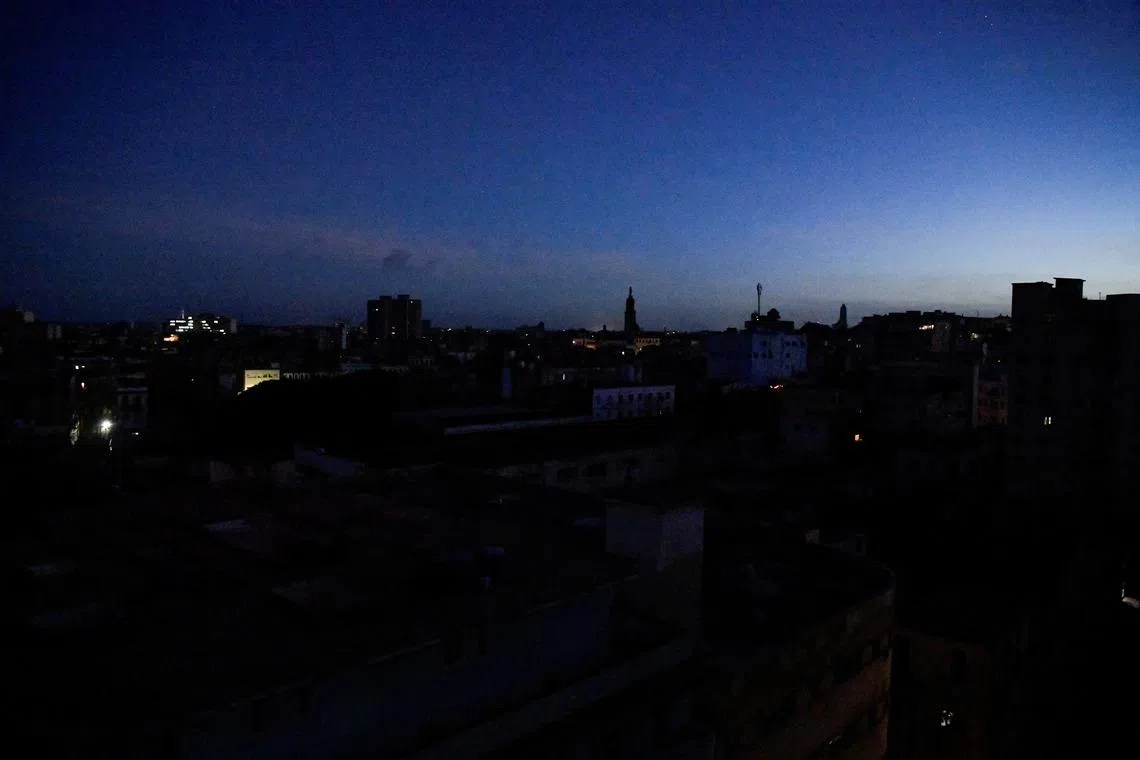
    Egypt is now offering a real-time example of what happens when an energy crisis moves from theory into reality, and it is not unfolding in some distant or abstract way but directly in the daily life of one of the most populated nations in the Middle East. Cairo, a city historically known for its nightlife and constant activity, is now being forced into darkness as the government imposes strict measures to conserve energy following the fallout from the Iran war.

    Businesses are being ordered to shut down early, public lighting has been reduced, and what was once a 24-hour economy is now being artificially curtailed to cope with soaring fuel costs and disrupted supply chains.

    The scale of the shock is significant because Egypt is not a major oil producer capable of insulating itself from global disruptions, but rather a country heavily dependent on imported energy. The government has confirmed that its energy import bill has more than doubled since the war began, forcing authorities to raise fuel prices, increase transportation costs, and even slow state-backed projects to manage the financial strain. This is precisely how an energy crisis spreads through an economy, beginning with supply constraints and then rippling outward into inflation, reduced activity, and ultimately social pressure.

    What is unfolding in Cairo is not just about dimmed streetlights or earlier closing times, it is a form of economic contraction imposed by necessity. Shops, cafes, and restaurants are now required to close as early as 9 p.m., cutting off peak business hours in a culture where much of economic and social life traditionally occurs late at night. This has immediate consequences as businesses lose revenue, workers lose hours, and entire sectors begin to slow down. The government has even introduced reduced working hours and remote work policies to limit energy consumption, which further highlights how deep the problem has become.

    Egypt was already dealing with a weakened currency and inflation running above 13%, and now it is being hit with an external shock that it cannot control. This combination is extremely dangerous because it reduces the government’s ability to respond while increasing pressure on the population. Tourism, one of Egypt’s primary sources of foreign currency, is already showing signs of slowing, and if that continues, it will further strain an already fragile balance of payments.

    Egypt is simply one of the first visible cracks in the system. Countries that rely on imported energy are all facing similar pressures, but Egypt’s scale and economic structure make the impact more immediate and more visible.

    This is where the broader picture becomes clear. The energy crisis is not something that hits everywhere at once. It moves unevenly, affecting the most vulnerable economies first, particularly those dependent on imports and exposed to global price shocks. Egypt is now showing what that looks like in practice, where an external geopolitical conflict translates directly into domestic restrictions, economic slowdown, and rising costs of living.


    Source link

    Share. Facebook Twitter Pinterest LinkedIn Tumblr Email Telegram Copy Link

    Related Posts

    World Economy

    Amsterdam Bans Meat Ads As The War On Food Expands

    June 9, 2026
    World Economy

    Market Talk – June 8, 2026

    June 8, 2026
    World Economy

    The Drumbeat Around Taiwan Grows Louder

    June 8, 2026
    World Economy

    Russia Needs 800,000 Workers | Armstrong Economics

    June 8, 2026
    World Economy

    The Jobs Report Everyone Will Misread

    June 8, 2026
    World Economy

    The Food Supply Has Been Compromised

    June 7, 2026
    Editors Picks

    The carbon cost of our clicks

    April 20, 2026

    Maple Leafs HC makes roster move that hints at rebuild plans

    April 5, 2026

    How serious are the sectarian tensions facing Syria? | Syria’s War

    December 29, 2025

    Israel hits Iran with new strikes despite Trump admonition

    June 8, 2026

    Opinion | How Fast Will A.I. Agents Rip Through the Economy?

    February 24, 2026
    About Us
    About Us

    Welcome to Benjamin Franklin Institute, your premier destination for insightful, engaging, and diverse Political News and Opinions.

    The Benjamin Franklin Institute supports free speech, the U.S. Constitution and political candidates and organizations that promote and protect both of these important features of the American Experiment.

    We are passionate about delivering high-quality, accurate, and engaging content that resonates with our readers. Sign up for our text alerts and email newsletter to stay informed.

    Latest Posts

    The end of the ‘good enough’ worker

    June 9, 2026

    Can Apple and Google stop children from sharing explicit images?

    June 9, 2026

    Amsterdam Bans Meat Ads As The War On Food Expands

    June 9, 2026

    Subscribe for Updates

    Stay informed by signing up for our free news alerts.

    Paid for by the Benjamin Franklin Institute. Not authorized by any candidate or candidate’s committee.
    • Privacy Policy
    • About us
    • Contact us

    Type above and press Enter to search. Press Esc to cancel.