

As Iran’s de facto blockade of the Strait of Hormuz continues, Britain is hosting virtual talks with about 40 countries to discuss strategies to reopen the waterway, through which 20 percent of the world’s oil and liquefied natural gas (LNG) supplies are shipped from Gulf producers in peacetime.
Iran, whose territorial waters extend into the strait, has blocked it to shipping since the United States and Israel launched the war on Iran with strikes on Tehran on February 28.
Recommended Stories
list of 3 itemsend of list
Its blockade has sent global oil prices soaring above $100 per barrel – a jump of roughly 40 percent from before the war – forcing countries, particularly in Asia, to ration fuel and cut industrial production. On Thursday, Malaysia ordered all civil servants to work from home in a bid to conserve energy.
The US is not taking part in these talks, after Trump said this week that it was not its responsibility to reopen the strait. He told European countries to “go get your own oil“.
What is on the United Kingdom’s meeting agenda? Who is attending? Here’s what we know:
Who is attending?
UK Foreign Secretary Yvette Cooper is chairing a video conference meeting of more than 40 countries, which began at midday [11:00 GMT] on Thursday.
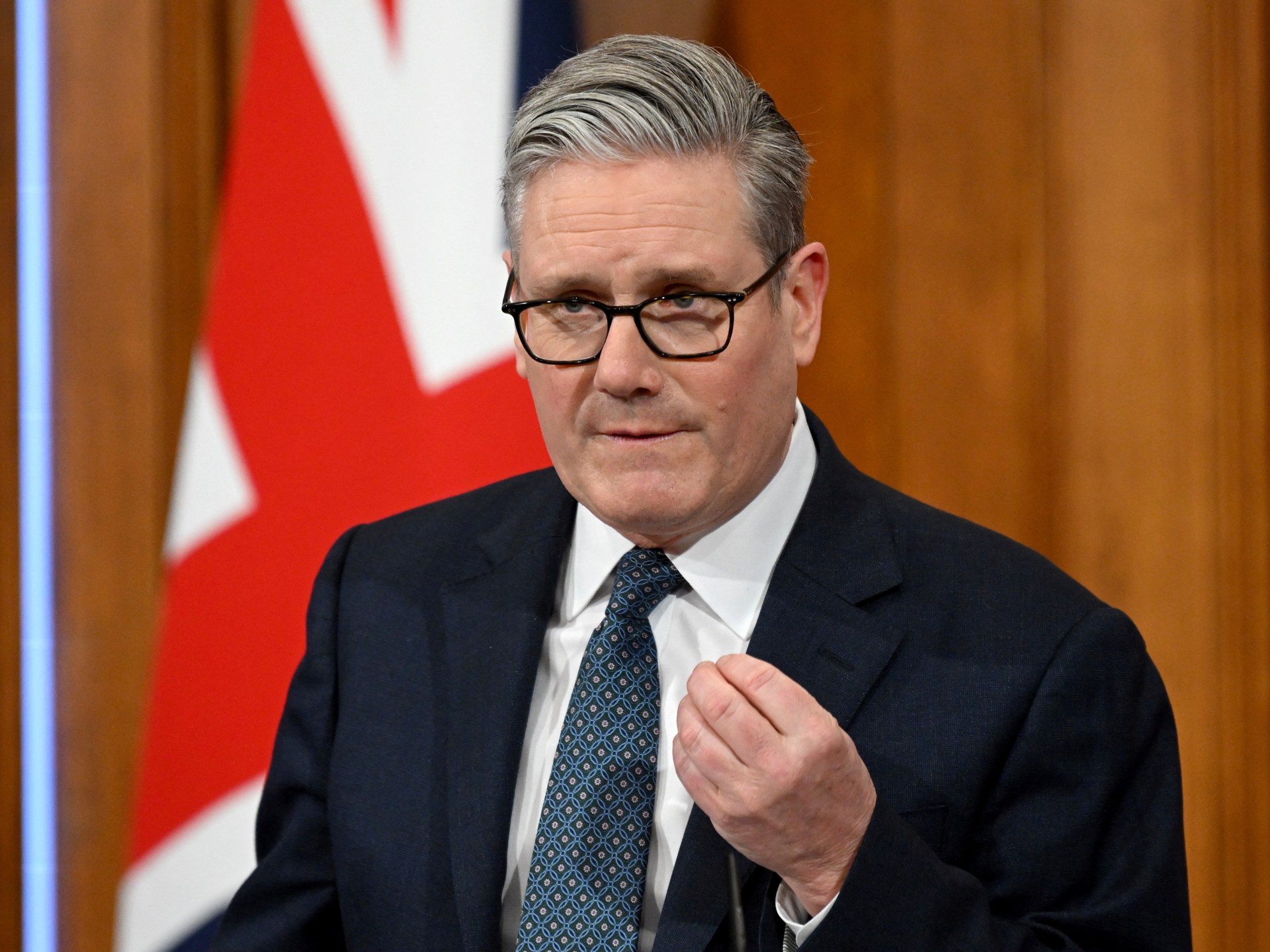
In a news conference on Wednesday, UK Prime Minister Keir Starmer said those countries which recently signed a statement saying they were ready “to contribute to appropriate efforts to ensure safe passage through the Strait of Hormuz” would take part in this week’s talks.
France, the Netherlands, Germany, Italy, Canada, Australia and the United Arab Emirates are among them.
European nations had initially refused to get involved in reopening the Strait of Hormuz, fearing they would be dragged into the war.
But as the war continues and oil and gas prices spike globally, EU nations have decided to join the UK’s coalition to reopen the strait, an EU official told the Reuters news agency.
The US is not included.
In a post on Truth Social earlier this week, the US president took aim at allies, “like the United Kingdom”, which, he said, have “refused to get involved in the decapitation of Iran”, telling them to either buy US fuel or get involved in the rapidly escalating war.
“You’ll have to start learning how to fight for yourself, the U.S.A. won’t be there to help you anymore, just like you weren’t there for us. Iran has been, essentially, decimated. The hard part is done. Go get your own oil!” he said.
What’s on the meeting’s agenda?
On Wednesday, ahead of the talks, Starmer said countries would “assess all viable diplomatic and political measures that we can take to restore freedom of navigation, guarantee the safety of trapped ships and seafarers and resume the movement of vital commodities”.
“Following that meeting, we will also convene our military planners to look at how we can marshal our capabilities and make the strait accessible and safe after the fighting has stopped,” Starmer added.
Any plan to reopen the strait will also include ensuring the maritime waterway is free of landmines, as well as a second phase to involve protecting tankers as they cross the area, the UK government said.
Christopher Featherstone, associate lecturer at the Department of Politics and International Relations at the University of York, told Al Jazeera that a crucial component of this summit is to signal that other nations, besides the US, are committed to acting diplomatically to get things back to normal.
“Starmer is clearly trying to signal commitment to the US-UK relationship to Trump, showing the UK can lead some European allies,” he said.
“However, he is also signalling to Iran and the rest of the world that these nations are not acquiescing to Trump’s demands either,” Featherstone added.

Can the coalition actually make a difference?
Speaking to the media on Wednesday, Starmer acknowledged that reopening the strait “will not be easy”.
“I do have to level with people on this,” the British prime minister said.
Since the war began, Iran has demanded international recognition of its right to exercise authority over the Strait of Hormuz as one of its five conditions for calling a ceasefire.
It has allowed only a handful of vessels from countries it deems “friendly” to pass through the strait since early March – mostly those flying flags of India, Pakistan, Malaysia and China. Other nations are also scrambling to strike deals with Iran to secure safe passage for their vessels.
Last week, Iranian media reported that the country’s parliament is seeking to pass legislation to collect tolls from ships transiting the strait.
According to media reports, Iran’s Islamic Revolutionary Guard Corps (IRGC) has already begun operating a “toll booth” system to control vessel traffic through the strait.
Ian Lesser, distinguished fellow at the German Marshall Fund of the United States, told Al Jazeera that under the current circumstances of the war, the outlook for this coalition is doubtful unless some sort of arrangement for access to the strait is negotiated with Iran.
“The coalition being discussed would, however, be well placed to provide security for commercial passage after the end of active hostilities,” he said. This would be dependent on member states being willing to send navies, however, something they have not shown enthusiasm for before now.
“Trump has called for international support several times and has been largely ignored. The Trump administration will be aware that they are unlikely to receive any other support beyond this proposed coalition, and so may seek to offer support to reassure potential members,” he said.
Lesser argued that reopening the strait by force would require the US and European allies to work together. “Ideally, this [Starmer’s coalition] would not be a replacement for US forces, but rather a larger coalition operating alongside the US,” he said.