

Back in 1972, only 54 years ago, it was way harder for women and girls to play sports.
Resources were scarce, there weren’t the same legal protections as today, it was socially discouraged—and coaches even often found themselves transporting entire teams themselves in their own cars, mopping courts and floors after a match, and funding the purchasing of uniforms and sweats.
Before Title IX—the landmark legislation that ended sex-based discrimination in sports passed in 1972—girls and young women who wanted to go to college for athletics sometimes found they simply couldn’t. Maybe the admission requirements (which were different than they were for men) were too steep; perhaps the school they wanted to attend didn’t even have any women’s sports teams, let alone the sport they hoped to compete in.
But today? It’s difficult to turn on the TV or open up a smartphone without seeing a powerful woman in sports: whether that’s an athlete who is at the top of her game, or an analyst who is racking up award nominations and hosting her own show.
Some of those girls and women moved into the realm of professional sports as athletes, a lot became coaches, GMs, team executives, as well as reporters, announcers, and broadcasters. Equality in women’s sports is about more than the athletes on the field—every time a gain is made for one group of women, on the field or off, it has the potential to improve things for all women.
And today, the women who are leading the way in sports are acutely aware of the impact they have.
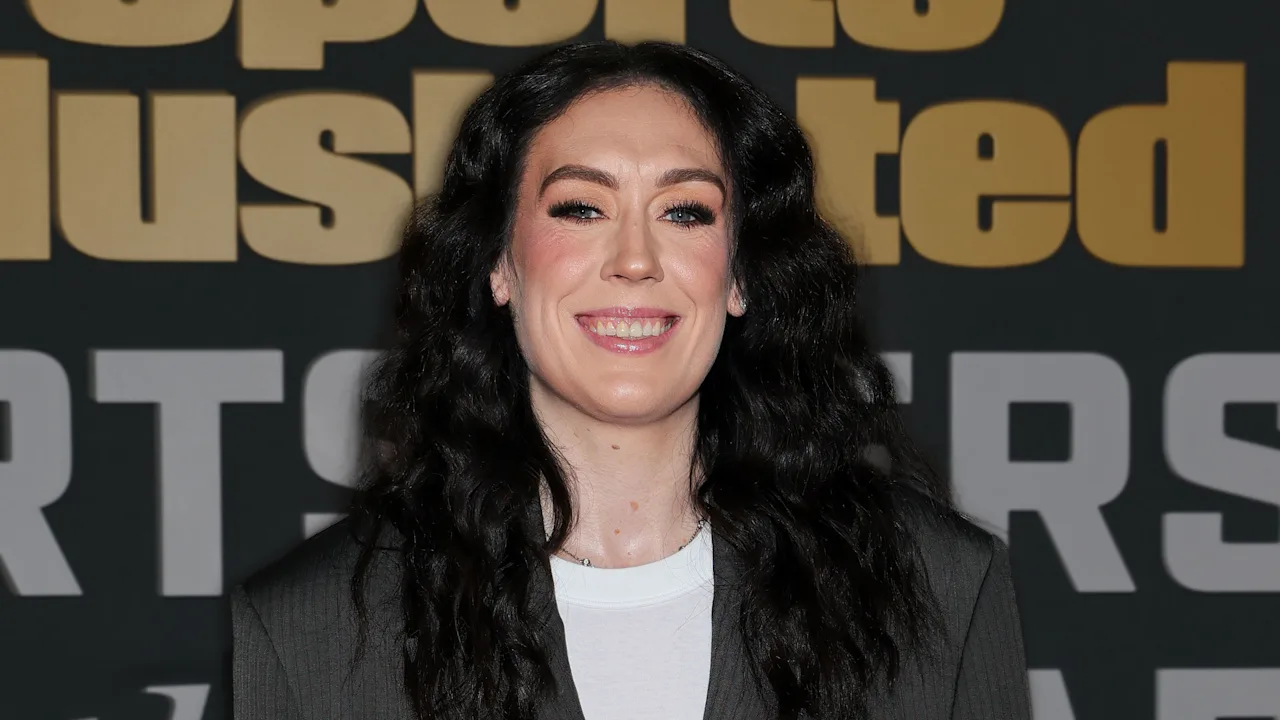
Mega star Breanna Stewart graduated from the University of Connecticut and was the number-one overall draft pick in 2016, and has since added three WNBA championships to her resume. She also started a whole second league: Unrivaled, the professional 3-on-3 women’s basketball league in Miami that she co-founded with fellow UConn alum and WNBA leader Napheesa Collier.
Since then, she was one of the athletes on the ground who recently negotiated what sounds like a landmark Collective Bargaining Agreement with the WNBA. WNBA players opted out of the CBA previously signed in January 2020 last October, and negotiations between the Women’s National Basketball Player’s Association (WNBPA) and the league’s leadership began nearly immediately. Those conversations took months, and ultimately, the two parties came to an agreement that will provide generational change for the athletes who play in the league.
For the first time, the players will benefit from a gross revenue sharing system, and minimum salaries will hover around $300,000. It’s one of the most high-profile examples of women fighting for what they’re worth in the modern workforce.
While speaking to Fast Company about her March Madness bracket at a press event for Reese’s, Stewart admitted there was no way she could have seen any of this coming in 2016. “When I first got drafted, I don’t know if I could have seen this path because I don’t know if I could have seen the sport growing as quickly and as rapidly as it did,” she explained.
“I’m not surprised by it at all, but I think we’ve come a long way. When I first came in, we were in one CBA, and then we had the new CBA in 2019, and now we’re in an even newer CBA. There’s the growth and evolution. All things take time to really build and get excited for where we’re going as a whole.”
The fact that such advances have been built for women by women is important to her.
“I think what I want to say is as women, we’re constantly always fighting for better and fighting for more. That’s nothing new to us being in the WNBA. And while we do it, we continue to stay united on where we’re trying to go and you see that with the CBA,” she added.
As one of the vice presidents of the league’s players’ association, Stewart was present at nearly every negotiations meeting, some of which extended well into the early morning hours.
“I can’t talk specifics, but obviously it’s going to be transformational,” she explained. “It’s going to be something that has never happened before and I’m really excited about that, but I’m not surprised because it’s a league full of women who are constantly doing this. We know what it means to step up to the plate and stand on our work and our family and we’re just doing it.”
That sentiment is also shared among women who work in other areas of the sports world.
Andraya Carter knows a thing or two about finding new ways to stay in a field you feel passionate about. She graduated from the University of Tennessee when injuries ended her own pro basketball goals.
Carter, who began calling Tennessee’s games for ESPN3 in 2016 and has since become one of the most prominent faces in women’s sports for ESPN, told Fast Company, “Instead of being a part of it as a player, I get to be alongside it as an analyst in such a big time of growth. But it’s really a testament to the players who have put on amazing performances. It just feels like it’s been the perfect storm to just have the game explode and grow.”
Representation matters: that’s something we hear frequently. But that doesn’t mean that representation is happening at the rate it should.
A 2021 report for the The Institute for Diversity and Ethics in Sport at at the University of Central Florida revealed that while the Associated Press Sports Editors has improved in terms of hiring more racially diverse editors, reporters, and journalists (their racial grade was a B-) it has a long way to go when it comes to hiring women (their gender/sex grade: a D).
Alaina Morris, who covers men’s and women’s sports at Vanderbilt University in Nashville for 247Sports, knows what that feels like at a more local level. Morris, who just graduated with a B.A. in Sports Media in December, has already seen the sex disparity in the flesh.
“In my experience, I’ve noticed that press conferences, practices, and games are still predominantly male spaces,” she told Fast Company. “Women’s basketball is often the only sport I cover where I’m regularly surrounded by other women. At men’s basketball and football outings, more often than not, I’m the only woman in attendance.”
Representation of women in the sports industry is “improving,” she also said, but “there’s still significant progress to be made. There’s no question that sports remains a male-dominated industry.”
Like a lot of women (including this author), Morris has also encountered bias at events. She recalled one men’s event when it was assumed she was a photographer while picking up her credential.
“I had to clarify that I was the reporter,” she said. “The person working the gate couldn’t grasp that at first and had questions for me when I corrected him. It’s just one example of moments where assumptions were made about my role and abilities because of my gender.”
A career in sports may still be something that isn’t easily handed to women, but there are plenty who are paving the way. Whether that’s by taking action on the court, reporting live on TV, or writing up the stories that matter, there’s plenty of room for more.