
Close Menu
    Trending
    • Struggling to scale your company? Here are five things that could be holding you back
    • What happens if you’re hit by a primordial black hole?
    • When is London Marathon 2026? Start time and how to watch race for FREE
    • Pentagon Requests $54 Billion For AI War
    • Clavicular Hit With New YouTube Crackdown
    • Beijing’s new supply chain rules deepen concerns for US firms in China
    • India denounces ‘hellhole’ remark shared by Trump | Donald Trump News
    • New photos of Mike Vrabel and Dianna Russini emerge
    Benjamin Franklin Institute
    Friday, April 24
    • Home
    • Politics
    • Business
    • Science
    • Technology
    • Arts & Entertainment
    • International
    Benjamin Franklin Institute
    Home»Technology»Facial Recognition Errors Affect Millions Globally
    Technology

    Facial Recognition Errors Affect Millions Globally

    Team_Benjamin Franklin InstituteBy Team_Benjamin Franklin InstituteMarch 30, 2026No Comments3 Mins Read
    Share Facebook Twitter Pinterest Copy Link LinkedIn Tumblr Email VKontakte Telegram
    Share
    Facebook Twitter Pinterest Email Copy Link


    Facial recognition technology (FRT) dates back 60 years. Just over a decade ago, deep-learning methods tipped the technology into more useful—and menacing—territory. Now, retailers, your neighbors, and law enforcement are all storing your face and building up a fragmentary photo album of your life.

    Yet the story those photos can tell inevitably has errors. FRT makers, like those of any diagnostic technology, must balance two types of errors: false positives and false negatives. There are three possible outcomes.

    In best-case scenarios—such as comparing someone’s passport photo to a photo taken by a border agent—false-negative rates are around two in 1,000 and false positives are less than one in 1 million.

    In the rare event you’re one of those false negatives, a border agent might ask you to show your passport and take a second look at your face. But as people ask more of the technology, more ambitious applications could lead to more catastrophic errors. Let’s say that police are searching for a suspect, and they’re comparing an image taken with a security camera with a previous “mug shot” of the suspect.

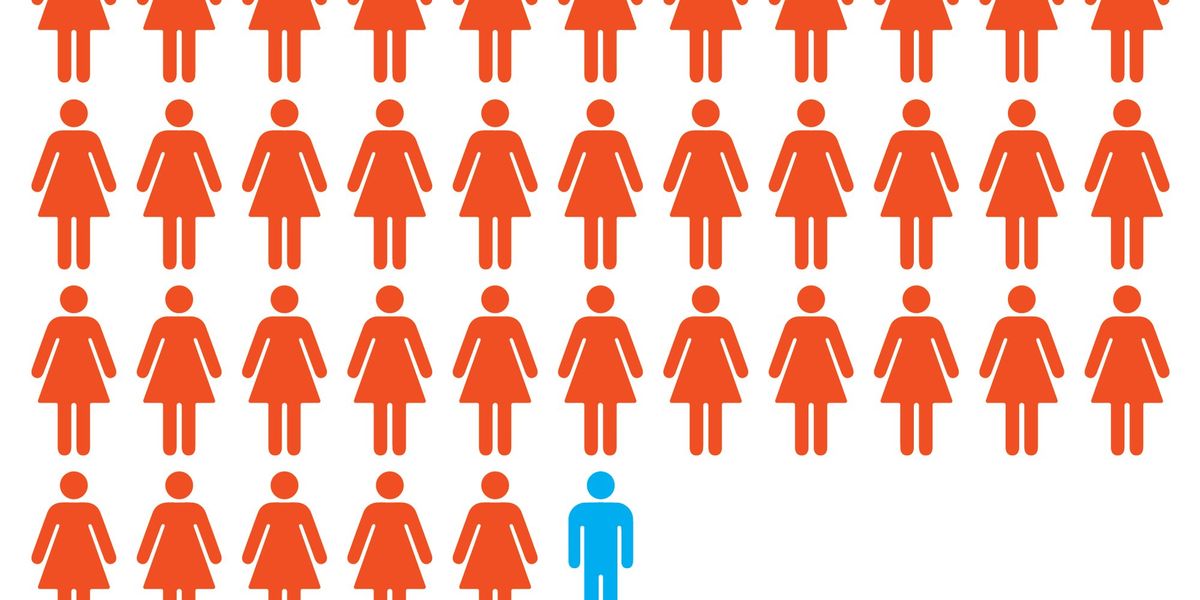
    Training-data composition, differences in how sensors detect faces, and intrinsic differences between groups, such as age, all affect an algorithm’s performance. The United Kingdom estimated that its FRT exposed some groups, such as women and darker-skinned people, to risks of misidentification as high as two orders of magnitude greater than it did to others.

    Less clear photographs are harder for FRT to process.iStock

    What happens with photos of people who aren’t cooperating, or vendors that train algorithms on biased datasets, or field agents who demand a swift match from a huge dataset? Here, things get murky.

    Consider a busy trade fair using FRT to check attendees against a database, or gallery, of images of the 10,000 registrants, for example. Even at 99.9 percent accuracy you’ll get about a dozen false positives or negatives, which may be worth the trade-off to the fair organizers. But if police start using something like that across a city of 1 million people, the number of potential victims of mistaken identity rises, as do the stakes.

    What if we ask FRT to tell us if the government has ever recorded and stored an image of a given person? That’s what U.S. Immigration and Customs Enforcement agents have done since June 2025, using the Mobile Fortify app. The agency conducted more than 100,000 FRT searches in the first six months. The size of the potential gallery is at least 1.2 billion images.

    At that size, assuming even best-case images, the system is likely to return around 1 million false matches, but at a rate at least 10 times as high for darker-skinned people, depending on the subgroup.

    Responsible use of this powerful technology would involve independent identity checks, multiple sources of data, and a clear understanding of the error thresholds, says computer scientist Erik Learned-Miller of the University of Massachusetts Amherst: “The care we take in deploying such systems should be proportional to the stakes.”

    From Your Site Articles

    Related Articles Around the Web


    Source link

    Share. Facebook Twitter Pinterest LinkedIn Tumblr Email Telegram Copy Link

    Related Posts

    Technology

    How This Former Roboticist’s Students Rebuilt ENIAC

    April 23, 2026
    Technology

    How AI Is Changing Cybersecurity

    April 23, 2026
    Technology

    Ham Radio Brings Teletext Back to Life

    April 22, 2026
    Technology

    Energy in Motion: Unlocking the Interconnected Grid of Tomorrow

    April 22, 2026
    Technology

    Tech Life – A hologram to remember: Pam and Bill’s love story

    April 21, 2026
    Technology

    Engineering Manager Vs IC: How to Choose With Clarity

    April 21, 2026
    Editors Picks

    Opinion | Where Does the Transgender Rights Movement Go From Here?

    December 4, 2025

    Opinion | A Bitcoin Evangelist Tries to Convert Me

    April 23, 2026

    US says it will not hit Iran energy sector

    March 8, 2026

    Commentary: What to do if you fail at your New Year’s resolution

    January 4, 2026

    All the countries Israel attacked in 2025: Animated map | Conflict News

    December 29, 2025
    About Us
    About Us

    Welcome to Benjamin Franklin Institute, your premier destination for insightful, engaging, and diverse Political News and Opinions.

    The Benjamin Franklin Institute supports free speech, the U.S. Constitution and political candidates and organizations that promote and protect both of these important features of the American Experiment.

    We are passionate about delivering high-quality, accurate, and engaging content that resonates with our readers. Sign up for our text alerts and email newsletter to stay informed.

    Latest Posts

    Struggling to scale your company? Here are five things that could be holding you back

    April 24, 2026

    What happens if you’re hit by a primordial black hole?

    April 24, 2026

    When is London Marathon 2026? Start time and how to watch race for FREE

    April 24, 2026

    Subscribe for Updates

    Stay informed by signing up for our free news alerts.

    Paid for by the Benjamin Franklin Institute. Not authorized by any candidate or candidate’s committee.
    • Privacy Policy
    • About us
    • Contact us

    Type above and press Enter to search. Press Esc to cancel.