

Would you consider tying your shoelaces an achievement? If you’re able-bodied, probably not. Now imagine doing it with one hand, or no hands at all. Suddenly it is. Fewer than 10,000 people have stood on the summit of Everest. It takes months of training and tests the limits of human endurance. However, if you helicoptered to the top, stepped out for a photograph, and flew back down, would that be an achievement? The outcome is the same. Same summit. Same view, but most of us would not consider it an achievement.
A new kind of helicopter has now arrived. Artificial intelligence can draft reports, write software, compose correspondence, and generate ideas in a matter of seconds. The systems are improving at a pace few anticipated. Google’s chief executive has informed investors that more than a quarter of new code at the company is now AI-generated. At Microsoft, the comparable figure lies between 20 and 30%. Shopify’s chief executive told employees that before requesting permission to hire, they must first demonstrate that the role cannot be performed by AI. This was not speculation about a distant future. It was a policy memorandum circulated last year.
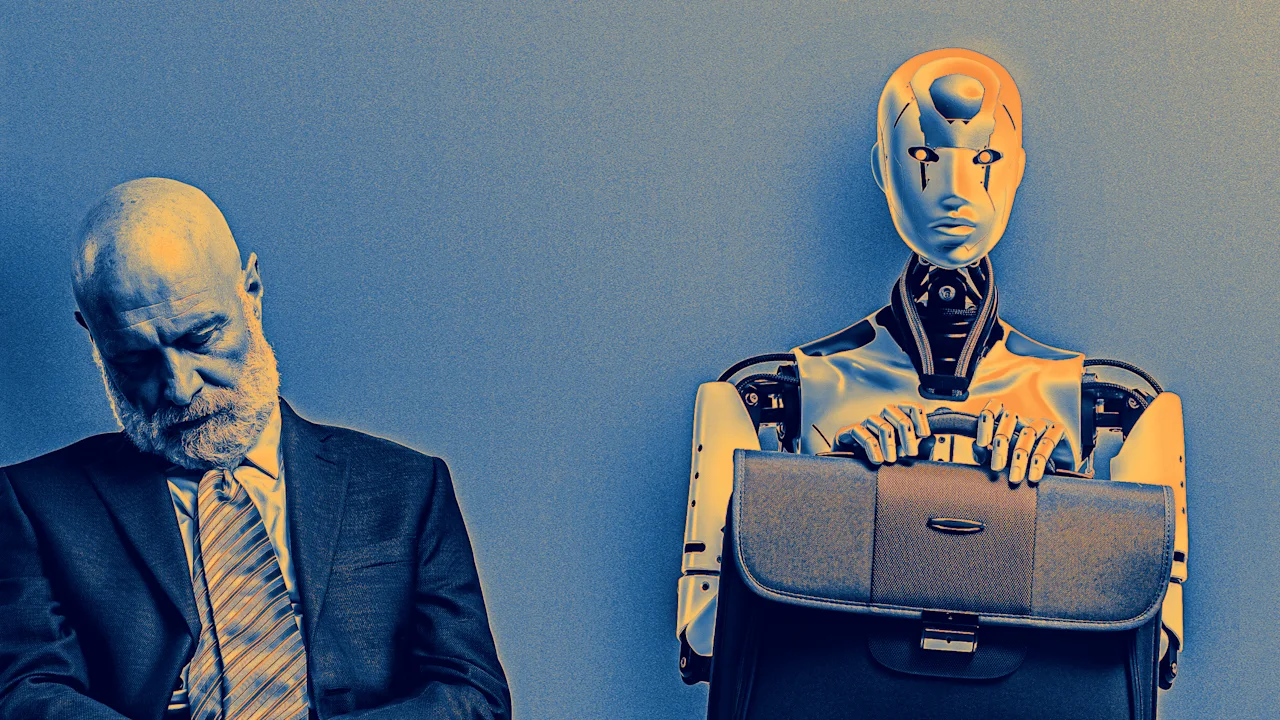
Artificial intelligence is not merely altering how we work. It is quietly reshaping what it means to have accomplished anything.
Philosopher Gwen Bradford argues that an achievement has three core features. First, it must arise from your own agency. The outcome must be attributable to your effort and direction. You cannot outsource the substantive work to another person, or to a machine, and claim the result as fully your own.
Second, it must be meaningfully difficult. Achievements typically require effort, skill, and perseverance. That’s why an Olympic medal is universally regarded as an achievement. It is the celebration of the years of grind the athlete went through.
Third, it must be non-accidental. The success must result from the exercise of competence rather than the favour of fortune. Winning a lottery may transform one’s circumstances, but it displays no mastery. We may envy the outcome, yet we do not admire the ability behind it, because there is none.
Sound judgement, effort, discipline and perseverance are what transform a result into an accomplishment. They bind the outcome to the person who produced it. Artificial intelligence unsettles precisely that bond. If increasingly valuable outputs can be produced with ever less reliance on human skill, the source of credit becomes harder to locate.
So the question is not whether we will collaborate with algorithms. We will. The question is what counts as achievement in such a world.
We will have to shape our sense of achievement by creating new opportunities and by redefining what mastery looks like in a world where our tools think alongside us. LLMs can write a basic article on almost anything. This means that if writers want a creatively fulfilling career, they will need to work with technology to create something richer, more nuanced, and more distinctly human.
Three things worth sitting with:
1) Audit your effort, not your output. Bradford’s framework gives you a useful personal test: look at something you produced this week and ask honestly how much of the difficulty you actually absorbed. Whether the output was good matters less than whether the struggle was yours.
2) Resist the urge to skip to the summit. The helicopter analogy extends well beyond Everest. Every time you use a tool to bypass the hard part of thinking, the wrestling, the false starts, the moment before clarity, you arrive at the answer without making the journey. Occasionally, that is fine. As a habit, it quietly hollows out the skills you believe you still have. Use AI to go further, not to go without. Consider a student preparing an essay on constitutional law. Faced with a difficult case, she could struggle through the judgments, reconstruct the reasoning, and attempt her own argument, refining it through revision. Or she could prompt an AI system to produce a polished draft in seconds. The submission might earn a respectable mark. Yet in outsourcing the intellectual labour, she has also outsourced the formation of her own judgement. The grade records an outcome; it does not record the capacities she failed to build.
3) Pick one thing that machines are bad at and get unusually good at it. Machines are poor at navigating moral ambiguity, at building trust in fractured human situations, and at knowing which question matters more than the answer. These are among the hardest skills that exist. Alexander Fleming, the bacteriologist who discovered penicillin, stumbled upon it by accident. But he had the trained eye to recognise what he was seeing. Another researcher might have discarded the contaminated petri dish as a failed experiment. Fleming understood its significance. Luck finds the prepared. So does the future.
It is more useful to think of AI not as artificial intelligence that replaces us, but as intelligence augmented, a tool that extends human capacity. A surgeon who uses AI-assisted imaging to detect a tumour earlier than would otherwise be possible has not diminished her achievement; she has elevated it. A composer who uses machine learning tools to experiment with harmonic structures he would never have imagined unaided is expanding the frontier of his own creativity.
The nature of achievement is changing, and with it, the scale of what we can reach for. What we can build, solve, and imagine in partnership with these tools exceeds anything a previous generation could have attempted alone. That is not a reason to be complacent about effort. It is a reason to be genuinely excited about what honest, skilled, human-directed effort can now produce.