

Islamabad, Pakistan – In the weeks before the Pakistani military carried out air raids inside Afghanistan over the weekend, violence had been unrelenting.
On February 6, a suicide bomber detonated explosives during Friday prayers at a Shia mosque in the capital, Islamabad, killing at least 36 worshippers and wounding 170 others.
Recommended Stories
list of 4 itemsend of list
Days later, an explosives-laden vehicle rammed a security post in Bajaur in the northwestern province of Khyber Pakhtunkhwa, killing 11 soldiers and a child. The attacker, according to Pakistani authorities, was later identified as an Afghan national.
After the Bajaur attack, Pakistan’s Ministry of Foreign Affairs issued a demarche to the Taliban authorities on February 19, summoning the Afghan deputy head of mission in Islamabad.
But two days later, in the early hours of Saturday, another suicide bomber struck a security convoy in Bannu, also in Khyber Pakhtunkhwa, killing two soldiers, including a lieutenant colonel.
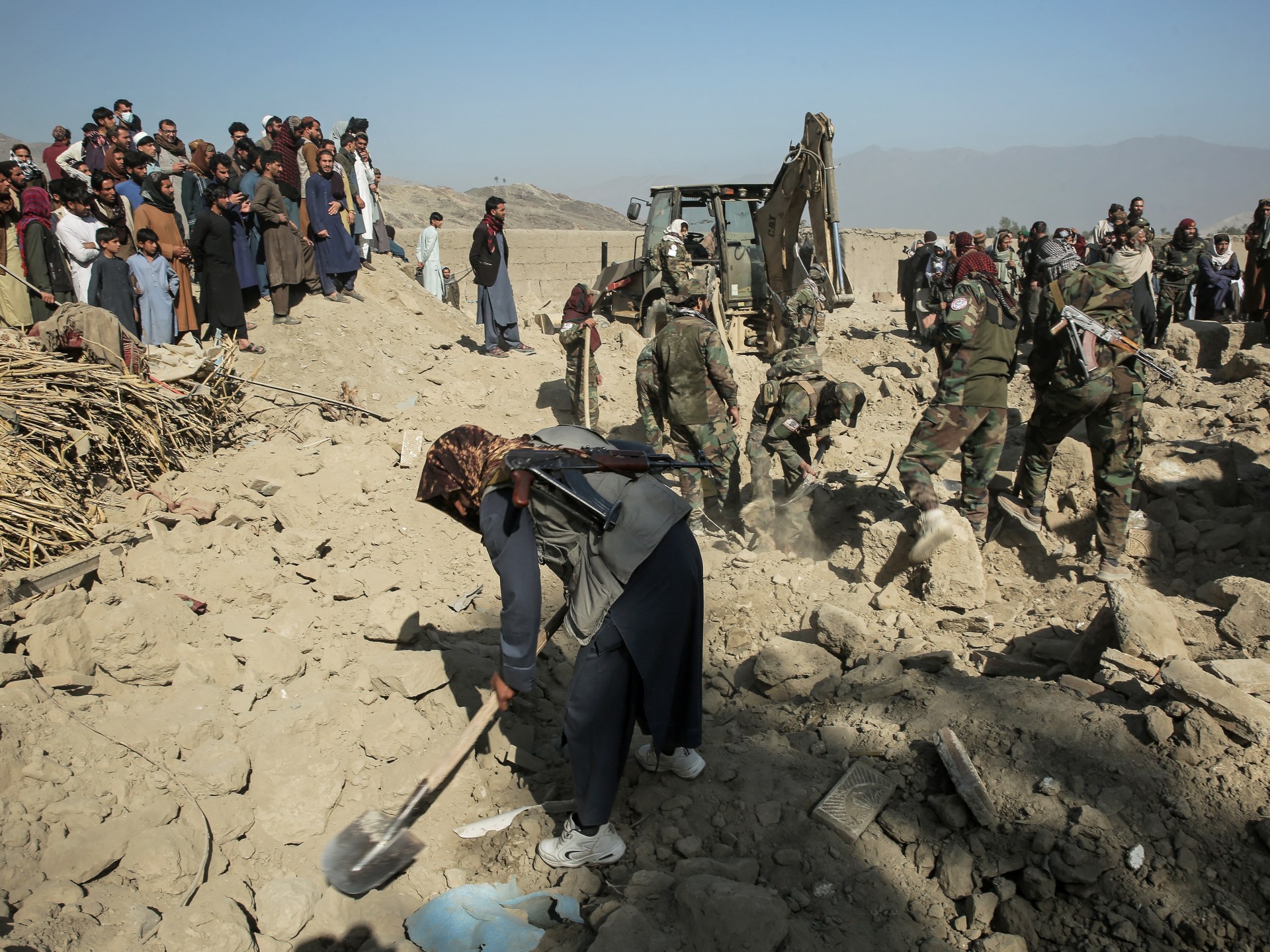
Pakistan’s patience appeared to have run out, and early on Sunday, the military struck back, targeting what it described as “camps and hideouts” in Afghan border areas.
According to Pakistani authorities, air raids in Afghanistan’s Nangarhar and Paktika provinces targeted sanctuaries of Pakistan Taliban, or TTP, and its affiliates, killing at least “80 militants in intelligence-based air strikes along the Pakistan-Afghanistan border targeting seven camps”.
Kabul has rejected those claims. The Afghan Ministry of Defence said the strikes hit a religious school and residential homes, killing and wounding dozens, including women and children. Afghan sources told Al Jazeera that at least 17 people were killed in Nangarhar alone. Kabul pledged a “measured and appropriate response”.
Later on Sunday, India entered the picture, condemning the Pakistani military action and throwing in its support for Afghanistan’s sovereignty and territorial integrity.
“India strongly condemns Pakistan’s airstrikes on Afghan territory that have resulted in civilian casualties, including women and children, during the holy month of Ramadan,” Ministry of External Affairs spokesperson Randhir Jaiswal said.
“It is another attempt by Pakistan to externalise its internal failures,” he said.
In many ways, the statement from New Delhi underscored the unease in Islamabad over India’s growing engagement with Taliban-ruled Afghanistan — an emerging partnership between two countries that Pakistan has repeatedly blamed in recent months for its domestic security turmoil.
Breaking point
Pakistan’s Ministry of Information and Broadcasting, in a statement issued on Sunday, said it had “conclusive evidence” that the recent attacks on its soil were carried out by fighters and suicide bombers acting on the “behest of their Afghanistan-based leadership and handlers.”
It said Islamabad had repeatedly urged Kabul to take verifiable steps to prevent armed groups from using Afghan soil, but that no substantive action had followed.
“Pakistan has always strived to maintain peace and stability in the region,” the statement read, “but the safety and security of Pakistani citizens remain its top priority.”
Pakistan’s attack shattered a fragile ceasefire brokered by Qatar and Turkiye after talks in October and November, following earlier rounds of deadly border clashes. The discussions last year had failed to produce a formal peace agreement, and calm along the frontier remained tenuous.
The Taliban government in Afghanistan has repeatedly rejected allegations that it is supporting armed groups that attack Pakistan.
But as far back as October last year, the Pakistan military’s spokesperson, Ahmed Sharif Chaudhry, had warned that Islamabad’s patience was wearing thin.
“Afghanistan is being used as a base of operations against Pakistan, and there is proof and evidence of that. The necessary measures that should be taken to protect the lives and property of the people of Pakistan will be taken and will continue to be taken,” he said during a press briefing, without presenting evidence publicly.
Prime Minister Shehbaz Sharif, after a suicide bombing outside a district court in Islamabad in November, had also stressed the need for cooperation from Kabul.
“Afghanistan must understand that lasting peace can only be realised by reining in TTP and other terrorist groups operating from Afghan territory,” he said.
‘Left between bad and worse options’
The TTP, which emerged in 2007, is distinct from the Taliban in Afghanistan but shares deep ideological, social and linguistic ties with the group. Pakistan accuses the Taliban of providing sanctuary to the TTP on Afghan soil, a charge Kabul denies.
Abdul Basit, a scholar at the International Centre for Political Violence and Terrorism Research at Singapore’s S Rajaratnam School of International Studies, said Pakistan’s attack confirms the collapse of the temporary ceasefire that followed the talks late last year.
Basit questioned the logic behind Pakistan’s bombings.
“The more Pakistan will strike in Afghanistan, the more Kabul and TTP will come closer,” he told Al Jazeera.
At the same time, Basit said, he understood Pakistan’s dilemma. “They have to retaliate after losing so many security personnel,” he said, describing Pakistan as being “left between bad and worse options”.
The losses for Pakistan in recent months have been steep. Last year was among the deadliest in nearly a decade, with 699 attacks recorded nationwide, a 34 percent increase from the previous year, according to the Pak Institute for Peace Studies.
Its 2025 security report said at least 1,034 people were killed in the renewed wave of violence, marking a 21 percent rise in “terrorism-related fatalities”. “In addition, 1,366 people were injured over the course of the year, underscoring the growing human cost of terrorism,” the report said.
Cross-border air raids are not new. A similar operation in December 2024 killed at least 46 people, most of them civilians. That episode prompted sharp warnings from Kabul, but attacks on Pakistani soil — blamed by Islamabad on the TTP — continued.
Some experts said Pakistan’s strategy needed to involve more than military pressure on the Taliban.
Fahad Nabeel, who heads the Islamabad-based research consultancy Geopolitical Insights, said Pakistan must also work to build goodwill among Afghans.
“Reopening the border and resuming bilateral trade are two possible measures that Pakistan can adopt. Pakistan also needs to share actionable intelligence with allied countries like China, Qatar, Saudi Arabia, and Turkiye to increase pressure on the Afghan Taliban to act against anti-Pakistan militant groups,” he told Al Jazeera.
The India question
An intriguing dimension of the crisis has been not only who Pakistan targeted, but who responded.
India, Pakistan’s nuclear-armed rival, condemned the air raids and highlighted civilian casualties in Afghanistan, while remaining silent on the attacks inside Pakistan that preceded them.
For officials in Islamabad, New Delhi’s statement reinforced a perception that India and the Taliban authorities are edging closer in ways that complicate Pakistan’s security calculus.
That shift has gathered pace over the past year. Afghan Foreign Minister Amir Khan Muttaqi’s six-day visit to India last October marked the first trip by a senior Taliban official since the group returned to power in 2021. India reopened its embassy in Kabul during the same period.
When a magnitude 6.3 earthquake struck northern Afghanistan weeks later, India was among the first to send aid and later gifted ambulances to Kabul, gestures closely watched in Islamabad.
Pakistan’s Defence Minister Khawaja Asif claimed in October that India had “penetrated” the Taliban leadership and suggested that Kabul’s growing ties with New Delhi made it less willing to cut ties with the TTP. He offered no public evidence to back his claims.
Basit said while Pakistan’s attacks on Afghanistan would amount to “India’s gain” — drawing the Taliban and New Delhi closer, with a shared enemy in Islamabad — India faced limitations imposed by geography. “It can provide humanitarian support to Afghanistan, but nothing more than that,” he said.
Still, Nabeel argued, Pakistani policymakers need clarity on how to address armed groups operating from Afghan soil.
“Pakistan cannot afford to keep both borders [with Afghanistan and India] engaged at a time when the prospects of military confrontation between the US and Iran are growing with each passing day,” he said, referring to rising tensions in the Middle East.
Narrowing options
Pakistan’s eastern border with India has remained tense since the two countries had a four-day military confrontation in May last year after an attack on tourists in Pahalgam in Indian-administered Kashmir, in which 26 people were killed. India blamed Pakistan, which denied any role.
To the west, the Taliban government shows little sign of acting decisively against the TTP, say Pakistani officials. At home, a surge in attacks, including in big cities, has intensified public pressure on the military to respond forcefully.
Sunday’s air raids were intended to project strength to Kabul, say experts. Whether they amount to a coherent long-term strategy is less clear, especially as the Taliban has pledged retaliation.
But Basit pointed out that the Taliban leadership also needs to project strength domestically and respond to entrenched “anti-Pakistan sentiment” among Afghans.
“Kabul is well within its rights to respond, considering it is a matter of their own sovereignty, but also because by doing that, the public will rally behind them and increase their domestic legitimacy, as we saw in the last cycle of attacks,” he said.