

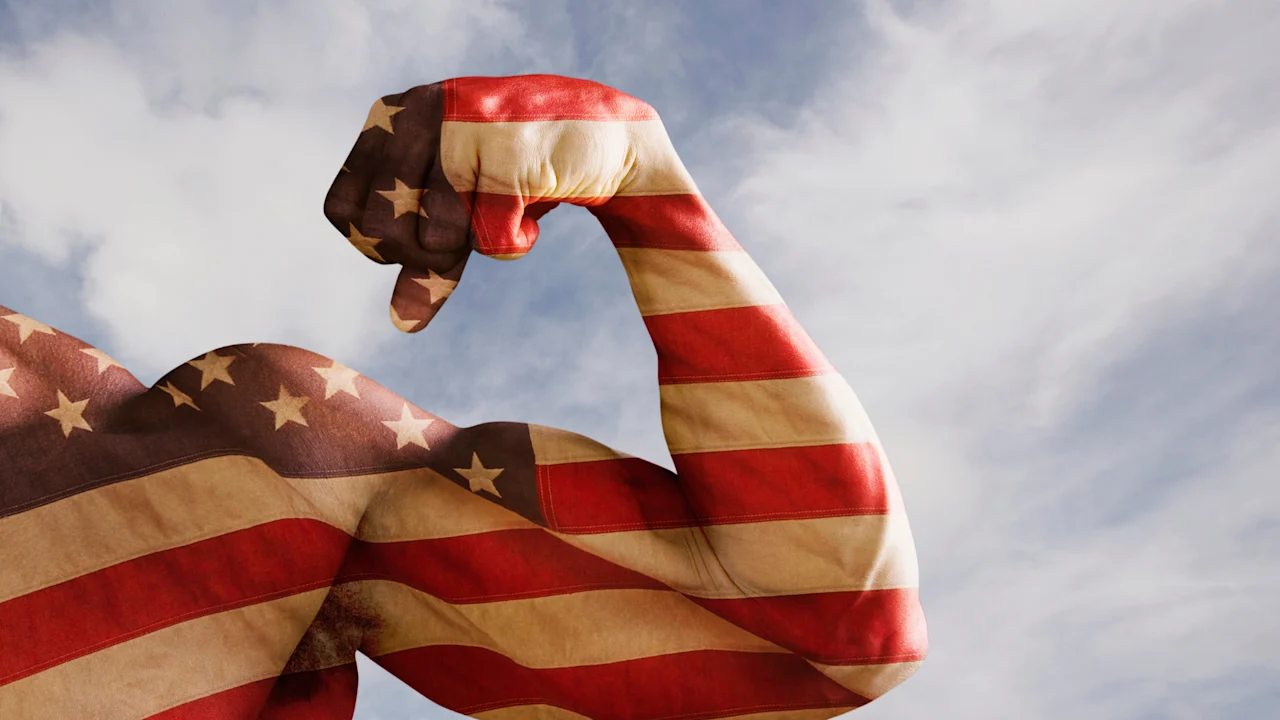
Authoritarian acolytes will tell you that, to be strong, a country must “demonstrate force.”
White House advisor Stephen Miller recently put that worldview plainly on CNN, arguing that “the real world…is governed by strength…by force…by power”—a claim belied, as it were, by history.
America did not become a superpower primarily by proving it could dominate. It became a superpower by proving it could partner.
After World War II, the United States stood unrivaled militarily. Yet it did not rely on force alone to secure its position. Instead, it invested in rebuilding a shattered world. The Marshall Plan was not charity—it was a strategy, linking economic recovery with political stability and turning war-torn nations into long-term allies. By helping others prosper, the U.S. increased its own security and economic future. That is soft power at work.
Dwight Eisenhower, a five-star general, advanced the idea that diplomacy is not the sole province of governments, and that when people know you, they are less likely to fear you. And when they trust you, they are more likely to collaborate with you. John F. Kennedy carried that logic forward with the Peace Corps. The program sent a clear signal that American power included service, partnership, and humility. In a Cold War offering competing models to aspire to, that mattered, and it continues to matter today.
THE ROLE OF SOFT POWER
Soft power was never intended to be solely a government project. After the collapse of the Soviet Union, the United States again faced a pivotal choice: declare victory and walk away or support the hard work of transition. Out of that moment emerged citizen diplomacy initiatives like what later became Pyxera Global—formed at the behest of the George H.W. Bush White House that called for a “Citizens Democracy Corps” to mobilize private-sector volunteer expertise to help planned-economy societies build market economies and democratic institutions.
Alongside these efforts, agencies like USAID institutionalized development as a pillar of U.S. foreign policy—investing for decades in health, education, food security, and economic growth as tools of stability and influence. That model—public purpose paired with private capability—has always been central to America’s soft power.
There are certainly many situations and geographies where U.S. engagement fell woefully short. Still, taken together, these efforts point to a simple conclusion: America’s influence has been strongest when it was most useful—not most intimidating. Soft power was never a weakness—it was leverage.
That history matters now. When the U.S. government pulls back from development, diplomacy, and partnership, the vacuum does not remain empty. Other forces are surely eager to fill it with transactional relationships, debt dependence, and authoritarian influence.
If Washington is narrowing its role now, the private sector faces a choice of its own. It can retreat inward, treating global instability as someone else’s problem. Or it can recognize a simple truth: A stable world is a prerequisite for sustainable business. Soft power is not philanthropy. It is long-term risk management.
HOW BUSINESS CAN STEP INTO THE GAP
None of the following actions is a substitute for government. But they represent a sampling of ways that global business now has the opportunity—and the capacity—to step into the vacuum.
- Normalize board service as leadership—not a side project. Encouraging executives to serve on nonprofit and civic boards strengthens institutions at a time of severe resource constraints, when we need them to function well. It also builds empathy, governance skills, and real-world decision-making capacity, qualities companies claim to value in leaders.
- Scale skills-based volunteering. Finance, compliance, cybersecurity, HR, and logistics are some of the skills that many public and nonprofit institutions cannot easily access. Deploying them fills a dire resource gap while meeting employee demand for purpose-driven work that uses real expertise.
- Double down on supply-chain resilience as a form of stability. Diversifying suppliers, investing in transparency, and ensuring local equity reduce exposure to disruption and coercion. Resilient supply chains are not just good business—they help anchor opportunity and stability in the places where companies operate.
- Expand community-driven initiatives where companies operate. Corporate success cannot sustainably outpace community well-being. Health, nutrition, education pipelines, workforce training, and local economic development are not public relations gestures—they are investments in human capital, social cohesion, and long-term operational continuity.
THE POWER OF PARTNERING
Taken together, and implemented at scale, these actions underscore a simple truth: strength is not only the ability to strike—it is the ability to attract, rebuild, and partner. And if Washington continues to pull back from soft power, global business can advance something new, durable, and worth trusting.
Deirdre White is the CEO of Pyxera Global.