

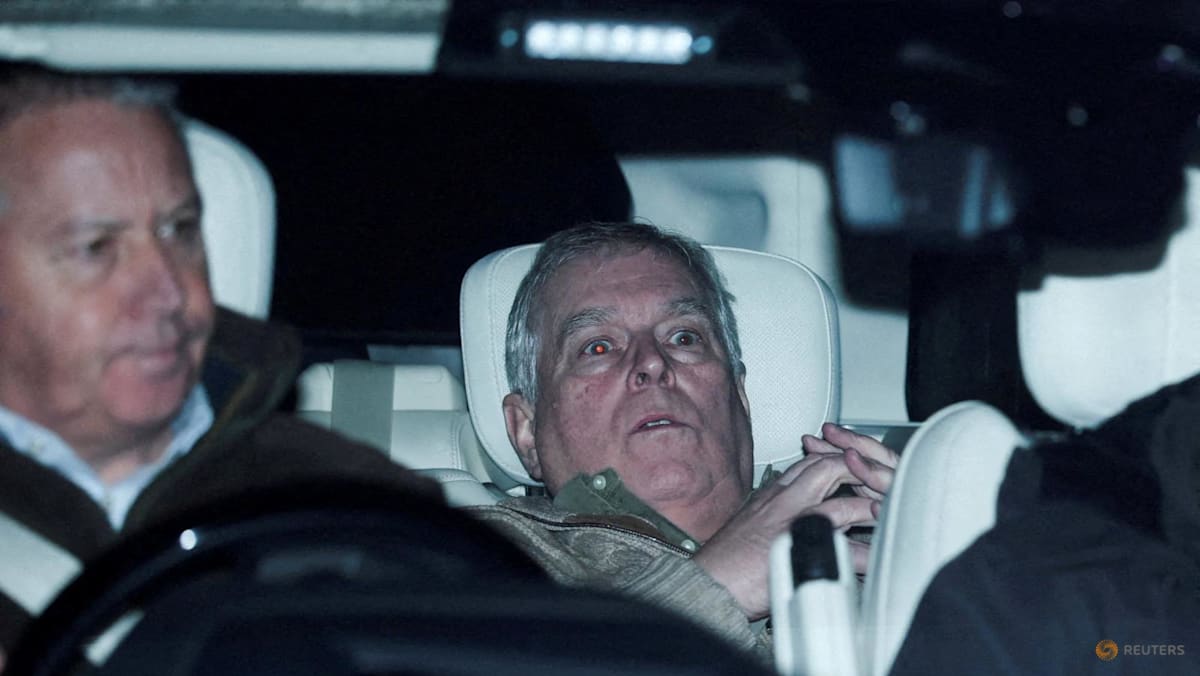
LONDON: King Charles III has been left wrestling with a new test after the arrest of his brother Andrew, the latest in a series of painful personal shocks to mar his reign.
“Charles has, since coming to the throne in September 2022, been battered by a succession of difficulties and crises, whether it’s in relation to his second son, Harry … his health, the health of Catherine, or the very disruptive figure of Andrew,” royal commentator Ed Owens told AFP.
After decades waiting in the wings, Charles became king in September 2022 on the death of his mother, Queen Elizabeth II, who had reigned for 70 years and commanded deep public affection and respect.
His coronation on May 6, 2023, was rich in pageantry, projecting continuity and tradition.
Yet trouble stirred even before the crown was placed on his head.
In January 2023, his youngest son, Harry, released his explosive memoir Spare, launching repeated attacks on the royal family and airing private disputes lapped up by a global audience.
Living in California with his wife Meghan since 2020, and estranged from his family, Harry has been accused by critics of damaging, for personal and commercial gain, an institution long seen as unshakeable.
Though Harry has since sought reconciliation, the rift remains.
Then, in February 2024, Charles, now 77, revealed he was undergoing treatment for cancer, without disclosing the type, forcing him to scale back public duties.
Weeks later came another blow: Catherine, Princess of Wales and wife of heir apparent William, announced she too was being treated for cancer.
While Catherine has since said she is in remission and Charles indicated in December that his treatment was being eased, illness has cast a long shadow over the royal household.
The king has won admiration for his dignified, touching fight against cancer, talking about his shock at learning his diagnosis, and making a point of publicly visiting patients, urging prevention and early detection.
But arguably the gravest threat to his reign has come from his younger brother Andrew Mountbatten-Windsor, as he is now known, who remains eighth in line to the throne.
Royal historian Andrew Lownie told AFP that it was “a crunch point” for the monarchy.
If it is found that “they have been abetting him, enabling him, protecting him, then I think Charles will have to stand aside”, he said.
The long-standing ties between the deeply unpopular Mountbatten-Windsor and the late convicted American sex offender Jeffrey Epstein have caused years of embarrassment.
A photograph published in 2011 showing the former prince with his arm around the waist of Virginia Giuffre, Epstein’s main accuser, proved especially damaging.