

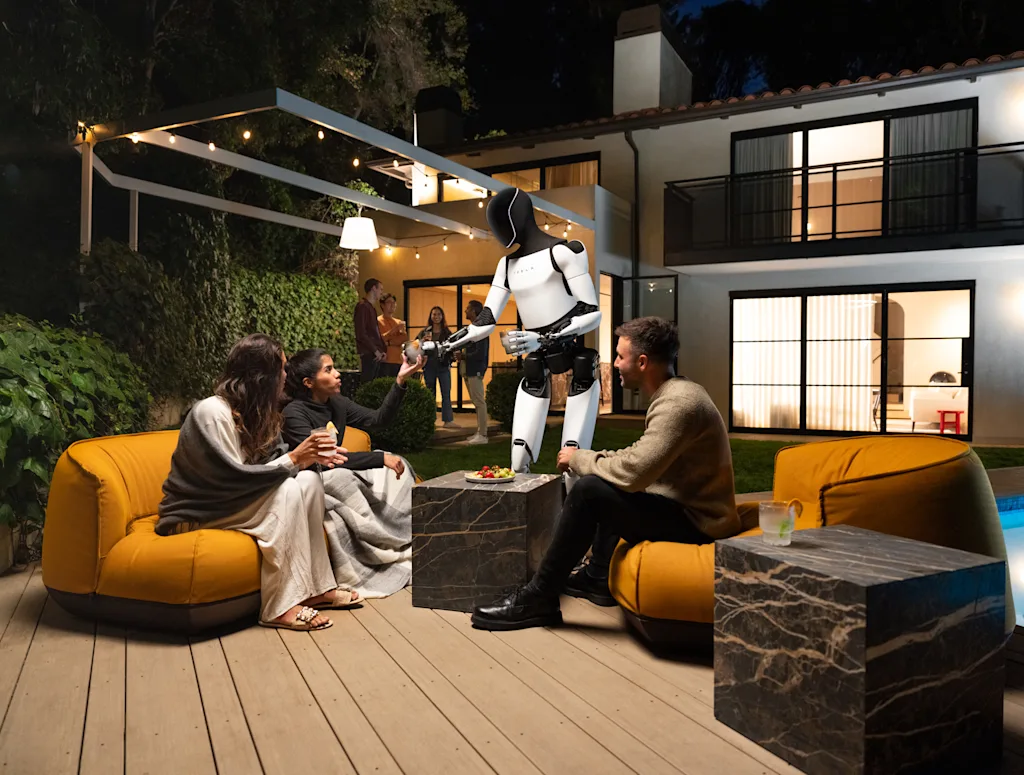
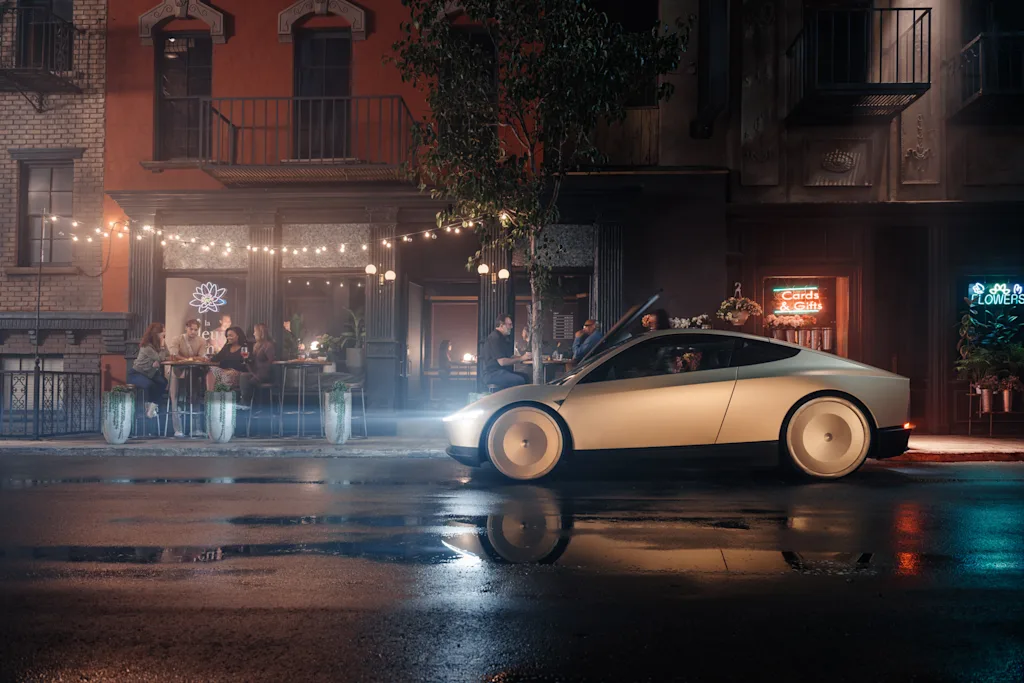
Tesla CEO Elon Musk just admitted what we have been saying since he first made his grand promises about the company’s Cybercab robotaxi and Optimus humanoid robot: His target to mass-produce these products was unrealistic, and now they’re crumbling faster than a Cybertruck’s accelerator pedal.
On January 20, Musk said on X that early production of both products will be “agonizingly slow”—a remarkable admission for a man who has spent the past year telling investors these moonshot projects would save his flailing car company. “For Cybercab and Optimus, almost everything is new, so the early production rate will be agonizingly slow, but eventually end up being insanely fast,” Musk wrote.
This is the same man who promised that the Cybercab would launch in 2026 at a price “under $30,000,” revolutionizing urban transportation with fully autonomous vehicles that would cost riders just 20 cents per mile. And the same person who, at his Hollywood spectacle of an event in October 2024, claimed these scissor-doored wonders would transform parking lots into parks.
It’s the same Musk who said Optimus would be working in Tesla factories by the end of 2025, with 5,000 units produced in 2026 and eventually 1 million per year within five years. But two sources in the Optimus supply chain claim that “Tesla had only procured enough parts to produce 1,200 Optimus units and had manufactured close to 1,000 before manufacturing halted (more on this later).
As of now, there are no robots doing any meaningful work in Tesla factories; this week, Musk claimed they are “currently doing simple tasks.” We do know, from videos online, that they move at glacial speeds and can’t replace human workers in any way.
Fail after fail
Let’s review the scoreboard of broken promises. Musk announced the Cybercab in 2024 at the We, Robot event, saying production would begin in 2026. Experts immediately called BS. “Tesla software is at least years behind where Waymo is,” Matthew Wansley, a professor at New York’s Cardozo School of Law, told Reuters at the time.
Wansley was right to be skeptical. Tesla’s Full Self-Driving manages 71 miles between critical disengagements—moments when a human has to grab control—compared to Waymo’s 17,311 miles. And that gap hasn’t closed. Tesla still reportedly depends heavily on tele-operators to prevent fatal accidents. On December 7, 2025, Musk promised that unsupervised Cybercabs were going to start driving in Austin “in three weeks.” There are no reports confirming this that I could find, though there is word that those Cybercabs are still supervised as of January 23, albeit from a chase car.
Optimus, meanwhile, has become the Fyre Festival of robotics. Musk claimed in April 2025 that “Optimus has the potential to be north of $10 trillion in revenue, like it’s really bananas. It will be the biggest product ever.” He told investors the robot would “eventually dwarf” Tesla’s vehicle business and could unlock “massive new economic value.”
Production of the robot froze completely last June and October. Overheating joints, limp wrists, and batteries that died before lunch forced Tesla to halt procurement after manufacturing only about 1,000 units at $60,000 each—units that moved at less than half the speed of the humans they were supposed to replace. It’s no wonder he’s now warning that he was deeply wrong (and yet still managed to throw another empty promise that we are supposed to believe).
This slow admission is just the latest chapter in Musk’s decade-long saga of vaporware. He has claimed Tesla would solve Full Self-Driving “this year” every year since 2014. It’s 2026, and Musk is warning of “agonizingly slow” production instead of the revolution he promised.
Here’s a prediction
The timing of Musk’s confession couldn’t be worse for Tesla. The company’s core business is collapsing. Much of Tesla’s $1.39 trillion valuation, according to Reuters, “hinges on investor expectations for its self-driving technology and humanoid robots, even as the company’s core revenue and profit continue to come from electric vehicle sales.” Translation: The stock is inflated on fantasies while the actual business falters.
So here we are, watching Musk admit that his previous timeline was fiction while maintaining that production will “eventually end up being insanely fast.” Eventually. That word again. Tesla trades with the valuation of a tech revolutionary while delivering the results of a struggling automaker with stagnant design, obsolete technology, and a CEO more focused on serving popcorn with speeded-up robots at Hollywood diners than fixing his company’s hemorrhaging sales.
I’m not Musk, and my crystal ball may be as broken as his, but here’s my prediction: These “agonizingly slow” production ramps will decrease revenue numbers, wear investors’ patience thin, and ultimately end in an agonizingly fast stock collapse.