

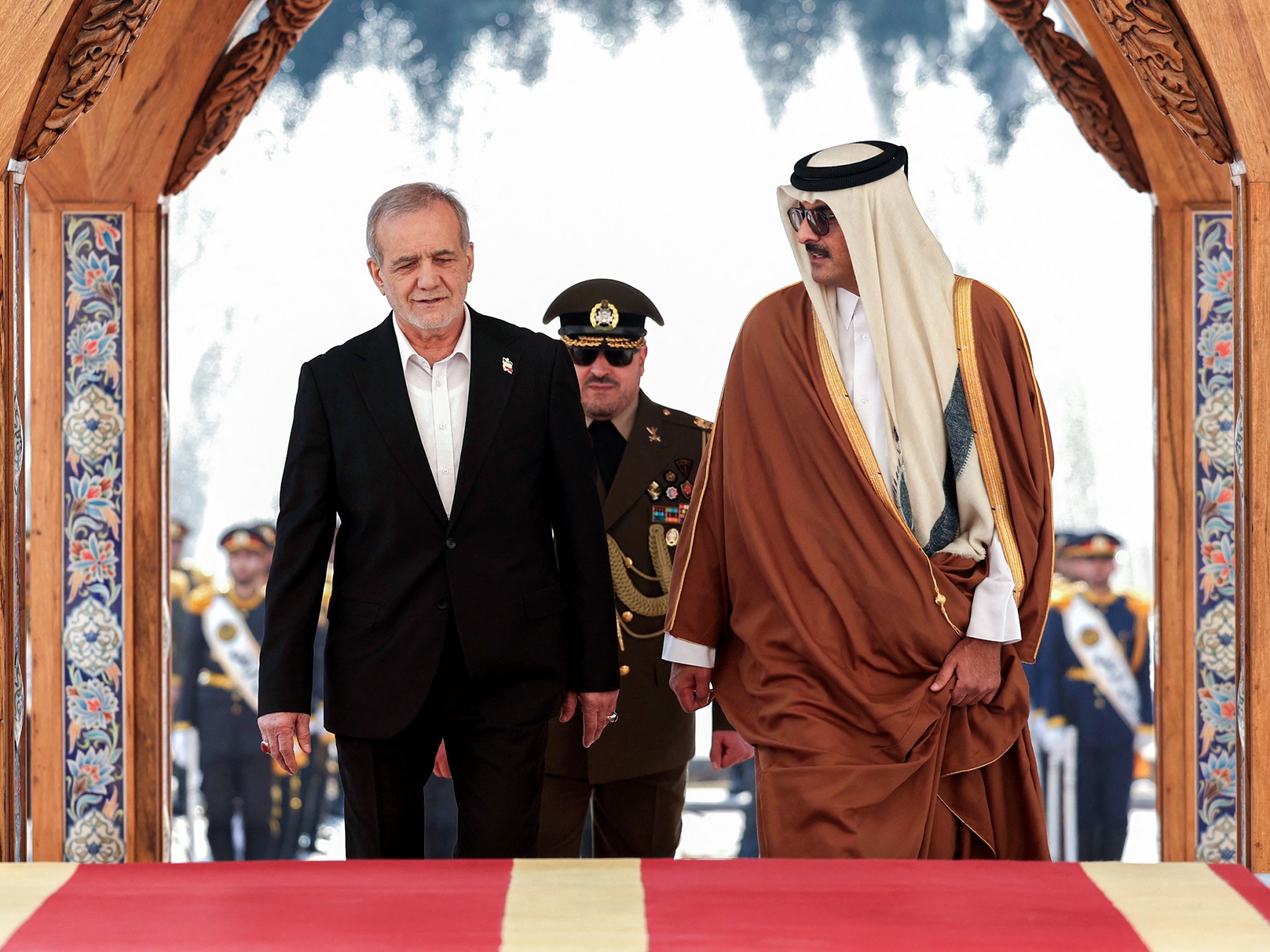
The confrontation between the United States and Iran has entered a more volatile phase, marked by direct military strikes, heightened rhetoric and the steady erosion of long-standing restraints. From attacks on Iranian nuclear facilities to Tehran’s calibrated retaliation across the region, the risk of escalation has become tangible rather than theoretical. For Gulf states, whose security and economic stability are directly exposed to any US–Iran conflict, the implications are immediate. It is within this environment that Qatar’s diplomacy between Washington and Tehran should be understood: not as neutrality for its own sake, but as a calculated effort to contain risks that escalation would only magnify.
Periods of heightened tension between the United States and Iran have long carried consequences well beyond Washington and Tehran. Following a wave of protests inside Iran that, according to varying estimates, resulted in the deaths of several thousand people, rhetoric between Tehran and Washington has hardened markedly. This included President Trump’s threat to intervene on behalf of the protesters, a development that further heightened the urgency of diplomacy in the Gulf. The Gulf’s geography, concentrated energy infrastructure and interlinked security environment mean that even limited confrontation risks rapid regional spillover. Against this backdrop, Qatar’s approach toward Washington and Tehran has consistently prioritised de-escalation, mediation and the maintenance of political channels at moments when such channels appeared increasingly fragile.
Qatar has emerged as an effective and credible mediator at moments of acute tension between the United States and Iran, offering practical avenues that have helped prevent crises from escalating further. Drawing on its sustained relations with Tehran and its strategic partnership with Washington, Doha has maintained discreet and trusted channels that allow both sides to communicate when direct engagement becomes politically constrained. This positioning has enabled Qatar to facilitate de-escalatory outcomes that have saved face for both parties, reinforcing its role as a mediator that creates political space for restraint rather than confrontation.
This role was most visibly demonstrated in September 2023, when Qatar helped facilitate a prisoner exchange between Iran and the United States, alongside the release of frozen Iranian funds for humanitarian purposes. The process required months of indirect negotiations, careful sequencing and political reassurance on both sides. While the agreement did not signal a broader rapprochement, it underscored an important point: even amid deep hostility, diplomacy remains possible when credible mediators are available.
For Doha, such mediation is not an end in itself. It reflects a broader conviction that the Iranian nuclear issue, and US–Iran tensions more generally, cannot be sustainably managed through coercion alone. Qatar has consistently aligned itself with the view that dialogue rather than military action offers the only viable path toward containing risks and preventing escalation. This position does not imply indifference to Iranian regional behaviour or to proliferation concerns; rather, it reflects an assessment of costs, uncertainty and unintended consequences for regional security. As such, even in the aftermath of Iran’s calibrated missile strike on the Al Udeid airbase in Qatar — a Qatari military facility hosting US forces — launched in June 2025 in response to US attacks on Iranian nuclear facilities, Doha moved swiftly to engage both sides and contain the crisis. Through urgent outreach and established communication channels, Qatar contributed to broader efforts that helped support a fragile ceasefire that has broadly held since, underscoring both its capacity to be effective in mediation and the trust placed in Qatari diplomacy.
A military confrontation aimed at overthrowing the Iranian regime would almost certainly generate effects that extend far beyond Iran’s borders. Internally, such a scenario risks producing state collapse, fragmentation of authority and the re-politicisation of ethnic and sectarian identities within a large and highly complex society. Externally, the spillover effects could include large-scale refugee movements toward neighbouring states, including across the Gulf, as well as severe disruptions to maritime security and energy markets. Taken together, these outcomes would pose immediate challenges to Gulf states whose own stability is closely tied to regional calm.
Recent developments in the region have already altered the strategic balance. Since the October 7 attacks and the subsequent regional confrontations, Iran’s network of allied non-state actors has come under sustained pressure. Several elements of the “axis of resistance” have been weakened militarily and politically, reducing Tehran’s ability to project influence in certain theatres. At the same time, the US attacks on Iran in June 2025 have dispelled any remaining misconception about Washington’s willingness to strike Iran directly and degrade its nuclear enrichment capacity.
From a Gulf perspective, however, further escalation offers diminishing returns. Weakening Iranian regional influence does not automatically translate into regional stability, particularly if pursued through strategies that risk state collapse. For Gulf states, the priority is not the dramatic remaking of Iran’s political system, but the avoidance of chaos that would be costly, unpredictable and difficult to contain. This assessment is not limited to Doha. In recent years, Qatar’s position has increasingly converged with those of Saudi Arabia and Oman, both of which have invested in reducing tensions with Tehran through dialogue and confidence-building measures. Their efforts to communicate the risks of military escalation to the Trump administration reflected a broader regional mood, one that favours containment and engagement over confrontation. This convergence is notable given the political differences that have historically separated Gulf capitals.
Qatar’s mediation efforts offer a pathway that helps prevent regional chaos at a moment when escalation increasingly offers diminishing returns. By keeping channels open, facilitating limited agreements and discouraging maximalist strategies, Doha seeks to reduce the likelihood of miscalculation. Such efforts rarely produce dramatic breakthroughs, and they are often invisible by design. Yet their absence would likely make escalation more probable, not less.
In an increasingly polarised regional environment, the value of de-escalation is easily overlooked. It lacks the clarity of deterrence and the euphoria of military action. Still, as Qatar’s engagement between Washington and Tehran illustrates, diplomacy, however incremental and imperfect, remains one of the few tools capable of preventing crises from spiralling into wider conflict. In a region where the costs of war are shared far beyond the battlefield, that contribution should not be dismissed lightly.
The views expressed in this article are the author’s own and do not necessarily reflect Al Jazeera’s editorial stance.