

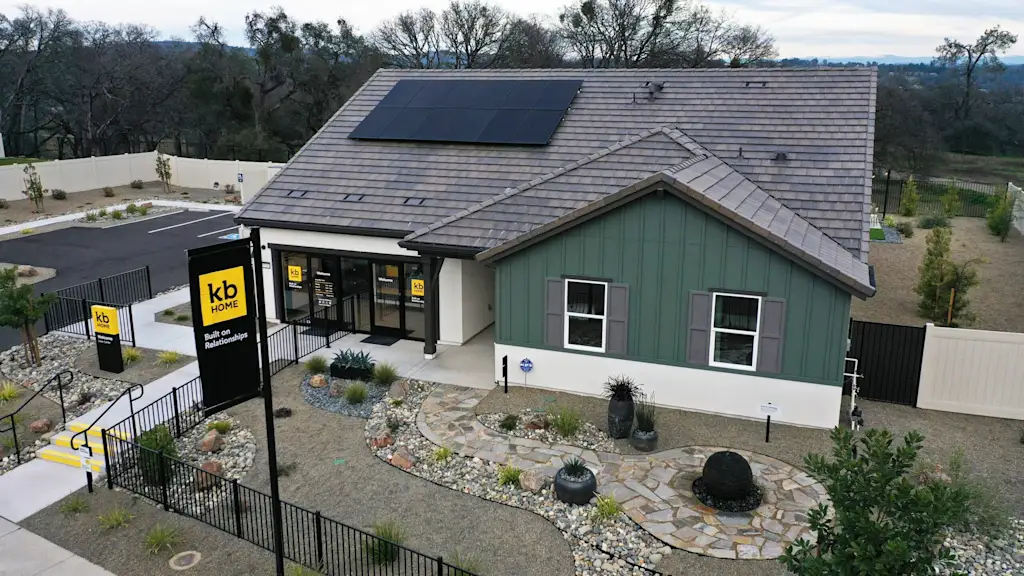
A new neighborhood under construction near Sacramento, California, in the rolling foothills of the Sierra Nevada mountains, looks like a typical subdivision. But it’s one of the first developments designed at a neighborhood scale to withstand wildfires.
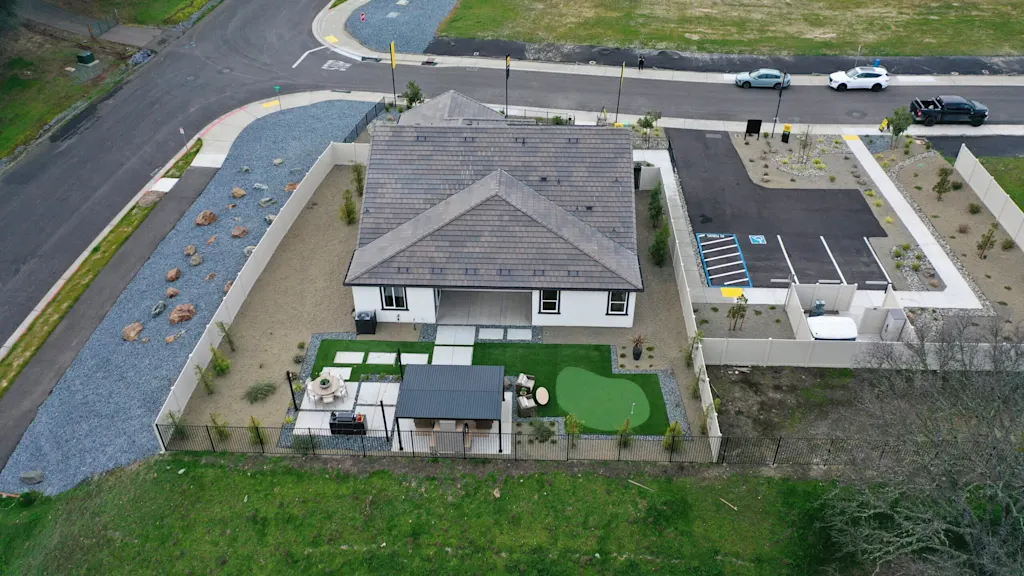
Each house goes farther than California’s latest building requirements for high-fire-risk zones, from enclosed, ember-resistant eaves to dual-paned, tempered glass windows that can better withstand extreme heat in a fire. The design considers not just each house, but how homes interact, spacing buildings at least 10 feet apart and removing combustible features to prevent fire from spreading between them.
Called Stone Canyon, it’s one of the state’s first “Wildfire Prepared Neighborhoods,” a standard developed by the Insurance Institute for Business & Home Safety (IBHS), a research nonprofit funded by the insurance industry.
Designing homes that withstand wildfires
At a unique facility in North Carolina, the nonprofit recreates wildfires—from embers to wind speed—and then uses controlled tests to see how houses perform.
We build full-size structures and we can control the wind speed and direction,” says Roy Wright, president and CEO at IBHS. “We can control the ember flow and the cast that is coming in that direction. We put out and publish really interesting, wonky things about wildfire. But [with the new standards] we said, let’s just take the most important pieces of the science and make them really plain and usable for developers and homeowners.”
KB Home, the national developer behind the project, decided to tackle a new level of fire safety after learning about IBHS’s research. At a building conference in 2024, the team watched one of the nonprofit’s demonstrations, which featured a house built to the standard building code next to one built to IBHS’s standards.
“They simulated a wildfire event where embers were blowing against the two structures,” says Steve Ruffner, president and regional general manager for KB Homes in Southern California. “The home that was built to the old standards burned fairly quickly, within about half an hour. And the other home didn’t burn at all.”
At the time, KB Home had another development underway in a fire risk zone in Escondido, near San Diego. “On the fly, we changed the design guidelines of our homes to accommodate the IBHS standards,” says Ruffner. (The homes, which start at around $1,000,000 and around 2,000 square feet, are aimed at “step-up” buyers looking for an upgrade; in the development near Sacramento, they start in the high $700,000s.)
IBHS had already put out a new building standard for “wildfire prepared” homes in 2022. In 2024, after meeting with KB Homes, it sped up the development of a related standard at the scale of a neighborhood.
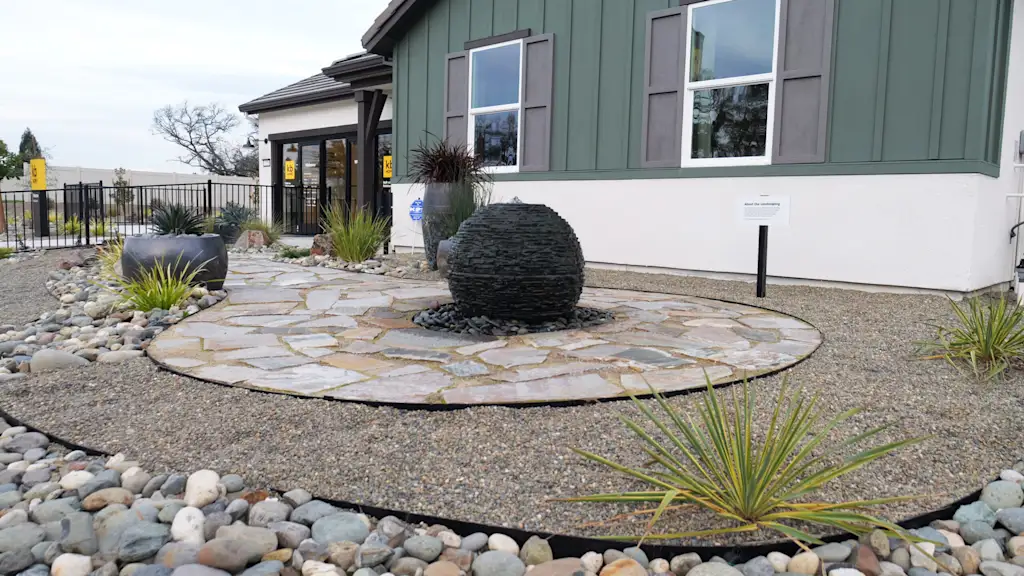
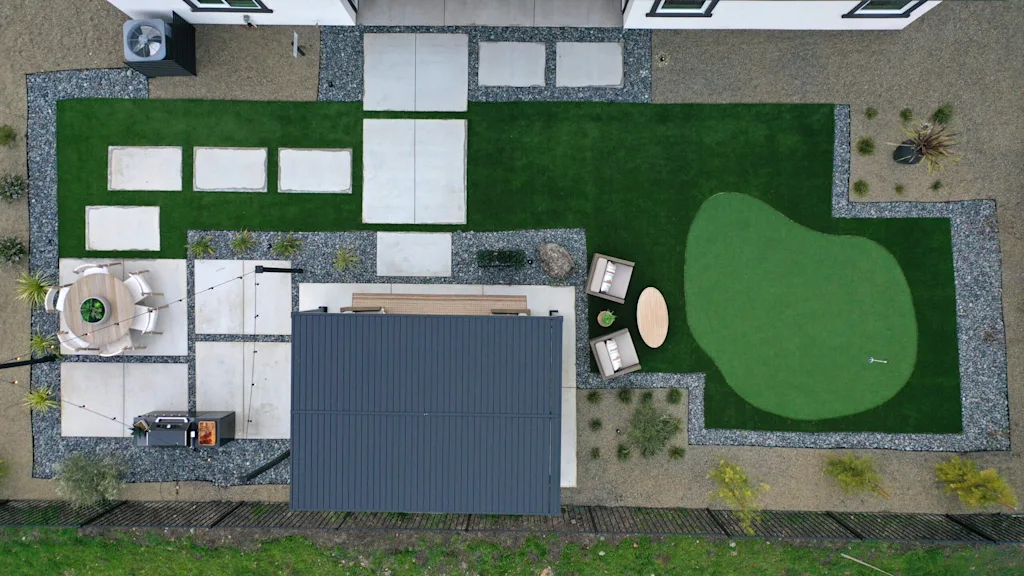
To get the designation, homes need to include features like noncombustible gutters, a Class A fire-rated concrete tile roof, ember-resistant vents, six inches of vertical clearance at the base of exterior walls, noncombustible fence and gate materials, and a five to 30-foot “defensible zone” around the home where any vegetation is carefully spaced to avoid the spread of fire. Plants have to be drought-resistant California natives.
The standard overlaps with California’s newest building code, but requires better, more resilient building materials for certain components. California’s code also doesn’t require at least 10 feet of space between buildings or the elimination of “connective fuel pathways” between buildings.
“Structure separation is the biggest indicator of wildfire progress that will take place—that density,” says Wright. “That’s why when you’re building new developments, you can incorporate this in. Because you want to make sure that within the adjacent home, if it is fully engulfed, that you’re giving the next structure a chance to survive.”
Fires often spread through embers that can be blown long distances on windy days. In both the development near Sacramento and the one in Escondido, the homes are near open wild land that could easily burn; embers wouldn’t have to travel far.
“We want to make sure that those homes can withstand those embers showers,” Wright says. “If embers are going to land on the property, it may ignite some bush or something that is away from the home on the parcel. But what’s closest to the structure is going to be able to withstand those embers showers. And if one of the structures has a really bad day and ignites, we slow the spread so that we’re not going to lose the whole neighborhood. We’re going to actually give the firefighters a chance to get in there and actually beat it down.”
It also protects older homes nearby. “There are adjacent subdivisions or neighborhoods that were built 40 years ago,” he says. “And the kind of actions that these neighborhoods have put in place are actually going to have a protective effect for their neighbors, because when they can withstand the impact of wildfire, that means the fire doesn’t spread.”
From lab tests to proof of concept
In the first project in Escondido, KB Home worked with the city to change some design guidelines (instead of Craftsman-style homes made from wood, they pivoted to ranch homes with cement-based siding or stucco). The city also required timber fencing that was treated for fire, but when IBHS explained that the coating quickly wears off in the sun—making this type of fence flammable—they were able to switch to a metal fence that looks like wood. The switch actually helped save costs, Ruffner says.
In total, all of the changes didn’t add significantly change the development’s bottom line, and there were some unexpected benefits. “We found out that tempered windows are much tougher, so we didn’t break as many windows during [construction], and we ended up saving a lot of money that way,” says Ruffner.
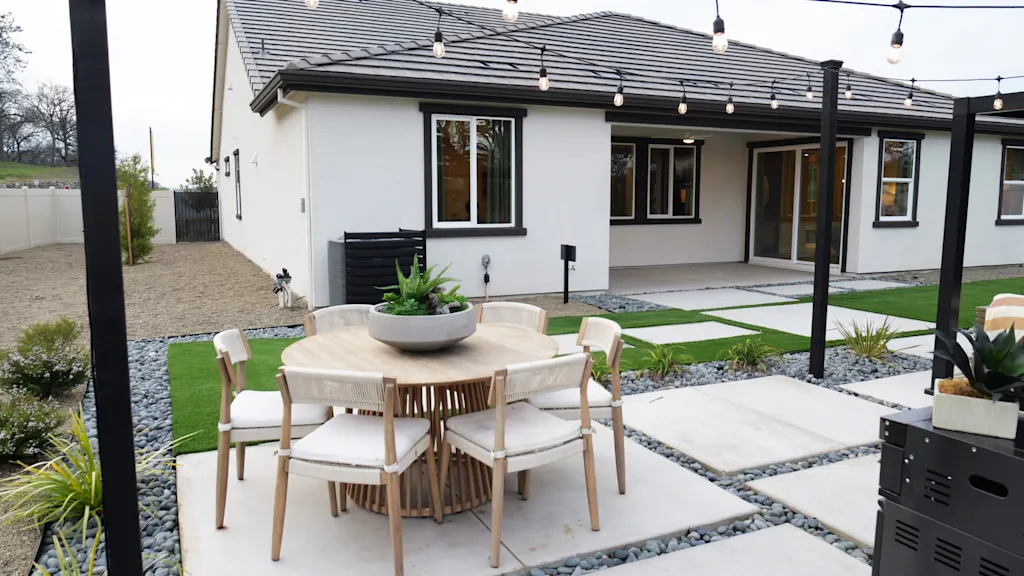
The first neighborhood in Escondido includes 64 homes, and an HOA agreement that requires homeowners to maintain gardens over time so fire can’t spread between plants or trees. The first homeowners have been carefully adhering to the plan. “They want to make sure they don’t break the rules because honestly, insurability in California is a big, big deal,” says Ruffner. “If you’re not insurable, you have to go into the public programs that are very, very expensive. And so at least they have a good chance here to negotiate with insurance companies.”
The newest neighborhood near Sacramento will follow the same path. So far, only model homes are in place; KB Home builds each house to order as each home is sold. Each house will be evaluated by IBHS before the neighborhood gets the “Wildfire Prepared” designation, though it’s getting a provisional designation now.
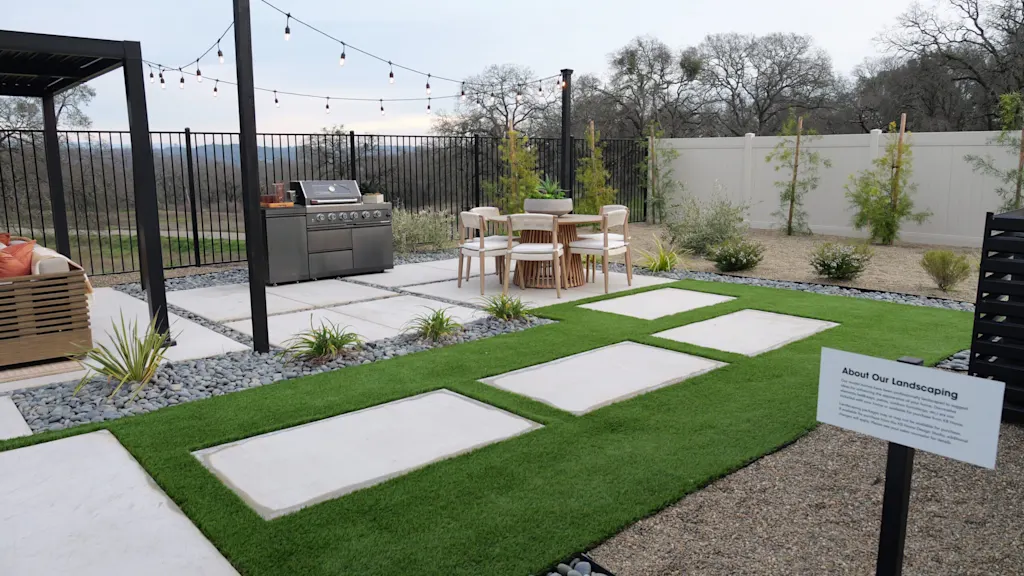
Now that KB Home has shown that meeting the standard is financially viable, other developers also have projects underway. Around a dozen other projects are being designed to the standard now, Wright says, some with several hundred homes in a single development.
Of course, the work can’t completely eliminate risk. It’s not possible to make a house completely fireproof, Wright says. But in a worst-case scenario, even if 20% of losses in a neighborhood could be avoided in a fire, that’s “absolutely phenomenal,” he says.
“Every time one more structure doesn’t burn, that means that structure is not sending off its flame. It’s not sending off its embers,” he adds. “Every time we save a structure and it survives, we really narrow the path of how that fire will propagate into a neighborhood.”