

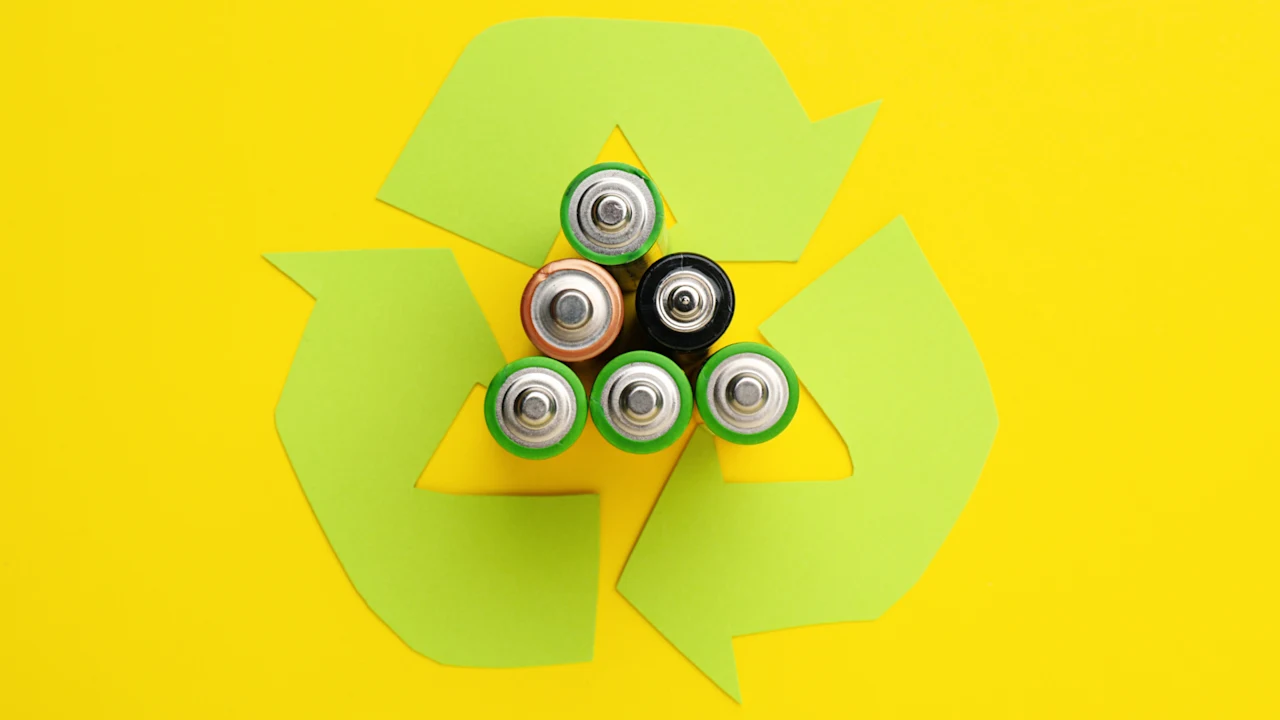
Batteries are powering a significant shift in how we go about our daily lives, ranging from the devices we carry to electric vehicles and energy storage systems. Batteries play a critical role across key sectors from data center infrastructure, military, and microgrid applications to consumer electronics and more. But as demand surges, so does end-of-life material that needs to be managed.
Beyond serving as compact energy sources, batteries also represent a domestic source of essential critical minerals. To fully realize their value, it is crucial to close the loop at end-of-life by recovering these minerals and strengthening the supply needed to support a rapidly expanding battery market. To responsibly manage battery materials at end-of-life, extended producer responsibility (EPR) for batteries becomes essential.
BATTERY RECYCLING INDUSTRY: GROWTH TRAJECTORY
In the U.S., battery EPR laws are being enacted at the state level, leaving battery producers, automotive original equipment manufacturers, and energy storage operators to navigate complex regulations, which vary by state. In states that have passed laws and those with active legislation, jobs will be created to manage these requirements, and we will see an increase in economic activity through the creation of closed-loop supply chains.
The battery recycling industry will continue to grow, and battery EPR regulation will only fuel that growth through the creation of a more responsible system to ensure batteries are recycled.
When systems are in place that require companies to recover batteries at end-of-life, we will significantly improve our ability to reclaim valuable materials. This applies to all battery chemistries, whether lithium-based or alkaline batteries containing zinc and manganese—yes, alkaline batteries can be recycled, and the recovered minerals from those alkaline batteries can be reused as micronutrients in fertilizers.
The groundwork has already been laid, and when you look at battery recycling as a whole, the value of recovering these materials is substantial. That value extends beyond financial benefits to include reduced geopolitical risk, improved logistics and supply chain resilience.
THE NATIONAL CHALLENGE
The country must address what happens to a battery when it’s no longer usable. Ultimately, through EPR legislation, we can make it a priority to recover critical minerals and increase the nation’s ability to produce battery-grade materials. In 2024 alone, the U.S. imported more than one billion batteries. These batteries are made of valuable materials such as lithium, nickel, cobalt, and manganese. EPR laws are designed to track a battery’s life cycle and, if done right, can help us take advantage of these materials once they are in the U.S. by recycling and reusing the minerals domestically to produce new batteries.
STATE LEADERSHIP
Battery recycling benefits everyone. Recyclers, producers, legislators, consumers, and the nation must work together to strengthen domestic supply chains, enhance national security, and keep batteries and the critical minerals they contain within U.S. borders.
When states introduce EPR bills, they will vary based on battery format or size, but several core principles should remain consistent:
- Collection: In addition to standard collection sites, expanding to independent collection points increases accessibility. Recycling opportunities must be available to everyone, not limited to a specific group or location.
- Avoid forfeiture requirements: The battery industry functions as a unified ecosystem, and the goal is to build a closed-loop supply chain. Restricting who can recycle and process the batteries after they are collected jeopardizes existing business models and risks harming the broader industry.
- Transparency: Full visibility across the entire process from initial recycling through to metal recovery—is essential. Without transparency, innovation within the industry will stagnate.
EDUCATION & ACCESS
To better implement battery EPR laws, we must enhance consumer education on battery recycling. Many people do not understand how to handle and dispose of used batteries properly. For example, a recent study focused on lithium batteries found that nearly 40% of people do not know they can be recycled, and more than 60% do not know where or how to recycle them.
Lithium batteries are far too prevalent in our daily lives for consumers not to have resources and access to responsible recycling.
FINAL THOUGHTS
I am hopeful that as battery recycling becomes more mainstream and visible to consumers, a larger collection network with increased access will be available, and end-of-life batteries can be properly recycled and processed to recover the critical minerals effectively.
And not only is battery EPR a foundation for this and a stronger, more sustainable supply chain, it supports national security and ensures that we in the U.S. increase our global competitiveness through innovation and the domestic sourcing of critical minerals.
David Klanecky is the CEO and President of Cirba Solutions.